Palestinian woman poses as Israeli in order to undergo surgery

A 22-year-old Jenin resident was arrested Wednesday for posing as an Israeli citizen in order to receive medical treatment.According to suspicions, the young Palestinian woman passed herself off as an Israeli in order to undergo complicated lung surgery at Haifa’s Rambam Hospital.

The woman arrived at the hospital a week and a half ago and presented herself as a citizen of Israel. During the course of her treatment, the hospital staff discovered that that her blood type does no match that that of the Israeli woman whose identity she stole. Despite this, and because of her sensitive condition, the suspect underwent the operation. Hospital staff only notified the police of the crime after the patient was healthy enough to be discharged.


Haifa Police chief Dudu Ben-Atia said that because of the sensitive nature of the case police is likely to allow the suspect’s release on bail until she makes a complete recovery.
A spokesperson for Rambam Hospital said the hospital decided to authorize the surgery and provide the Palestinian woman with complete medical treatment despite that fact that they had discovered the identity theft beforehand.

The hospital staff expressed surprise at the fact that the woman had to resort to identity theft in order to undergo the operation, as they routinely treat patients from the Palestinian Authority.

Source

Posted in Disclosure | Leave a comment

Don’t sack Musharraf, US and UK warn election victors – The Independent – 21 Feb.08

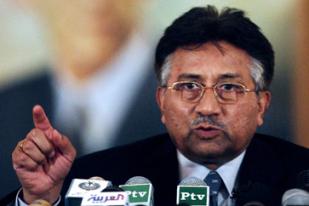
General Pervez MusharrafThe US and Britain are pressing Pervez Musharraf’s victorious opponents to drop their demands that he resign as president and that the country’s independent judiciary be restored before forming a government.

In a strategy some Western diplomats admit could badly backfire, the Bush administration has made clear it wishes to continue to support Mr Musharraf even after Monday’s election in which the Pakistani public delivered a resounding rejection of his policies. “[The US] does not want some people pushed out because it would lead to instability. In this case that means Musharraf,” said one Western diplomat.

Officials say the policy is driven by concern about possible instability in the aftermath of the election in which the president’s parliamentary allies were soundly beaten. In such circumstances US and its Western allies are urging the election’s winners – the late Benazir Bhutto’s Pakistan People’s Party (PPP) and Nawaz Sharif’s Pakistan Muslim League-N (PML-N)- to quickly move forward and form a coalition that includes all “moderate” elements.

But along with Mr Musharraf’s future, the reinstatement of sacked Chief Justice Iftikar Chaudhry and other Supreme Court justices – sacked by the president when they refused to ratify his imposition of a State of Emergency last November – has rapidly emerged as the most contentious issues in the aftermath of Monday’s vote, as the PPP and PML-N negotiate to form a coalition government. Mr Sharif, whose party secured the second most number of seats, built his campaign around the reinstatement of Mr Chaudhry and has repeatedly insisted Mr Musharraf should stand down.

Last night an aide to Mr Sharif, who is due to meet today (THURS) with PPP leader, Asif Ali Zardari, confirmed there had been pressure to drop its demand for Mr Chaudhry’s return. “The suggestion has been there from Western countries for some time. In fact it was raised by [a senior British official] when he met Mr Sharif in London. [But] we are not willing to compromise on our stance. We feel it would be against the interest of the Pakistani people.”

This week senior US officials have already met with Mr Sharif and the other leading players in Pakistan’s unfolding political drama, urging an inclusive transition towards democracy. Yesterday morning, a US diplomat based in Lahore spent two hours with Aitzaz Ahsan, leader of the lawyers movement, laying out the US position.

Mr Ahsan, who has been under house arrest for three months, declined to detail the contents of his conversation with the diplomat, but he said: “There is no way other than to reinstate the judges…We are not going to let this pass. We will not let it be accepted as a norm.”

Since the aftermath of 9/11, the Bush administration has pursued a controversial policy in which it has given billions of dollars and considerable political support to Mr Musharraf, who is considered a vital ally in the so-called war on terror. The policy has been pursued despite criticism of Mr Musharraf’s human rights record and amid claims of hypocrisy over the US’s backing for a military dictator who seized power in a military coup while purportedly promoting democracy.

Officials admit that in the aftermath of such a decisive election its decision to stick by Mr Musharraf and its urging of his opponents to work with him – even with him serving in a reduced role – could be seen as interference and carried with it high risks.

Yet they say the threat of instability and the over-present threat of violence in Pakistan requires the various groups to form a coalition of moderate parties rather than becoming “fixated” on Mr Musharraf’s immediate future or the restoration of the judiciary. Another Western diplomat said: “The important thing is that a stable government can be formed.”

The West’s approach has already drawn criticism. Ali Dayan Hasan of Human Rights Watch, said: “[How is it that] the US believes…Musharraf can be the guarantor of any sort of stability when he is the source of instability?”

Mr Musharraf has insisted that he has no intention of resigning. His spokesman, Rashid Qureshi, said yesterday that he intended to work with the new government and that he would serve out his term that expires in 2012. “The people on Monday didn’t vote to elect a new president,” said the spokesman. “In fact, they participated in the elections to elect the new parliament.”

Source

Clouds gather as ‘sulky’ Musharraf retreats to bunker

Despite US support, president is isolated in battle for power

Pakistan president Pervez Musharraf

Pervez Musharraf’s allies received a drubbing in Monday’s elections. Now he faces the prospect of being impeached as president if his rivals can cobble together a two-thirds majority in parliament Photograph: Aamir Qureshi/AFP

In some ways life has changed little for Pakistan’s president, Pervez Musharraf, since Monday’s election. The retired general still trots out for afternoon tennis, aides say, and enjoys a game of bridge a few times a week. In the evenings he pulls on a cigar and, although he can’t admit it, nurses a glass of whisky.

Visitors still call to see him at Army House, the marble-floored Rawalpindi residence of Pakistan’s military chiefs, even though he retired three months ago. “It has been renamed Presidential Lodge,” said spokesman Rashid Qureshi. “The normal routine is functioning.”

But outside clouds are gathering. The spectacular rout of his Pakistan Muslim League (Q) party at the polls has shorn the retired commando of his political base, leaving him isolated and exposed.

“He’s been sulking,” said a senior party official. “He’s retreated into a mental bunker, which is not healthy. He thinks everyone is out to get him and only listens to a small circle. It’s a dangerous mindset to be in at this point in time. He could decide to hit back.”

Musharraf’s bad mood stems from the prospect of Nawaz Sharif, the rotund prime minister from Punjab he ousted in a 1999 coup and banished to Saudi Arabia a year later, returning to power. Sharif, who controls the second biggest party in parliament, the Pakistan Muslim League (N) has vowed to oust Musharraf at the earliest opportunity. “The nation has given its verdict. The sooner he accepts it the better,” said Sharif.

But Musharraf, targeted at least twice by al-Qaida assassins, has a knack for survival. And he has at least one loyal friend left. Shortly after the electoral drubbing George Bush paused on a trip to Africa to pay warm tribute to him. He sounded less enthusiastic about Sharif’s ascent. The message filtered quickly through the lines. In Washington the state department urged the opposition to work with Musharraf. In Islamabad American diplomats engaged in frantic talks with the opposition.

Senior officials from all parties told the Guardian they were trying to broker a deal that would ensure Musharraf stays in power. The PML (Q) official said his party was being pressured by US embassy officials hoping for a coalition between their party with Benazir Bhutto’s Pakistan People’s party, now led by her widower, Asif Ali Zardari.

“The Americans want a German-style grand coalition including the PPP,” he said. “They want Musharraf to stick around, even if it’s a diminished Musharraf.”

British officials have been more coy, bristling at suggestions they are following the American lead. But many Pakistanis believe Whitehall is singing from a hymn sheet drawn up in the White House.

“The British are masters at using their language; the Americans are more crude. But in the end, it comes down to the same thing,” said Nadir Chaudhri, a Sharif aide.

The western obsession with Musharraf seems puzzling. Since he resigned as army chief in late November most of Musharraf’s power has drained to his successor, General Ashfaq Kayani. Diplomats unanimously praise the former spychief as a sober and sympathetic commander.

The problem is Sharif, who although not elected to parliament is still the power behind the PML (N). Although he went through a makeover during his exile in Jeddah and London – polishing his English, acquiring a hair transplant and a wardrobe of Saville Row tweed jackets – diplomats fear he cannot, or will not, deliver on their greatest concern: hunting al-Qaida and Taliban militancy.

Critics suspect Sharif of being a closet “fundo”, or fundamentalist. They recall his infamous attempt to crown himself commander of the faithful while prime minister in 1998, and point to his family’s conservative background. His close links with Saudi Arabia, which provided a royal jet and bulletproof Mercedes for his return from exile, have also caused some concern, particularly about possible leakage of nuclear technology.

But supporters and some political rivals say such fears are misplaced. A former Sharif minister said that during a 1998 meeting with Bill Clinton in the White House Sharif signed off on a secret plan to assassinate Osama bin Laden in Afghanistan, using a CIA-trained force of crack Pakistani troops. Earlier he permitted an FBI team to capture a terrorism suspect and bundle him into a plane bound for the US.

“The whole idea of Sharif being the odd man out in the war on terror is utter nonsense,” said Chaudhri, his aide. “There’s no one more committed to rooting out extremism than him.”

Still, Bush, whose has given more than $10bn to Pakistan since 2001, is more at home with Musharraf.

“He’s very loyal. It’s almost a tribal thing,” said one aide. To some degree, Musharraf has reciprocated. Yesterday the New York Times reported that the president has allowed the CIA to set up a secret base inside Pakistan from which unmanned Predator aircraft can attack al-Qaida fugitives in the tribal areas. If Musharraf goes, officials worry, so could the permission to strike at will.

But many Pakistanis are angry at what they see as American meddling, even among pro-western parties.

“The US has to understand that the parties now elected to parliament are not stooges of Musharraf. They are genuinely elected people,” said Senator Enver Baig, of Bhutto’s PPP.

On the streets there is a tangible sense that the boundaries of power are blurring and Musharraf’s aura is fading. Sheikh Rashid Ahmed, a cigar-chomping politico who was a Musharraf favourite, was among 19 former ministers to lose their seats in Monday’s election.

A few days later he held a press conference at a five-star hotel, visibly smarting from the loss and threatening to set up his own party.

“Politics is very crude. You have to deal with the situation,” he told the Guardian.

Speculation is rife that other PML (Q) cronies will defect to Sharif’s party – from whence many of them came – in droves.

On Thursday hundreds of lawyers and civil society activists tried to storm the barricades outside the Islamabad house of the imprisoned former chief justice, Iftikhar Muhammad Chaudhry. Lawyers in suits, ties and gardening gloves ripped back coils of barbed wire, only to be confronted with a phalanx of policemen armed with teargas and water canon. “Go Musharraf, go!” chanted the crowd – a mantra that has haunted the president since his botched attempted to fire Chaudhry last March. Musharraf despises the judge even more than he does Sharif; in a recent interview he described him as “the scum of the earth”.

But unlike previous protests, the police did not baton charge or thrash the protesters – at least not very much – and only a few teargas canisters were fired, which landed half-heartedly in a nearby garden. When the crowd dispersed peacefully, one lawyer shook hands briefly with a policeman in riot gear, who smiled back.

“Things have changed,” said the organiser, Athar Minallah. “Today Musharraf is obviously not in power, and that is the beauty of democracy.”

But Musharraf’s fate also rests on the ability of the fractious opposition to unite. In a country of giant egos and troubled history, that’s no sure thing. A complex game of blackmail and manoeuvre is underway.

On Thursday afternoon government lawyers reinvigorated a corruption case against Zardari, a move seen as a shot over the bow in his government-forming talks with Sharif. But that night the two men appeared in public, looking chummy on a pair of gilt-edged thrones, announced they would “cooperate” to form a government against Musharraf.

Exactly what that means is unclear. Sharif’s party wants to form a provincial government in Punjab but leave the national administration to the PPP, perhaps hoping to win an election outright in one or two years’ time. Zardari wants a genuine coalition.

“We are still in the opening moves of this chess game,” said Ayaz Amir, a newly-elected parliamentarian.

By roping in a few smaller parties the two leaders could cobble the two-thirds majority necessary to impeach Musharraf. The end could come by March 8, the date by which election officials estimate the new parliament will first sit.

Musharraf says he is going nowhere. “His term runs for five years. He knows there’s a vast number of people who appreciate and love him for what he’s done,” said Qureshi, his spokesman. “After all he’s done for this country, he would feel a little disappointed I guess.”

In his self-vaunting autobiography, published last year, Musharraf wrote that “a true leader will always be loved by his people”.

Supporters say if it comes to an impeachment motion, he may not fight to the end. “Frankly I’m not sure if he has the stomach for Custer’s last stand. I don’t see the fire in his belly any more,” said a party official.

A new home, complete with security bunkers, is under construction on the edge of Islamabad. Whether he needs to move in there any time soon should become clearer in the coming weeks.

Source
Posted in Pakistan | Leave a comment

Editorial 20/02/08

johnhowardnigeria.jpg

The other day I was emailed a picture of former Australian Prime Minister (and eternal redneck) John Howard taken in Lagos, Nigeria. Why would he go to Nigeria? My opnion is that there must be oil there and that at some point real soon he will join the Carlyle Group, the Bush & Bin Laden family oil business. Why else would John Howard visit anywhere where black people live?

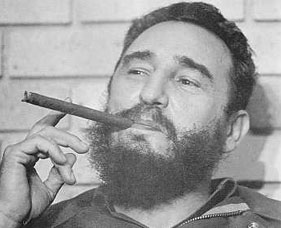
Fidel Castro My observation of leadership in the Muslim world is that no matter what a leader has to be pushed to leave. Seldom do we see leaders of Eastern countries say “I’ve done all I can do, it’s time for me to move on”. Imagine Pakistan if Musharraf said that. Even Fidel Castro has decided his time is up. He has resigned as leader. article | bio

Quote: “There’s no need for other media outlets to report on the address by the president of the United States; just let Bush do the talking. For a country that can read, write and think, no one can make a more eloquent criticism of the empire than Bush himself.’” – On George Bush’s State of the Union Address, January 2008. Ten Classic Castro Quotes

Pakistan elections – Interesting coverage over at Al Jazeera and what about the Army Chief

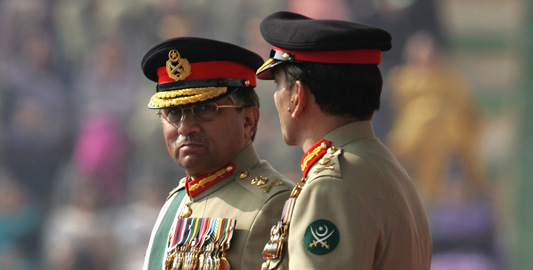
Musharraf & Kayani

Posted in Editorials, Redneckia | Leave a comment

Muslim and Hindu: The Sensitive Areas (February 1958) – Atlantic Monthly

Kashmir

A decade has passed since the struggle of the Indian subcontinent to free itself from British imperial rule was crowned with success. For half a century or more before emancipation, nationalists of both the great religious communities had stridently asserted that communal antipathy was illusory – a mere creation of the British Raj, allegedly following the old Roman maxim of “divide and rule.” History since independence has shown with tragic clarity that antagonism between Muslim and Hindu is much more deeply rooted than in an oppressor’s stratagem. For the ink was not yet dry on the 1947 charter of sovereignty before what had been one great single nation under British rule became split into two sullenly hostile countries, Pakistan and India.

However regrettable, this state of affairs is not really surprising. Long before the British conquered India, the Hindus had resented their Muslim Mogul masters and those who by conversion followed the same faith. The Muslim for his part had all the scorn of the warrior for those less martial than himself, not untainted with an intellectual inferiority complex vis-à-vis those commercially and politically more astute than he. With this historic background it would have required more courage, tolerance, and statecraft than any leaders in Delhi or Karachi have yet shown to heal the hereditary strains between the two great communal factions.

Instead, as each year passes, friction grows. What began with a squabble about the division of assets after partition, and went on to bitter conflict over the future of disputed princely states such as Hyderabad, Junagadh, and Kashmir, has now spread to the struggle for limited, precious irrigation water which literally spells life or death for millions upon millions of poverty-stricken, undernourished, illiterate peasants.

Externally, too, a wide gulf has yawned. Pakistan, West and East, with barely a fifth of the population of her larger neighbor, cut asunder by over 1500 miles of Indian territory, fearful of ultimate Indian subjection and absorption, has in her search for allies gone much further than she otherwise might have in openly siding with the West in the global struggle against Communism. For although Pakistan’s opposition to Communism is genuine, there is no doubt that to the average Pakistani, India, not Soviet Russia or Red China, is the number one foe.

India, superior in manpower and resources, is fundamentally resentful of, in her view, the quite unnecessarily continued existence of the only nation that stands between her and the complete hegemony of the Indian subcontinent. Nehru is not alone in the ambition to see his country leading a great Asian uncommitted third force between warring Capitalist West and Communist East. Inclined toward Communism to meet the social and political demands of his teeming peoples, he does not openly break with the West in shrewd calculation that only thence can flow the capital and technical know-how to ensure his country’s economic survival and its development. Pakistan, firmly linked with one side, the West, is a hindrance to this tightrope policy.

In Kashmir, hostility has reached near flash point. Today an uneasy peace is maintained between the two zones of rival occupation only through the vigilant presence of UN officers and troops ceaselessly patrolling the demarcation line.

In the Indian-occupied sector of this unhappy state, with a handful of local stooges backed by Hindu and Sikh troops keeping in subjection 3 million resentful Muslims, conditions remind one of life in one of the Soviet satellites. As you walk down a street in Srinagar, the state’s capital, a man sidles up to you, mutters something in barely intelligible English, and warily presses a crumpled piece of paper into your hand. Nearby stand a couple of police. On the other side of the road .a detachment of grim-faced soldiers marches along. Behind you casually strolls your own particular shadow, the man who seems always to be hanging around the lobby of your hotel when you come down from your room, looking at nothing in particular; who always decides to take a walk when you do; and who always, too, stops aimlessly when you pause on your way.

When you get back to the privacy of your own room, you look at the scribbled message which you were handed: it is either a plea for outside intervention of the forces of freedom, or a letter to a friend or relative across the border, which the writer knows would never pass the censor if posted the ordinary way. A few minutes later your telephone rings, and a voice hysterical with fear asks whether a few opponents of the regime may come and talk privately with you. Hours later, a handful of tired, nervous men crowd into your room, insisting on searching every corner for hidden microphones before they talk. They are late because the police, knowing of their plans through wire tapping, have forbidden all taxis, the only transport available, to bring them, and so they have had to walk several dusty miles. Their story is sickeningly familiar in this day and age – a tale of persecution, repression, midnight arrests, and aggrandizement of the local “Big Brother.”

Officials do not deny that thousands of Indian soldiers and gendarmery are stationed in the state to help preserve an outward calm. (Reliable estimates put the figure at 125,000-one soldier to every dozen adult inhabitants of occupied Kashmir.) A rigid censorship exists. All public assemblies and gatherings, except regime-sponsored ones, are banned. The prisons are full to overflowing, and those behind bars include twenty-five or more political leaders – among them a former prime minister – who are being detained under a local law which permits imprisonment without charge or trial, on executive order alone, for periods of up to five years.

As to the recent elections there, Hitler and Stalin could have approved of their conception and execution. In the Vale of Kashmir itself, only five out of a total of forty-five constituencies were contested, all the others returning unopposed ruling party candidates. Moreover, even where the five contests did occur, permitted opposition candidature was limited to purely domestic controversy. This was inevitable, since it is “unlawful,” under the constitution imposed from Delhi last year, for anyone to declare for any policy other than the status quo of absorption into India.

To appreciate how this sorry state of affairs has come about, one has to recall the year 1947, when Britain handed over the reins of government to the two newly born states of Pakistan and India, with consequent partitioning of the subcontinent. So far as the then autonomous princely states were concerned, they were faced with three choices: accession to India or to Pakistan or complete independence. The third alternative proved in every case illusory.

The last British Viceroy, Earl Mountbatten, then holding the ring between the rival claimants in this territorial lottery, affecting more than five hundred separate states and 93 million people, declared, with the prior approval of the governments of both India and Pakistan, the considerations that should decide the states’ choice. The overriding factor was to be the will of the people concerned, which was to be implemented through the medium of a formal accession instrument lodged by the ruler either in Delhi or Karachi. In cases where the ruler’s personal wishes conflicted or were likely to conflict on communal religious or other grounds with those of his subjects, the latters’ will, to be given a free, prompt opportunity to express itself, should prevail.

Meanwhile, in any instance where the issue seemed to be in doubt, interim agreements could be entered into with one or both of the national claimants, in order to preserve certain existing essential links, such as the postal system and trade. To the general principle of self-determination, the Viceroy added a practical warning that in reaching a decision the inescapable consequences of frontier contiguity could not he ignored. What happened next is history.

In Junagadh, a small princedom with a Muslim ruler but a population which was predominantly Hindu, surrounded by Indian territory except for an outlet to the sea, the decision of the Nawab to join Pakistan was immediately thwarted by force of Indian arms – in the name of democracy.

In Hyderabad, one of the few princely states large enough and strong enough economically to support itself, the Muslim ruler of a largely Hindu population opted, as was his constitutional right, for total independence, and initiated a referendum to test the will of his subjects. Refusing to await the outcome of this, the Indian government, in what it soothingly described as a “police action,” entered the territory with tanks and infantry and forcibly integrated the state with India.

In Kashmir, partition rivalry between India and Pakistan produced an even more confused and dangerous situation. Thankful for an opportunity at long last to rid themselves of the autocratic minority Hindu regime which had ruled them so long, the local population supported by sympathetic tribesmen from outside the state rose in revolt and drove the Maharajah from the land. The fleeing Prince sought Indian help and, in exchange for the promise of Indian military intervention on his side, signed an accession instrument in favor of India. In accepting this purported accession, the Indian government also accepted the condition that it should subsequently be ratified by a free and fair expression of the people’s will. Meanwhile, Pakistan refused to accept at all the validity of the ousted ruler’s accession, and fearful of her own national security as Indian troops continued their advance northward toward her own frontiers, Pakistan moved her troops into Kashmir and a local war began.

It was at this point that Nehru, who now so bitterly complains of United Nations interference in “an internal domestic matter,” took the matter to the Security Council for settlement. After much bitter wrangling, a temporary truce and cease fire was arranged and accepted by both sides. From that day to this, the story of Kashmir has been one of endlessly recurring delay, procrastination, and obstruction, by which India has sought to evade the obligations to hold a plebiscite that she solemnly affirmed between 1947 and 1949. Argument and counterargument have ranged over who was the original aggressor, the number of troops of each side that would have to be withdrawn before a fair test of public opinion could be held, and the terms and timing of the plebiscite.

In patient efforts to end the deadlock, mediator after mediator, investigatory commission after investigatory commission, conciliator after conciliator, have been appointed. Despite even the division in the Security Council between Communist and non-Communist powers, one unanimous recommendation after another—eleven in all, including neutral arbitration of the points of detail still in dispute have been put forward. Every time Pakistan has said “Yes,” India has said “No.” Always, as one argument is met or falls to the ground, Nehru or his delegate at the United Nations, Krishna Menon, supported lately only by Soviet Russia, produces another, with seemingly inexhaustible fertility and often total irrelevance. Thus quite recently, when it at last seemed that the clouds were lifting, India suddenly announced that because Pakistan had joined in such anti-Communist security treaties with the West as SEATO and the Baghdad Pact, and had accepted military aid from the United States, Kashmir’s self-determination was permanently debarred. Now, the issue is once. more firmly back in the “For Urgent Action” file of the UN.

While this controversy continues to rage, another perhaps even more menacing quarrel divides India and Pakistan; that of the division of their natural water resources. The Indus basin, watered by the Indus and its five main tributaries, Jhelum, Chenab, Ravi, Beas, and Sutlej, all having their source in Indian territory, forms one of the largest irrigation systems in the world, created during the bygone days of British rule. On partition, the duly authorized representatives of both the two new countries gave assurances that each would abide by well-established principles of international law, requiring all riparian users of common rivers to respect one another’s established uses and to divide surplus waters, in accordance with the rule of equitable apportionment. Patient efforts by the’ International Bank in Washington have so far failed to find a solution that would produce for India the extra irrigatory supplies she needs for her increasing millions of impoverished peasants, without reducing the flow no less vitally needed by Pakistan to feed her own fast-growing population. For India the problem is grave, but for Pakistan it is one of national survival.

If on this, as on all other outstanding issues between India and Pakistan, any permanent cure of the present estrangement is to be effected, sacrifices and gestures will have to be made by both sides. Yet it is India who will have to make the first constructive efforts to break the log jam. For it is her recalcitrance that blocks the UN attempt to provide a settlement of the Kashmir quarrel; it is her obstinacy, based doubtless on uneasy foreknowledge of the probable verdict, that prevents the Canal Waters dispute going to thee International Court of justice at The Hague for adjudication. Is it too much to hope that Nehru, who has already lost so much of the moral stature he had gained for himself and his country since the war, will yet, before it is too tragically late, have second thoughts?

Posted in History, Pakistan, South Asia | Leave a comment

Bhutto’s party seeks coalition – Al Jazeera – 20 Feb.08

Nawaz Sharif

The Pakistan People’s party (PPP) has said it will try to form a coalition goverment without the pro-Musharraf Pakistan Muslim League-Q.

“We will form a government of national consensus which will take along every democratic force,” Asif Ali Zardari, the party’s co-chairman told a news conference in Islamabad on Tuesday.

The PPP won the most seats in the national assembly in Monday’s elections, while the PML-Q, which supports Pervez Musharraf, the president, trailed a distant third.

“For now, the decision of the party is that we are not interested in any of those people who are part and parcel of the last government,” Zardari, the widower of assassinated former prime minister Benazir Bhutto, said.

He said the PPP would try to persuade the party of Nawaz Sharif, the prime minister whom Musharraf overthrew in 1999, to join the PPP in power.

Ruling party defeated

The PPP move came after partial elections results gave opposition parties enough seats to form a new government.

Tariq Azeem, spokesman for the PML-Q said that the party would “accept the verdict of the nation”.

“We officially concede defeat,” he said.

Several leading PML-Q candidates, including its chief, lost their seats and unofficial results on state television showed the party trailing behind the two main opposition parties.

“This is the basic spirit of democracy,” Azeem said. “We believe the elections were free and fair and everybody must accept the decision for the betterment of Pakistan.”

Chaudhry Shujaat Hussain, head of the PML-Q, said that his party accepted the result and “will sit on opposition benches”.

With counting in from 257 constituencies, PML-Q and its allies had taken a total of 57 seats.

The Pakistan People’s party (PPP), the party of Benazir Bhutto, the opposition leader assassinated in December last year, had 86 seats, according to preliminary results.

The PML-N gained 65 seats, with smaller parties and independents taking the rest.

Full results were not expected until late on Tuesday or early Wednesday.

Musharraf urged to quit

Meanwhile, Nawaz Sharif was among those who called on Musharraf to step down.

Sharif told reporters in the eastern city of Lahore that “Musharraf has said he would quit when people tell him. People have now given their verdict”.

However, Major General Rashid Qureshi, the presidential spokesman, rejected the demand.

He said: “They are way off in their demands. This is not the election for president. President Musharraf is already elected for five years.”

Aitzaz Ahsan, a former minister and lawyer, currently detained, also asked Musharraf to quit.

Ahsan has been under detention since Musharraf imposed a state of emergency last November, sacking Iftikhar Muhammad Chaudhry, the chief justice and other judges to clear legal obstacles to his second presidential term.

Ahsan led Chaudhry’s legal fight against his suspension by Musharraf in March 2007.

“He [Musharraf] is the most hated man in the country and he must resign, there is no other way.”

The lawyer also called on Musharraf to reinstate sacked members of the country’s judiciary.

“If they are not reinstated by the 9th of March then we will march on Islamabad, the lawyers and the judges,” he said.

Musharraf has said he would work with the new government regardless of which party wins.

“I will give them full co-operation as president, whatever is my role,” he said after voting in Rawalpindi.

But with the support of smaller groups and independent candidates, the opposition could now gain the two-thirds majority in parliament needed to impeach the president.

‘Free and fair’

Opposition parties had feared the polls would be rigged, but analysts from Washington-based Strategic Forecasting said the elections “seem to have been decently free and fair”.

Sarwar Bari, of the non-profit Free and Fair Elections Network, said his group’s 20,000 election observers reported a voter turnout of about 35 per cent, the same as in the 1997 election and the lowest in Pakistan’s history.

Ayaz Baig, the election commissioner in Punjab, estimated the turnout there to be between 30 per cent and 40 per cent, slightly lower than in the 2002 election.

In Baluchistan and Sindh provinces, turnout was estimated at about 35 per cent, officials said.

Although fear and possible apathy kept millions of voters at home on Monday, Talat Hussein from Aaj TV said turnout was similar to previous years.

“Going by previous trends in Pakistan it is not that disappointing. At the end of the day, the voting did pick up and 42 per cent is not exactly a big disappointment,” Hussein told Al Jazeera.

The PPP said 15 of its members had been killed and hundreds more injured in scattered violence “deliberately engineered to deter voters”.

In northwest Pakistan on Tuesday, witnesses said more than 2,000 tribesmen blocked the main highway from Peshawar to the Afghan border, protesting that their favoured candidate had been defeated by electoral fraud.

At least 24 people were killed in election-related violence, mostly in Punjab province.

Posted in Pakistan | Leave a comment

Achari Chicken

Achari Chicken

Ingredients

1 kilogram of Chicken (cut into pieces)
3 large Tomatoes (finely sliced)
4 medium Onions (peeled & finely sliced)
6 Green Chillies (Hari Mirch) (more or less may be used depending on taste preferance.)
1 ½ tsp. Fennel Seeds (Sounf)
1 ½ tsp. Mustard Seeds (Rai)
1 ½ tsp. Cumin Seeds (Sufaid Zeera)
1 ½ tsp. Nigella Seeds (Kalonji)
Red Chilli Powder (Pisi Lal Mirch) (to taste)
Salt (to taste)
¼ tsp. Turmeric Powder (Pisi Haldi)
1 tbsp. Ginger Paste (Pisi Adrak)
1 tbsp. Garlic Paste (Pisa Lehsan)
250 grams of Plain Yogurt
Lemon Juice (of 1 large lemon)
2 tbsp. of Cooking Oil

Directions

Heat oil in a heavy based pan on medium heat. Add onions and fry (stirring occasionally) until golden brown. Add tomatoes and saute until they are well soft.

Add in the chicken pieces, plain yogurt , ginger paste, garlic paste, salt, red chilli powder and turmeric powder. Mix and cover pot and let it cook on low heat until the chicken is half done.

Seperately put a frying pan on stove on medium heat and roast the mustard seeds, cumin seeds, fennel seeds and nigella seeds in a dry pan. (Do not use oil.) Roast these seeds until the cumin turns brown.

Take 2 teaspoons of this roasted mixture and set it aside. Grind the rest of it in a grinder to a fine powder. Then add the turmeric powder to this grinded powder and make it into a thick paste by adding the lemon juice. Now stuff this paste into the green chillies and set them aside.

Add the remaining paste to the chicken and sprinkle the roasted mixture over the chicken and further cook the chicken until it is well done. Then add the stuffed chillies to the chicken and cook on very low heat for another 5 minutes.

Serve with Naan or roti.

Posted in Food | Leave a comment

‘Islam larger than Arabism’

Fahmy Howeidy 

Fahmy Howeidy, a prominent journalist and Islamist thinker, says that Arab unity is important because it is a step towards a greater Islamic unity.

While acknowledging the importance of nationalism, Howeidy argues that the “cloak” of Islam is larger than that of Arabism.

Trained as a lawyer, and having authored several books on Islam in Afghanistan, Iran, Bosnia, China and Senegal, Howeidy has been a leading proponent of the concept that Islam should be the cornerstone of social politics.

He is a member of the International Union for Muslim Scholars.

Al Jazeera: The idea of Arab nationalism was partially introduced by a group of Syrian and Lebanese Christians. Do you think that it was meant to be an alternative to Islamic unity?

Howeidy: The idea of Arab nationalism was introduced at a time when Arabs were fed up with the Turkish presence. I believe that it was not directed against the region’s Islamic identity; rather, it came as a response to the adoption of the idea of Turkic nationalism by the Ottomans, which came against the backdrop of a growing discontent with the performance of Ottoman governors, especially in the Levant region.

Thus, the Arab reaction took two forms: at the political level, they revolted against the Ottoman rule, and at the cultural level, they developed the idea of Arab nationalism.

Perhaps some of those who first introduced the idea had anti-Islamic feelings; however, most of them dealt with it as a national issue.

How has Islamism affected the quest for Arab nationalism and unity?

The effect of Islamic movements differs from one Arab country to another, depending on the democratic status. In some countries such as Morocco, Yemen and Lebanon, Islamic movements have more freedom. And the stronger [the] democracy is rooted, the more moderate Islamic movements are.

Moderate Islamic movements attempt to establish good relations and to start a dialogue with nationalists. An example of such a dialogue is the National Islamic Conference in Beirut [in December 2004]. Focusing more on the Arab dimension, moderate Islamic movements believe that Arab unity is the base that should be fixed first.

However, given the fact that moderate Islamists are not part of the political process, their influence is limited.

On the other hand, extremist movements, which totally oppose nationalism, clash not only with nationalists, but also with moderate Islamists.

We are not against the ideals of Arab nationalism; however, we believe that it is only a phase, not the ultimate goal.

It is also important to note that the calls for Arab unity caused a surge in the nationalistic feelings of other ethnic groups, such as the Kurds and the Berbers.

At the same time, there was an intentional marginalisation of Islam – the single common feature among the different ethnic groups. In other words, weakening Islam unleashed nationalist strife.

According to Gamal Hemdan (a prominent Egyptian geographer), the “cloak” of Islam is larger than that of Arabism; it is easier to convince people to rally behind Islam than to convince them to do so behind Arabism. The expanse of Islam in the Arab world is bigger than that of Arabism.

It is possible to create a society with an Islamic cultural orientation that encompasses various religious groups, which has been the case throughout Islamic history. The Islamic civilisation was not established by the hands of Muslims alone – Jews and Christians made significant contributions as well.

I remember [the late Egyptian finance minister] Makram Ebeid’s famous statement in 1940: “Religion-wise, I am a Christian, and nation-wise, I am a Muslim.” Why do we not adopt the paradigm of ‘majority rules, minority rights’ like the Americans?

Do you think that Islamism is on the rise because of the disillusionment with Arab nationalism?

I do not think that Arab nationalism has failed because the failure of Egypt or a single experiment does not represent the failure of the whole project. Arab nationalism and unity were put to the test in Egypt, and – to a lesser degree – in Syria and Iraq.

I believe that such experiments failed as a result of tyranny, not as a result of a problem inherent in Arab nationalism. And the same thing applies to Islamism. Ideals are the criteria against which we judge the reality and not the opposite.

However, I believe that Arab nationalism lost its glamour after the death of [the late Egyptian president Gamal] Abdel Nasser and the defeat [in the Arab-Israeli war] of 1967. Nasser’s project died with him because it was not established upon democratic ideals. If such a project had been carried by strong parties, institutions and civil society, it would have lasted. But, today, the Nasserites are a small party.

It is totally unrealistic to discuss Arab unity today, given that we are incapable of uniting political forces within individual states. Yet, I still believe that Arab unity is an essential step towards Islamic unity.

Islamic movements have different ideas and world visions. Do you not think that such differences can affect or have affected the unity of Arabs?

Apart from extremists, I do not believe that there are substantial, permanent differences among moderate Islamic movements. It is the same Islam everywhere, but it accommodates the peculiarities of each society. The Justice and Development Party in Turkey, for instance, has taken its name from the Justice and Development Party in Morocco.

Differences do not constitute a problem. There are different factions within the same religion. In Islam, for instance, there are different schools of jurisprudence. What is really important is establishing a truly democratic society.

What about the status of minorities under such an Islamic society?

First, the size of religious minorities in the Arab world is smaller than that of ethnic minorities. The fear of religious persecution and fanaticism is the product of the last 20 years only. During the 1942 elections, for instance, one of [Muslim Brotherhood founder] Hassan al-Banna’s representatives was a Copt.

The current fear, which is growing against the backdrop of the rise of Islamism, is the result of the activities of extremists on both sides, external intervention, and fanaticism.

I also believe that some governments, like the Egyptian one, for instance, spread fear among religious minorities on purpose in order to discredit the Islamist option. They tend to convince religious minorities that if Islamists ascend to power, they will be persecuted against and they will be forced to pay the jizya [a tax which, according to Islamic law, is imposed on non-Muslims living under Muslim rule] and so on.

Second, minorities have never been a problem. They did not flourish except under Islamic rule. When the Jews, for instance, faced persecution at the hands of the Spaniards after the fall of Andalusia, they fled to the Ottoman empire.

Do you think that there is a contradiction between Arab and Islamic unity?

Ideas should not clash. It is not necessary to categorise everything into wrong and right. There can be two rights.

There are different levels of unity: national, regional, Arab, and Islamic, and we need all of them. Both the Arab and the Islamic strategic depths are important. The nation should have two bases of support: Arab and Islamic.

And by unity here, I do not mean a single ruling system; rather, I mean political, economic, and military coordination.

Today, we are facing challenges that are beyond ideological affiliations, such as the occupation of Palestine, backwardness, and so on. We should all cooperate to achieve our big goals regardless of our ideologies. Today’s challenges are much bigger than ideological differences. So, what is the point of breaking the unity of the national front?

I have no problem whatsoever with the secularism that is reconciled with religion. In Turkey, for instance, now secularism is being reconciled with religion.

I believe that the relationship between Islamism and all the other intellectual and political trends depends on the future of democracy. The success of such a relationship can only be achieved in a democratic environment.

Which is more feasible: Arab or Islamic unity?

I hope for Islamic unity, but, there is a big difference between dreams and political realities. I do not think that either of them is feasible today.

What is really important is creating a truly democratic society in which people can coexist despite their differences.

Source

Religion and reason |

Posted in Empire, Religion of Abraham | Leave a comment

Why weren’t Aboriginal people included as Australian citizens?

Aboriginals in Chains

Here is an exchange in parliament that shows what many people thought at the time:

Senator Matheson: We all admit that the black people have to live. What we say is that the black people should live in their own country.

Senator Walker: This was a blackfellows country before it was a white man’s country.

Senator Matheson: The honourable gentleman said that to me privately yesterday, and he seemed to think that that settled the question. He fails to recognise that we have taken this country from the blacks, and made it a white man’s country, so that there is no earthly use in the honourable gentleman saying that 100 years ago this was a black man’s country.

Senator Walker: There are still 100,000 aborigines in Australia.

Senator Matheson: We are aware of that fact, and it is very regrettable, and the only consolation we have is that they are gradually dying out.

Commonwealth Parliamentary Debates, May 22, 1901, vol. 1, p152

Another POV on “SORRY” – worth a look

Posted in History, Redneckia | 5 Comments

Ruling against Islamic law on conversion – SMH – 11 Feb.2008

CAIRO: In a landmark case, an Egyptian court has ruled that the state must recognise the right of Christians who convert to Islam to change their minds and revert to Christianity.

Until now, Egyptian courts have upheld a traditional reading of Islamic law in such cases, prohibiting the conversion from Islam to any other faith, regardless of the convert’s original religion.

While Egyptian law is largely secular and modelled on the French legal system, personal-status issues such as conversion, marriage and divorce are governed by the religious laws of the relevant community. Egypt is mainly Muslim, but has a substantial number of Coptic Christians.

The ruling by the Supreme Administrative Court on Saturday said 12 people who had converted to Islam from Christianity and then back again could have their reversion to their original faith stated on their government identity papers.

Authorities had allowed the 12 to change their religious status on their identity documents when they converted to Islam, but had so far refused to allow them to change it back.

“This opens the door of hope to hundreds of Copts who converted … and were then unable to return,” said Mamdouh Nakhla, a human rights lawyer.

Mr Nakhla said there were about 450 similar cases in litigation, and estimates of the number of people who wished to revert to Christianity from Islam ranged up to several thousand.

The court ruling, which cannot be appealed, overturned a lower court decision in April, which said the state had no obligation to recognise a convert to Islam’s decision to revert back to his original faith because it violated Islam’s ban on apostasy.

The higher court’s decision now obliges Egypt’s Ministry of Interior to issue the plaintiffs with birth certificates and identity papers identifying them as Christians.

But the paperwork will note their previous conversion to Islam – a caveat one human rights activist said was an invitation to discrimination.

“This may solve some procedural issues, but … will open the door to discrimination against those citizens by extremist officers or civil servants when they see in the entry that they left Islam,” said Gamal Eid, the head of the Arabic Network for Human Rights.

The Koran does not explicitly prescribe a penalty for apostasy, but considers it one of the gravest sins. However, traditions of the prophet Muhammad and some of his companions call for the death penalty in some cases of apostasy.

Source

Posted in Disclosure | Leave a comment

Quote of the month – Malcolm X

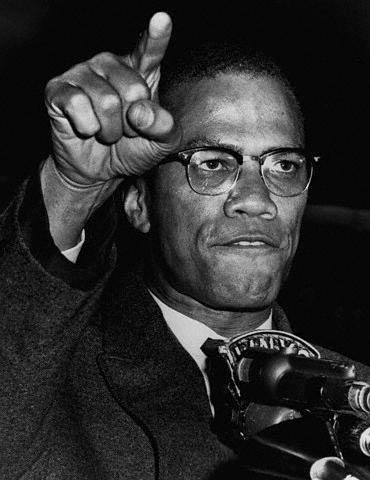
el-Hajj Malik el-Shabazz aka Malcolm X

“The collective white man’s history has left the non-white peoples no alternative, either, but to draw closer to each other. Characteristically, as always, the devilish white man lacks the moral strength and courage to cast off his arrogance. He wants, today, to ‘buy’ friends among the nonwhites.

He tries, characteristically, to cover up his past record. He does not possess the humility to admit his guilt, to try and atone for his crimes. The white man has perverted the simple message of love that the Prophet Jesus lived and taught when He walked upon this earth.”Malcolm X

Posted in Quotes | Leave a comment