Saudi Prince Alwaleed buys his own A380 – SMH – 13 Nov.07

Saudi Prince Alwaleed buys his own A380

Saudi billionaire Prince Alwaleed bin Talal has become the first person to buy the ultimate status symbol – his own A380 superjumbo.

Planemaker Airbus named the Saudi royal, whose interests span hotels and banking to the operator of Disneyland Paris, as the mystery buyer of a VIP version dubbed the Flying Palace.

The buyer’s identity had been secret for months but was unveiled to coincide with the Dubai air show today.

The price of the deal was not disclosed. Russian billionaire Roman Abramovich recently denied buying the plane, which costs over $US300 million to ordinary airlines.

Prince Alwaleed confirmed the order despite seeing $US2.5 billion wiped off his personal fortune in the past month due to a slide in the shares of US banking group Citigroup.

Prince Alwaleed owns around 95 per cent of Kingdom, which in turn owns 3.6 percent of the U.S. banking giant, reeling from subprime mortgage losses and the global credit crisis.

He is the world’s 13th richest person, according to Forbes magazine, and Citigroup’s largest individual shareholder.

He already owns a Boeing 747-400, the newest type of the original jumbo jet currently in service.

The Airbus superjumbo has been hit by production delays but entered service with Singapore Airlines last month.

It can seat 525 passengers in three classes or more than 800 in an all-economy layout, by using less space between seats.

Leg room will not be a problem on the Flying Palace, which has 551 square metres of floor space – enough to hold the ballroom of London’s Savoy Hotel, which Alwaleed owns.

The A380 can be fitted with cocktail bars, casinos, showers and sleeping quarters for first class passengers on ordinary airlines. But for the super-rich, the sky is the limit.

“It would depend very much on what sort of cabin interior the purchaser wanted,” an Airbus official said this year. “On our VIP jets we offer the option to include whatever they want.”

Aviation experts say it is only a matter of time before big spenders like Chelsea soccer club owner Abramovich are courted by Airbus and rival Boeing.

Sales of private jets are booming amid security concerns.

Boeing has three VIP clients who have bought five of its latest giant, the 747-8 Intercontinental which is due to enter service with airlines in 2010, a Boeing spokesman said.

A nephew of King Abdullah, Prince Alwaleed began investing after graduating from California’s Menlo College in 1979.

A year later, he received a $US300,000 loan from Saudi American Bank, now known as Samba, which was run by Citicorp, according to his biography.

The prince invested $US590 million in Citicorp in 1991 at a time when the bank needed cash as it struggled with Latin American loan losses and a collapse in US real-estate prices. That stake is now worth about $US6 billion.

Kingdom had $US24 billion in assets at the end of 2006.

Reuters

Source

Posted in Disclosure | Leave a comment

Our Man in Islamabad – ICH

By Stephen Lendman

General Pervez Musharraf

11/09/07 “ICH” — – – The Islamic Republic of Pakistan was established in August,1947 when its majority Muslim population separated from British-controlled India and became a sovereign state. Since then, the country has been plagued by wars, political instability, and a series of military coups as it continues stumbling unsuccessfully toward democracy.

Nominally, Pakistan is a federal democratic republic (declared in 1956) under a semi-presidential system and bicameral legislature consisting of a 100 member Senate and larger lower house National Assembly. The President is considered head of state and armed forces commander and chief (in a civilian capacity) and is elected by the Electoral College of Pakistan comprised of both houses of Parliament and the Provincial Assemblies. The Prime Minister is Pakistan’s head of government, is elected by the National Assembly, and is usually the largest party’s leader. Continue reading

Posted in Pakistan | Leave a comment

Terror case thrown out – SMH – 12 Nov.07

Izhar Ul-Haq

A high profile terror case was abandoned before it got to trial today after a judge found that two ASIO officers had kidnapped and falsely imprisoned a young medical student, Izhar ul-Haque.

Mr ul-Haque’s lawyer, Adam Houda, later accused authorities of launching a politically motivated and “moronic prosecution” against his client.

In a scathing judgment, NSW Supreme Court Justice Michael Adams said two ASIO officer had broken the law in a deliberate attempt to coerce answers from Mr ul-Haque.

“I am satisfied that B15 and B16 [the ASIO officers] committed the criminal offences of false imprisonment and kidnapping at common law and also an offence under section 86 of the Crimes Act,” the judge said.

He said this misconduct meant subsequent police records of interview with Mr ul-Haque were inadmissible as evidence.

The judge’s findings forced the Crown to withdraw its case against Mr ul-Haque, just before a trial jury was to be empanelled.

Mr ul-Haque had faced charges of training with the Pakistan-based terrorist group, Lashkar-e-Toiba since April 2004.

He was accused of receiving weapons and combat training from the organisation during a visit to Pakistan in January and February 2003.

“This is reminiscent of Kafka,” Justice Adams said in a lengthy judgment in which he derided the misconduct of both ASIO and Australian Federal Police officers.

He detailed how ASIO officers had confronted Mr ul-Haque, forced him into a car and then taken him to a park where he was threatened with serious consequences if he did not co-operate fully.

Justice Adams said Mr ul-Haque rightly believed had no choice but to comply with all their demands.

The student was taken to his home where as many as 30 plain-clothes intelligence officers and police conducted a search while his family watched.

Mr ul-Haque was then interviewed again amid continuing threats against him, even though ASIO only had a search warrant.

It was a “gross breach of the powers given to the officers given under the warrant” Justice Adams said, adding later that at least one ASIO officer had broken the common law and legislative protections against false imprisonment.

He also heavily criticised two AFP officers who had demanded Mr ul-Haque become their informant against Faheem Lodhi, a Sydney architect who was found guilty last year of terrorism offences. That verdict is now subject to appeal.

The police officers also threatened Mr ul-Haque with adverse consequences if he didn’t comply.

However, Mr ul-Haque refused to wear a wire and to spy for the authorities, and was charged three months later with a single terrorism offence.

Justice Adams detailed evidence of how law enforcement authorities had told Mr ul-Haque all along they accepted that his brief training with Lashkar-e-Toiba was linked to the Indian presence in the disputed state of Kashmir and had nothing to do with Australia.

Mr ul-Haque declined to to comment to the waiting media after today’s case ended.

However, Mr Houda said his client had been unfairly persecuted.

“This has been a moronic prosecution,” Mr Houda said. “From the beginning, this was no more than a political show trial designed to justify the billions of dollars spent on counter-terrorism.”

Source

Agents tried to turn student into informer – SMH – 14 Nov.2007

Police, ASIO review after court debacle – SMH – 15 Nov.2007

Ul-Haque agents to be investigated – SMH – 15 Nov.2007

Beware those searching for a crisis – SMH – 17 Nov.2007

Spies in the eyes of others – SMH – 17 Nov.2007

Bully for you, ASIO – the dumb face of intelligence – SMH – 17 Nov.2007

Posted in Conspiracy, Disclosure | 1 Comment

7 Countries Considering Abandoning the US Dollar (and what it means)

November 6th, 2007

By Jessica Hupp

It’s no secret that the dollar is on a downward spiral. Its value is dropping, and the Fed isn’t doing a whole lot to change that. As a result, a number of countries are considering a shift away from the dollar to preserve their assets. These are seven of the countries currently considering a move from the dollar, and how they’ll have an effect on its value and the US economy.

  1. Saudi Arabia: The Telegraph reports that for the first time, Saudi Arabia has refused to cut interest rates along with the US Federal Reserve. This is seen as a signal that a break from the dollar currency peg is imminent. The kingdom is taking “appropriate measures” to protect itself from letting the dollar cause problems for their own economy. They’re concerned about the threat of inflation and don’t want to deal with “recessionary conditions” in the US. Hans Redeker of BNP Paribas believes this creates a “very dangerous situation for the dollar,” as Saudi Arabia alone has management of $800 billion. Experts fear that a break from the dollar in Saudi Arabia could set off a “stampede” from the dollar in the Middle East, a region that manages $3,500 billion.
  2. South Korea: In 2005, Korea announced its intention to shift its investments to currencies of countries other than the US. Although they’re simply making plans to diversify for the future, that doesn’t mean a large dollar drop isn’t in the works. There are whispers that the Bank of Korea is planning on selling $1 billion US bonds in the near future, after a $100 million sale this past August.
  3. China: After already dropping the dollar peg in 2005, China has more trouble up its sleeve. Currently, China is threatening a “nuclear option” of huge dollar liquidation in response to possible trade sanctions intended to force a yuan revaluation. Although China “doesn’t want any undesirable phenomenon in the global financial order,” their large sum of US dollars does serve as a “bargaining chip.” As we’ve noted in the past, China has the power to take the wind out of the dollar.
  4. Venezuela: Venezuela holds little loyalty to the dollar. In fact, they’ve shown overt disapproval, choosing to establish barter deals for oil. These barter deals, established under Hugo Chavez, allow Venezuela to trade oil with 12 Latin American countries and Cuba without using the dollar, shorting the US its usual subsidy. Chavez is not shy about this decision, and has publicly encouraged others to adopt similar arrangements. In 2000, Chavez recommended to OPEC that they “take advantage of high-tech electronic barter and bi-lateral exchanges of its oil with its developing country customers,” or in other words, stop using the dollar, or even the euro, for oil transactions. In September, Chavez instructed Venezuela’s state oil company Petroleos de Venezuela SA to change its dollar investments to euros and other currencies in order to mitigate risk.
  5. Sudan: Sudan is, once again, planning to convert its dollar holdings to the euro and other currencies. Additionally, they’ve recommended to commercial banks, government departments, and private businesses to do the same. In 1997, the Central Bank of Sudan made a similar recommendation in reaction to US sactions from former President Clinton, but the implementation failed. This time around, 31 Sudanese companies have become subject to sanctions, preventing them from doing trade or financial transactions with the US. Officially, the sanctions are reported to have little effect, but there are indications that the economy is suffering due to these restrictions. A decision to move Sudan away from the dollar is intended to allow the country to work around these sanctions as well as any implemented in the future. However, a Khartoum committee recently concluded that proposals for a reduced dependence on the dollar are “not feasible.” Regardless, it is clear that Sudan’s intent is to attempt a break from the dollar in the future.
  6. Iran: Iran is perhaps the most likely candidate for an imminent abandonment of the dollar. Recently, Iran requested that its shipments to Japan be traded for yen instead of dollars. Further, Iran has plans in the works to create an open commodity exchange called the Iran Oil Bourse. This exchange would make it possible to trade oil and gas in non-dollar currencies, the euro in particular. Athough the oil bourse has missed at least three of its announced opening dates, it serves to make clear Iran’s intentions for the dollar. As of October 2007, Iran receives non-dollar currencies for 85% of its oil exports, and has plans to move the remaining 15% to currencies like the United Arab Emirates dirham.
  7. Russia: Iran is not alone in its desire to establish an alternative to trading oil and other commodities in dollars. In 2006, Russian President Vladmir Putin expressed interest in establishing a Russian stock exchange which would allow “oil, gas, and other goods to be paid for in Roubles.” Russia’s intentions are no secret–in the past, they’ve made it clear that they’re wary of holding too many dollar reserves. In 2004, Russian central bank First Deputy Chairmain Alexei Ulyukayev remarked, “Most of our reserves are in dollars, and that’s a cause for concern.” He went on to explain that, after considering the dollar’s rate against the euro, Russia is “discussing the possibility of changing the reserve structure.” Then in 2005, Russia put an end to its dollar peg, opting instead to move towards a euro alignment. They’ve discussed pricing oil in euros, a move that could provide a large shift away from the dollar and towards the euro, as Russia is the world’s second-largest oil exporter.

What does this all mean?

Countries are growing weary of losing money on the falling dollar. Many of them want to protect their financial interests, and a number of them want to end the US oversight that comes with using the dollar. Although it’s not clear how many of these countries will actually follow through on an abandonment of the dollar, it is clear that its status as a world currency is in trouble.

Obviously, an abandonment of the dollar is bad news for the currency. Simply put, as demand lessens, its value drops. Additionally, the revenue generated from the use of the dollar will be sorely missed if it’s lost. The dollar’s status as a cheaply-produced US export is a vital part of our economy. Losing this status could rock the financial lives of both Americans and the worldwide economy.

Source

How the Euro will Finish What Osama Couldn’t Achieve

Posted in Economics | Leave a comment

Chicken Tikka

chicken-tikka.jpg

Ingredients

1 Boneless Chicken Breast (cubed)
1 tsp. Ginger (Adrak) (chopped & crushed)
2 cloves of Garlic (Lehsan) (crushed)
2/3 cup Plain Yogurt
1 tsp. Red Chilli Powder (Pisi Lal Mirch) (or to taste)
¼ tsp. Turmeric Powder (Pisi Haldi)
¼ tsp. Salt
¼ tsp. Curry Powder
¼ tsp. Garam Masala Powder
¼ tsp. Coriander Seeds (Saabut Dhania)
¼ tsp. Corn Starch
3 tbsp. Lemon Juice (Nimbu Arakh)
1 tbsp. Olive Oil (Zaitoon Ka Tail)

Directions

1) Mix together all of the ingredients (accept the corn starch) into a mixture. Take ½ cup of this combined mixture and set it aside for later (see step 3). Let the chicken marinate in the rest of the mixture for 3-4 hours.

2) After the chicken is done marinating, heat up the grill and grill the chicken on skewers.

When the chicken is cooked your tikkaa is ready to eat. For added intensity go to step 3 below –

3) While they are grilling take ½ cup of the marinade that was set aside and put it in a small saute pan. Before heating it, mix in the corn starch. Heat the sauce until it thickens and then let it bubble for a while. Set that aside until the chicken is done.  Cover chiken with this mixture and serve.

Serve with chutney or rolled in Naan, Roti, Pita or Lebanese bread with Salad, Raita, Chutney.

Posted in Food | Leave a comment

“Making a Mockery of Democracy” – General Musharaff’s “State of Emergency” By GARY LEUPP

I think the New York Times has this one right. “For more than five months the United States has been trying to orchestrate a political transition in Pakistan that would manage to somehow keep Gen. Pervez Musharraf in power without making a mockery of President Bush’s promotion of democracy in the Muslim world. On Saturday, those carefully laid plans fell apart spectacularly.”

Not since Hamas’ dramatic victory in the Palestinian elections has the disconnect between Bush’s democratic rhetoric and reality of U.S. policy been so starkly exposed. In the former case, Washington responded to democracy with rejection, and support for the Fatah coup. How will it respond to Musharraf’s assault on the fading façade of incipient Pakistani democracy?

Recall that Musharraf toppled the democratically elected president of Pakistan, Nawaz Sharif, in 1999. The year before Pakistan had conducted nuclear weapons tests, and been slapped with U.S. sanctions. Relations with the military dictatorship were cool until 9-11, after which Musharraf became a key U.S. ally in the “war on terror” and recipient of massive U.S. aid.

U.S. Secretary of State Colin Powell, through his deputy Richard Armitage, told Musharraf: “Be prepared to be bombed. Be prepared to go back to the Stone Age,” if he was unwilling to cooperate in the destruction of Afghanistan’s Taliban regime. That regime was largely a creation of Pakistani military intelligence, and Pakistan and Saudi Arabia its main supporters. But Musharraf agreed to break ties, host U.S. forces, and even to suppress any (democratic) anti-U.S. demonstrations in his country.

Using Pakistani military bases as part of its campaign, the U.S. swiftly overthrew the primitive Taliban apparatus, chased al-Qaeda and some of the Talibs across the border into Pakistan, allowed the reemergence of the Northern Alliance warlord regime with a Pashtun fig-leaf figurehead, proclaimed a great victory and then without skipping a beat shifted its attention to the wholly unrelated target of Iraq.

In the border area, often described as “lawless” and never fully controlled by the central government of Pakistan, tribal leaders met the routed Afghans as well as the al-Qaeda Arabs with hospitality. In the interim, the latter have not only survived, regrouped and facilitated military opposition to the Karzai regime in Kabul, but acquired a following within Pakistan. There is now a Pakistani Taliban movement that in coalition with other anti-government Islamist movements in the country (alongside “moderate” democratic movements as well) seriously challenges Musharraf’s regime. In July, in an effort to crack down on Islamist forces, the government stormed the Red Mosque in Islamabad, killing 183 according to the BBC. Tensions between the Islamists (who are well represented in the military) and Musharraf are at a boiling point, recently obliging him to reach out to political rival former prime minister Banazir Bhutto.

The U.S. put Musharraf in a very difficult position. “You must agree,” it told him in 2001, “to help us overthrow Pakistan’s own creation, the Taliban.” After he did, he was told, “You must send your soldiers to places in your country they have never been deployed before, to crush the fleeing Afghans and al-Qaeda terrorists. Or we will do it for you.” The region where these forces have taken refuge is, as Eric Margolis recently wrote in an excellent column, “under express constitutional guarantee of total autonomy and a ban on Pakistani troops ever entering there.” Pakistani army efforts to crush them have met with dismal results, forcing Islamabad to in effect sue for peace a year ago.

In September 2006 the government signed a pact with tribal groups, including the “Islamic Emirate of Waziristan” whereby the latter would prevent cross-border movement of militants into and out of Afghanistan in exchange for the government’s cessation of air and ground attacks against militants in Waziristan. This met with some concern in Washington, and Voice of America announced that the pact had Mullah Omar’s blessing. But Bush spokesman Tony Snow at the time said that the agreement was aimed at combating terrorism and that Islamabad had assured the U.S. the accord wouldn’t undermine the hunt for Osama bin Laden. In any case, the attack on the Red Mosque led to reprisals on government forces in Waziristan and the collapse of the Waziristan Accord.

The National Intelligence Estimate (NIE), the collective product of 16 U.S. intelligence agencies concerning national security issues, was released last July just as the accord broke down. It declared that al-Qaeda has regained the same strength it had as of the 9-11 attacks due to (1) the “safe haven” it has enjoyed in parts of Pakistan and (2) its association with “al-Qaeda in Iraq,” which has allowed it to “energize the broader Sunni extremist community, raise resources, and to recruit and indoctrinate operatives . . .” That set the neocons chattering about a U.S. attack on Pakistan.

“I think the president’s going to have to take military action there over the next few weeks or months,” Bill Kristol said on Fox News. “Bush has to disrupt that sanctuary. I think, frankly, we won’t even tell Musharraf. We’ll do what we have to do in Western Pakistan and Musharraf can say, ‘Hey, they didn’t tell me.'” It got the White House talking tough. Tony Snow answering reporters’ questions refused to rule out striking at targets inside Pakistan. Asked if the U.S. would seek Pakistan’s permission before a strike, he said “We never rule out any options, including striking actionable targets. . . . Those are matters that are best not discussed publicly.” He declared that Musharraf is “going to have to be more aggressive” in going after al-Qaeda in Pakistan.

In fact, the U.S. had already conducted strikes. One in January 2006 a military airstrike targeting the village of Damadola in the Bajaur tribal area of northwestern Pakistan killed at least 18 people, including women and children. It apparently targeted al-Qaeda leader Ayman al-Zawahiri. The U.S. government denied responsibility, which suggests this was a CIA operation. During the same month a missile attack killed eight people in a village in North Waziristan, prompting protests throughout the country and two official letters of protest hand delivered from the Foreign Office to U.S. embassy officials. His American allies’ disregard for Pakistani sovereignty was becoming an acute embarrassment for Musharraf.

Only July 20 Pakistan’s Foreign Office spokeswoman Tasneem Aslam called US officials’ comments about striking targets along the Pakistan-Afghanistan border “irresponsible and dangerous,” adding, We cannot, nor should we be expect to take indiscriminate action over a large territory without any precise information about any Al Qaeda or terrorist hideout.” But the following day Bush in his weekly radio address stated he was troubled by the report that al-Qaeda was gaining strength in the Pakistani tribal region. Then Frances Fragos Townsend, Bush’s homeland security adviser, told CNN that if the U.S. has “actionable targets, anywhere in the world, including Pakistan, then we would respond to those targets. . . . There are no options off the table.” This produced an immediate angry response from the Pakistani Foreign Minister, Khurshid Mahmud Kasuri, who told CNN: “Some people are talking irresponsibly of attack in the tribal areas by the United States. People in Pakistan get very upset when, despite all the sacrifices that Pakistan has been making, you have the sort of questions that are sometimes asked by the American media. . . [But] indiscriminate attacks could only undercut efforts to win hearts and minds.”

On July 25, Acting Assistant Secretary of Defense for International Security Peter Verga told an unusual joint session of the House Armed Services Committee and Permanent Select Committee on Intelligence, “If there were information or opportunity to strike a blow” on Pakistani territory “to protect the American people” U.S. forces would act immediately. On the same day at a Senate Foreign Relations Committee hearing, State Department Undersecretary for Political Affairs R. Nicholas Burns declared, “Given the primacy of the fight against al-Qaeda and Osama bin Laden, if we have in the future certainty of knowledge, then of course the United States would always have the option of taking action on its own.”

Of course this sort of talk did not go down well in Pakistan, and had to worry the general. His goal was to survive assassination attempts and serve a third term as president. To do that, he had to get the parliament to change the constitution, and prevent the Supreme Court from declaring such a move illegal. Thus he suspended the Chief Justice in March. But the judge, Iftikhar Chaudhry, was reinstated by the Court in July, handing Musharraf a setback just as the U.S. was ratcheting up pressure on him. Thereafter, Condi Rice has been twisting his arm to accept an arrangement whereby Bhutto, back in Pakistan, can organize her Pakistan People’s Party to work with him to support the “war on terror.” That deal requires that he leave his Army post.

Last month Musharraf won the parliamentary vote for president, but the Supreme Court has yet to rule on whether he can legitimately hold the post without resigning from the army. Perhaps anticipating a negative decision, he has now declared a state of emergency and is busy locking up political opponents and shutting down the independent press. He has perhaps determined that to do otherwise he would either (1) fall to a “People’s Power” type movement coalescing around Bhutto (no democrat but with some populist appeal), or (2) fall to Islamist forces including some in the military. He might also feel that the first of these results would lead dangerously to the second, embroiling Pakistan in conflict with the U.S.

Washington forced Musharraf into his present position. He’s the leader of a nation in which the Taliban’s presence and popularity grows. This results from no fault of his own but as a result of the “regime change” exercise in Afghanistan six years ago and its failure to destroy either the Taliban or al-Qaeda. He’s the leader of a nation in which Osama bin Laden’s popularity is far greater than his own. He’s the leader of a nation appalled (like most nations) at the carnage in Iraq, resulting from an invasion based on lies. He’s the leader of a Muslim nation with a huge Shiite minority (the second largest Shiite population in the world, next to Iran) whose adherents will—with likely Sunni support—react with outrage to a U.S. attack on neighboring brotherly Iran. He’s been put in a very tight spot by the neocons’ wild moves towards the creation of an American Raj in Southwest Asia. He wants to cooperate, but he’s perhaps reached the point where he feels that to say “Yes, Ma’am” again to Condi will not just mean his own political fall but the rise of others whom the U.S. will target with deadly force.

“Be prepared to be bombed. Be prepared to go back to the Stone Age.” That’s what Musharraf told CBS’s “60 Minutes” he was told by Colin Powell’s deputy in 2001. Surely such words haunt him, and played a role in his decision to declare the state of emergency, “making,” as the New York Times puts it, “a mockery of President Bush’s promotion of democracy in the Muslim world.”

The U.S. State Department, having reportedly discouraged Musharraf from declaring martial law in the past, pronounces itself “deeply disturbed” by the “extra-constitutional actions” he has taken. Possibly this just another sniffle of hypocrisy dripping from Pinnochio’s lengthening nose. Maybe the move received prior authorization from Musharraf’s patrons in Washington. Quite possibly the Vice President’s office has a different reaction from the State Department’s (often the case) and feels a stronger, more dictatorial Musharraf will be a more useful ally when the missiles hit Iran. Surely we will soon see how sincere these U.S. expressions of support for the Pakistani constitution and “democracy” really are.

Gary Leupp is Professor of History at Tufts University, and Adjunct Professor of Comparative Religion. He is the author of Servants, Shophands and Laborers in in the Cities of Tokugawa Japan; Male Colors: The Construction of Homosexuality in Tokugawa Japan; and Interracial Intimacy in Japan: Western Men and Japanese Women, 1543-1900. He is also a contributor to CounterPunch’s merciless chronicle of the wars on Iraq, Afghanistan and Yugoslavia, Imperial Crusades.

He can be reached at: gleupp@granite.tufts.edu

Source

Posted in Pakistan | 1 Comment

Intoxicated by the Incense of Power – Pakistan Sinks Deeper Into the Night By TARIQ ALI

Pakistan Special Report Click for Al Jazeera Special Report

Q&A: Bhutto, Musharraf and developments in Pakistan – Khilafah.com

“Provisional Constitutional Order: PCO” – Full Text of Pakistan Emergency Declaration
Bhutto is not arrested, deal with Musharraf seems intact
Pakistan: Martial Law, Media Jammed

Judge: Several Lawyers Opposed to Musharraf Arrested
‘They Can Take Me Away, but They Will Not Stop the Lawyers’ Struggle’
US Officials See Few Options for Pakistan
Pakistan Militants Seize Police Stations
Pakistan: Musharraf Sees Threat to Country
‘Tough New Media Policy’ Introduced in Pakistan
As Crisis Deepens, White House Endures Diminished Power to Influence Events

Pakistani News Channels Taken Off Air
US ‘Deeply Disturbed’ by Pakistan Emergency Rule
It’s a second coup: Bhutto
Sharif Calls for Musharraf’s Resignation
Khan escapes amid Pakistan crackdown
Musharraf move is nightmare for Bush
Bush Bets the Farm on Musharraf
Thousands Face Down Pakistani Police
Musharraf’s Military Aid Flows On
Lawyers Take on Musharraf

Bush Urges Musharraf to Reverse Course but Signals No Penalty
Lawyers vs. the General
Pakistan Attempts to Crush Protests by Lawyers
Bhutto Threatens Demonstrations
Crackdown Widens as Musharraf Insists Emergency Rule Needed to Fight ‘Terrorism’
Former Chief Justice: Emergency Rule a Naked Attack on Pakistan’s Constitution
Pakistan Threatens to Seal Jang Press
Sporadic Clashes Continue in NW Pakistan
Pakistan to Keep Elections Date

Militants Move Beyond Tribal Areas in Pakistan
Aid Still Flows to Pakistan
Take Off Uniform, Bush Tells Musharraf
Britain Demands ‘Free and Fair’ Elections in Pakistan but Rules Out Aid Cuts
US Tied to Pakistan With Billions in Aid
US Military Aid to Pakistan Misses Its al-Qaeda Target

US, Pakistan to Continue Joint Operations
Overview of US Aid to Pakistan
Bhutto Rules Out Talks With Musharraf
Escaped Opposition Figure Vows to Oppose Musharraf

Pakistan AG: State of Emergency May Only Last 30 Days
Pakistani Lawyers’ Anger Grew as Hope for Changes Withered
With News Banned From TV, Pakistanis Find It on Web
Commonwealth Crisis Meeting Called Over Pakistan Ban
Australian FM Condemns ‘Dictator’ Musharraf Irrelevant
Amnesty Urges US to Ensure Weapons Sent to Pakistan Aren’t Used on Peaceful Protesters
Tourist Spot Is New Frontline for Pakistani Islamists

Pakistan emergency: No end in sight
Pakistan emergency ‘aiding Taliban’ 
Pakistan’s Bhutto detained again
Corrupt Elites and a Kleptocratic Military – The Roots of Pakistan’s Political Crisis By SADIA ABBAS
Logistical Vulnerabilities and the Afghanistan War – The Pakistan Fuel Connection By ROBERT BRYCE

Where are the Demonstrations? – Pakistani Lawyers vs. American Lawyers By RALPH NADER

Imran Khan arrested Pakistan labels Khan a terrorist – SMH – 15 Nov.07
Bhutto Calls on Musharraf to Resign
Bhutto: I Will Never Work With Musharraf
Musharraf Warns Bhutto Against Calling for His Resignation
Who Drafted Musharraf’s November 3 Proclamations?
In Interview, Musharraf Defends Rule by Decree
Musharraf’s Army Losing Ground in Insurgent Areas
Militant Killed While Planting Bomb in Pakistani City
Dozen US Rights Groups Ask Bush to Cut Off Military Aid to Pakistan
Bush Calls for End to Pakistan Emergency
Japan Threatens to Slash Pakistan Aid

Jemima Khan joins Pakistan protests in London

Jemima Khan joins Pakistan protests in London
Imran Khan on hunger strike – SMH – 20 Nov.07
Pakistan court throws out Musharraf challenges – SMH – 20 Nov.07
The U.S. Game Plan in Pakistan
US military strike on Pakistan advocated

Should Musharraf have declared state of emergency? – Your comments

For anyone marinated in the history of Pakistan yesterday’s decision by the military to impose a State of Emergency will hardly comes as a surprise. Martial Law in this country has become an antibiotic: in order to obtain the same results one has to keep doubling the doses. What has taken place is a coup within a coup.

General Pervaiz Musharraf ruled the country with a civilian façade, but his power base was limited to the Army. And it was the Army Chief of Staff who declared the emergency, suspended the 1973 Constitution, took all non-government TV channels off the air, jammed the mobile phone networks, surrounded the Supreme Court with paramilitary units, dismissed the Chief Justice, arrested the President of the Bar association and the civil rights activists of the Human Right Commission of Pakistan, thus inaugurating yet another shabby period in the country history.

Why? They feared that a Supreme Court judgement due next week might make it impossible for Musharraf to contest the elections. The decision to suspend the Constitution was taken a few weeks ago. Benazir Bhutto, was informed and left the country. She is reportedly on her way back. Till now she has offered no comment on the new martial law, despite the fact that a senior leader of her party, Aitzaz Ahsan has been arrested for denouncing the coup. Intoxicated by the incense of power she might now discover that it

Remains as elusive as ever. If she supports the latest turn it will be an act of political suicide. If she decides to dump the General(she has accused him of breaking his promises and it will be difficult for her to remain allied to a dictator) she will be betraying the confidence of the US State Department, which pushed her in this direction. At a recent off-the-record gathering at Ditchley Park(a British Foreign Office think-tank), the would-be Secretary of State, James Rubin, became short-tempered when Pakistani participants challenged his view that Bhutto was a decisive player in the ‘war on terror’ on the Western borders of the country.

The two institutions targeted by the Emergency are the judiciary and the lively network of independent TV stations, many of whose correspondents supply information that can never be gleaned from politicians. Geo TV the largest of these continued to broadcast outside the country. Hamid Mir, one of its sharpest journalists, reported yesterday afternoon that according to his sources the US Embassy had green lighted the coup because they regarded the Chief Justice as a nuisance and ‘a Taliban sympathiser’.

For a whole year now, the regime was confronted with a severe crisis of legitimacy that came to a head earlier this year when General Musharraf’s decision to suspend the Chief Justice, Iftikhar Hussein Chaudhry, provoked a six-month long mass movement that forced a government retreat. Some of Chaudhry’s judgements had challenged the government on key issues such as ‘disappeared prisoners’, harassment of women and rushed privatisations. It was feared that he might declare a uniformed President illegal.

The struggle to demand a separation of powers between the state and the judiciary, which has always been weak, was of critical importance. Pakistan’s judges have usually been acquiescent in the past. Those who resisted previous military leaders were cajoled, blackmailed, bullied and persuaded to retire. Pakistani judges spring from the same milieu as the rest of the ruling elite, which is why the decision of this chief justice to fight back was surprising, but extremely important and won him enormous respect, a commodity in short supply.

Global media coverage of Pakistan suggests a country consisting of Generals, corrupt politicians and bearded lunatics. The struggle to reinstate the Chief Justice presented a different snapshot of the country. This movement for constitutional freedoms revived hope at a time when most people are alienated from the system and cynical about their rulers, whose ill-gotten wealth and withered faces consumed by vanity inspire nil confidence.

That this is the case can be seen in the heroic decision taken by the Supreme Court in a special session yesterday declaring the new dispensation ‘illegal and unconstitutional’. The hurriedly sworn in new Chief Justice will be seen for what he is: a stooge of the men in uniform. If the constitution remains in suspension for more than three months then Musharraf himself might be pushed aside by the Army and a new strongman put in place. Or it could be that the aim of the operation was limited to a cleansing of the Supreme Court and controlling the media. That is what Musharraf indicated in his broadcast to the nation. In which case a totally rigged election becomes a certainty next January. Whatever the case Pakistan’s long journey to the end of the night continues.

Source

Posted in Pakistan | Leave a comment

Fascist America, in 10 easy steps

From Hitler to Pinochet and beyond, history shows there are certain steps that any would-be dictator must take to destroy constitutional freedoms. And, argues Naomi Wolf, George Bush and his administration seem to be taking them all

Naomi Wolf

Last autumn, there was a military coup in Thailand. The leaders of the coup took a number of steps, rather systematically, as if they had a shopping list. In a sense, they did. Within a matter of days, democracy had been closed down: the coup leaders declared martial law, sent armed soldiers into residential areas, took over radio and TV stations, issued restrictions on the press, tightened some limits on travel, and took certain activists into custody.
They were not figuring these things out as they went along. If you look at history, you can see that there is essentially a blueprint for turning an open society into a dictatorship. That blueprint has been used again and again in more and less bloody, more and less terrifying ways. But it is always effective. It is very difficult and arduous to create and sustain a democracy – but history shows that closing one down is much simpler. You simply have to be willing to take the 10 steps.

As difficult as this is to contemplate, it is clear, if you are willing to look, that each of these 10 steps has already been initiated today in the United States by the Bush administration.

Because Americans like me were born in freedom, we have a hard time even considering that it is possible for us to become as unfree – domestically – as many other nations. Because we no longer learn much about our rights or our system of government – the task of being aware of the constitution has been outsourced from citizens’ ownership to being the domain of professionals such as lawyers and professors – we scarcely recognise the checks and balances that the founders put in place, even as they are being systematically dismantled. Because we don’t learn much about European history, the setting up of a department of “homeland” security – remember who else was keen on the word “homeland” – didn’t raise the alarm bells it might have.

It is my argument that, beneath our very noses, George Bush and his administration are using time-tested tactics to close down an open society. It is time for us to be willing to think the unthinkable – as the author and political journalist Joe Conason, has put it, that it can happen here. And that we are further along than we realise.

Conason eloquently warned of the danger of American authoritarianism. I am arguing that we need also to look at the lessons of European and other kinds of fascism to understand the potential seriousness of the events we see unfolding in the US.

1. Invoke a terrifying internal and external enemy

After we were hit on September 11 2001, we were in a state of national shock. Less than six weeks later, on October 26 2001, the USA Patriot Act was passed by a Congress that had little chance to debate it; many said that they scarcely had time to read it. We were told we were now on a “war footing”; we were in a “global war” against a “global caliphate” intending to “wipe out civilisation”. There have been other times of crisis in which the US accepted limits on civil liberties, such as during the civil war, when Lincoln declared martial law, and the second world war, when thousands of Japanese-American citizens were interned. But this situation, as Bruce Fein of the American Freedom Agenda notes, is unprecedented: all our other wars had an endpoint, so the pendulum was able to swing back toward freedom; this war is defined as open-ended in time and without national boundaries in space – the globe itself is the battlefield. “This time,” Fein says, “there will be no defined end.”

Creating a terrifying threat – hydra-like, secretive, evil – is an old trick. It can, like Hitler’s invocation of a communist threat to the nation’s security, be based on actual events (one Wisconsin academic has faced calls for his dismissal because he noted, among other things, that the alleged communist arson, the Reichstag fire of February 1933, was swiftly followed in Nazi Germany by passage of the Enabling Act, which replaced constitutional law with an open-ended state of emergency). Or the terrifying threat can be based, like the National Socialist evocation of the “global conspiracy of world Jewry”, on myth.

It is not that global Islamist terrorism is not a severe danger; of course it is. I am arguing rather that the language used to convey the nature of the threat is different in a country such as Spain – which has also suffered violent terrorist attacks – than it is in America. Spanish citizens know that they face a grave security threat; what we as American citizens believe is that we are potentially threatened with the end of civilisation as we know it. Of course, this makes us more willing to accept restrictions on our freedoms.

2. Create a gulag

Once you have got everyone scared, the next step is to create a prison system outside the rule of law (as Bush put it, he wanted the American detention centre at Guantánamo Bay to be situated in legal “outer space”) – where torture takes place.

At first, the people who are sent there are seen by citizens as outsiders: troublemakers, spies, “enemies of the people” or “criminals”. Initially, citizens tend to support the secret prison system; it makes them feel safer and they do not identify with the prisoners. But soon enough, civil society leaders – opposition members, labour activists, clergy and journalists – are arrested and sent there as well.

This process took place in fascist shifts or anti-democracy crackdowns ranging from Italy and Germany in the 1920s and 1930s to the Latin American coups of the 1970s and beyond. It is standard practice for closing down an open society or crushing a pro-democracy uprising.

With its jails in Iraq and Afghanistan, and, of course, Guantánamo in Cuba, where detainees are abused, and kept indefinitely without trial and without access to the due process of the law, America certainly has its gulag now. Bush and his allies in Congress recently announced they would issue no information about the secret CIA “black site” prisons throughout the world, which are used to incarcerate people who have been seized off the street.

Gulags in history tend to metastasise, becoming ever larger and more secretive, ever more deadly and formalised. We know from first-hand accounts, photographs, videos and government documents that people, innocent and guilty, have been tortured in the US-run prisons we are aware of and those we can’t investigate adequately.

But Americans still assume this system and detainee abuses involve only scary brown people with whom they don’t generally identify. It was brave of the conservative pundit William Safire to quote the anti-Nazi pastor Martin Niemöller, who had been seized as a political prisoner: “First they came for the Jews.” Most Americans don’t understand yet that the destruction of the rule of law at Guantánamo set a dangerous precedent for them, too.

By the way, the establishment of military tribunals that deny prisoners due process tends to come early on in a fascist shift. Mussolini and Stalin set up such tribunals. On April 24 1934, the Nazis, too, set up the People’s Court, which also bypassed the judicial system: prisoners were held indefinitely, often in isolation, and tortured, without being charged with offences, and were subjected to show trials. Eventually, the Special Courts became a parallel system that put pressure on the regular courts to abandon the rule of law in favour of Nazi ideology when making decisions.

3. Develop a thug caste

When leaders who seek what I call a “fascist shift” want to close down an open society, they send paramilitary groups of scary young men out to terrorise citizens. The Blackshirts roamed the Italian countryside beating up communists; the Brownshirts staged violent rallies throughout Germany. This paramilitary force is especially important in a democracy: you need citizens to fear thug violence and so you need thugs who are free from prosecution.

The years following 9/11 have proved a bonanza for America’s security contractors, with the Bush administration outsourcing areas of work that traditionally fell to the US military. In the process, contracts worth hundreds of millions of dollars have been issued for security work by mercenaries at home and abroad. In Iraq, some of these contract operatives have been accused of involvement in torturing prisoners, harassing journalists and firing on Iraqi civilians. Under Order 17, issued to regulate contractors in Iraq by the one-time US administrator in Baghdad, Paul Bremer, these contractors are immune from prosecution

Yes, but that is in Iraq, you could argue; however, after Hurricane Katrina, the Department of Homeland Security hired and deployed hundreds of armed private security guards in New Orleans. The investigative journalist Jeremy Scahill interviewed one unnamed guard who reported having fired on unarmed civilians in the city. It was a natural disaster that underlay that episode – but the administration’s endless war on terror means ongoing scope for what are in effect privately contracted armies to take on crisis and emergency management at home in US cities.

Thugs in America? Groups of angry young Republican men, dressed in identical shirts and trousers, menaced poll workers counting the votes in Florida in 2000. If you are reading history, you can imagine that there can be a need for “public order” on the next election day. Say there are protests, or a threat, on the day of an election; history would not rule out the presence of a private security firm at a polling station “to restore public order”.

4. Set up an internal surveillance system

In Mussolini’s Italy, in Nazi Germany, in communist East Germany, in communist China – in every closed society – secret police spy on ordinary people and encourage neighbours to spy on neighbours. The Stasi needed to keep only a minority of East Germans under surveillance to convince a majority that they themselves were being watched.

In 2005 and 2006, when James Risen and Eric Lichtblau wrote in the New York Times about a secret state programme to wiretap citizens’ phones, read their emails and follow international financial transactions, it became clear to ordinary Americans that they, too, could be under state scrutiny.

In closed societies, this surveillance is cast as being about “national security”; the true function is to keep citizens docile and inhibit their activism and dissent.

5. Harass citizens’ groups

The fifth thing you do is related to step four – you infiltrate and harass citizens’ groups. It can be trivial: a church in Pasadena, whose minister preached that Jesus was in favour of peace, found itself being investigated by the Internal Revenue Service, while churches that got Republicans out to vote, which is equally illegal under US tax law, have been left alone.

Other harassment is more serious: the American Civil Liberties Union reports that thousands of ordinary American anti-war, environmental and other groups have been infiltrated by agents: a secret Pentagon database includes more than four dozen peaceful anti-war meetings, rallies or marches by American citizens in its category of 1,500 “suspicious incidents”. The equally secret Counterintelligence Field Activity (Cifa) agency of the Department of Defense has been gathering information about domestic organisations engaged in peaceful political activities: Cifa is supposed to track “potential terrorist threats” as it watches ordinary US citizen activists. A little-noticed new law has redefined activism such as animal rights protests as “terrorism”. So the definition of “terrorist” slowly expands to include the opposition.

6. Engage in arbitrary detention and release

This scares people. It is a kind of cat-and-mouse game. Nicholas D Kristof and Sheryl WuDunn, the investigative reporters who wrote China Wakes: the Struggle for the Soul of a Rising Power, describe pro-democracy activists in China, such as Wei Jingsheng, being arrested and released many times. In a closing or closed society there is a “list” of dissidents and opposition leaders: you are targeted in this way once you are on the list, and it is hard to get off the list.

In 2004, America’s Transportation Security Administration confirmed that it had a list of passengers who were targeted for security searches or worse if they tried to fly. People who have found themselves on the list? Two middle-aged women peace activists in San Francisco; liberal Senator Edward Kennedy; a member of Venezuela’s government – after Venezuela’s president had criticised Bush; and thousands of ordinary US citizens.

Professor Walter F Murphy is emeritus of Princeton University; he is one of the foremost constitutional scholars in the nation and author of the classic Constitutional Democracy. Murphy is also a decorated former marine, and he is not even especially politically liberal. But on March 1 this year, he was denied a boarding pass at Newark, “because I was on the Terrorist Watch list”.

“Have you been in any peace marches? We ban a lot of people from flying because of that,” asked the airline employee.

“I explained,” said Murphy, “that I had not so marched but had, in September 2006, given a lecture at Princeton, televised and put on the web, highly critical of George Bush for his many violations of the constitution.”

“That’ll do it,” the man said.

Anti-war marcher? Potential terrorist. Support the constitution? Potential terrorist. History shows that the categories of “enemy of the people” tend to expand ever deeper into civil life.

James Yee, a US citizen, was the Muslim chaplain at Guantánamo who was accused of mishandling classified documents. He was harassed by the US military before the charges against him were dropped. Yee has been detained and released several times. He is still of interest.

Brandon Mayfield, a US citizen and lawyer in Oregon, was mistakenly identified as a possible terrorist. His house was secretly broken into and his computer seized. Though he is innocent of the accusation against him, he is still on the list.

It is a standard practice of fascist societies that once you are on the list, you can’t get off.

7. Target key individuals

Threaten civil servants, artists and academics with job loss if they don’t toe the line. Mussolini went after the rectors of state universities who did not conform to the fascist line; so did Joseph Goebbels, who purged academics who were not pro-Nazi; so did Chile’s Augusto Pinochet; so does the Chinese communist Politburo in punishing pro-democracy students and professors.

Academe is a tinderbox of activism, so those seeking a fascist shift punish academics and students with professional loss if they do not “coordinate”, in Goebbels’ term, ideologically. Since civil servants are the sector of society most vulnerable to being fired by a given regime, they are also a group that fascists typically “coordinate” early on: the Reich Law for the Re-establishment of a Professional Civil Service was passed on April 7 1933.

Bush supporters in state legislatures in several states put pressure on regents at state universities to penalise or fire academics who have been critical of the administration. As for civil servants, the Bush administration has derailed the career of one military lawyer who spoke up for fair trials for detainees, while an administration official publicly intimidated the law firms that represent detainees pro bono by threatening to call for their major corporate clients to boycott them.

Elsewhere, a CIA contract worker who said in a closed blog that “waterboarding is torture” was stripped of the security clearance she needed in order to do her job.

Most recently, the administration purged eight US attorneys for what looks like insufficient political loyalty. When Goebbels purged the civil service in April 1933, attorneys were “coordinated” too, a step that eased the way of the increasingly brutal laws to follow.

8. Control the press

Italy in the 1920s, Germany in the 30s, East Germany in the 50s, Czechoslovakia in the 60s, the Latin American dictatorships in the 70s, China in the 80s and 90s – all dictatorships and would-be dictators target newspapers and journalists. They threaten and harass them in more open societies that they are seeking to close, and they arrest them and worse in societies that have been closed already.

The Committee to Protect Journalists says arrests of US journalists are at an all-time high: Josh Wolf (no relation), a blogger in San Francisco, has been put in jail for a year for refusing to turn over video of an anti-war demonstration; Homeland Security brought a criminal complaint against reporter Greg Palast, claiming he threatened “critical infrastructure” when he and a TV producer were filming victims of Hurricane Katrina in Louisiana. Palast had written a bestseller critical of the Bush administration.

Other reporters and writers have been punished in other ways. Joseph C Wilson accused Bush, in a New York Times op-ed, of leading the country to war on the basis of a false charge that Saddam Hussein had acquired yellowcake uranium in Niger. His wife, Valerie Plame, was outed as a CIA spy – a form of retaliation that ended her career.

Prosecution and job loss are nothing, though, compared with how the US is treating journalists seeking to cover the conflict in Iraq in an unbiased way. The Committee to Protect Journalists has documented multiple accounts of the US military in Iraq firing upon or threatening to fire upon unembedded (meaning independent) reporters and camera operators from organisations ranging from al-Jazeera to the BBC. While westerners may question the accounts by al-Jazeera, they should pay attention to the accounts of reporters such as the BBC’s Kate Adie. In some cases reporters have been wounded or killed, including ITN’s Terry Lloyd in 2003. Both CBS and the Associated Press in Iraq had staff members seized by the US military and taken to violent prisons; the news organisations were unable to see the evidence against their staffers.

Over time in closing societies, real news is supplanted by fake news and false documents. Pinochet showed Chilean citizens falsified documents to back up his claim that terrorists had been about to attack the nation. The yellowcake charge, too, was based on forged papers.

You won’t have a shutdown of news in modern America – it is not possible. But you can have, as Frank Rich and Sidney Blumenthal have pointed out, a steady stream of lies polluting the news well. What you already have is a White House directing a stream of false information that is so relentless that it is increasingly hard to sort out truth from untruth. In a fascist system, it’s not the lies that count but the muddying. When citizens can’t tell real news from fake, they give up their demands for accountability bit by bit.

9. Dissent equals treason

Cast dissent as “treason” and criticism as “espionage’. Every closing society does this, just as it elaborates laws that increasingly criminalise certain kinds of speech and expand the definition of “spy” and “traitor”. When Bill Keller, the publisher of the New York Times, ran the Lichtblau/Risen stories, Bush called the Times’ leaking of classified information “disgraceful”, while Republicans in Congress called for Keller to be charged with treason, and rightwing commentators and news outlets kept up the “treason” drumbeat. Some commentators, as Conason noted, reminded readers smugly that one penalty for violating the Espionage Act is execution.

Conason is right to note how serious a threat that attack represented. It is also important to recall that the 1938 Moscow show trial accused the editor of Izvestia, Nikolai Bukharin, of treason; Bukharin was, in fact, executed. And it is important to remind Americans that when the 1917 Espionage Act was last widely invoked, during the infamous 1919 Palmer Raids, leftist activists were arrested without warrants in sweeping roundups, kept in jail for up to five months, and “beaten, starved, suffocated, tortured and threatened with death”, according to the historian Myra MacPherson. After that, dissent was muted in America for a decade.

In Stalin’s Soviet Union, dissidents were “enemies of the people”. National Socialists called those who supported Weimar democracy “November traitors”.

And here is where the circle closes: most Americans do not realise that since September of last year – when Congress wrongly, foolishly, passed the Military Commissions Act of 2006 – the president has the power to call any US citizen an “enemy combatant”. He has the power to define what “enemy combatant” means. The president can also delegate to anyone he chooses in the executive branch the right to define “enemy combatant” any way he or she wants and then seize Americans accordingly.

Even if you or I are American citizens, even if we turn out to be completely innocent of what he has accused us of doing, he has the power to have us seized as we are changing planes at Newark tomorrow, or have us taken with a knock on the door; ship you or me to a navy brig; and keep you or me in isolation, possibly for months, while awaiting trial. (Prolonged isolation, as psychiatrists know, triggers psychosis in otherwise mentally healthy prisoners. That is why Stalin’s gulag had an isolation cell, like Guantánamo’s, in every satellite prison. Camp 6, the newest, most brutal facility at Guantánamo, is all isolation cells.)

We US citizens will get a trial eventually – for now. But legal rights activists at the Center for Constitutional Rights say that the Bush administration is trying increasingly aggressively to find ways to get around giving even US citizens fair trials. “Enemy combatant” is a status offence – it is not even something you have to have done. “We have absolutely moved over into a preventive detention model – you look like you could do something bad, you might do something bad, so we’re going to hold you,” says a spokeswoman of the CCR.

Most Americans surely do not get this yet. No wonder: it is hard to believe, even though it is true. In every closing society, at a certain point there are some high-profile arrests – usually of opposition leaders, clergy and journalists. Then everything goes quiet. After those arrests, there are still newspapers, courts, TV and radio, and the facades of a civil society. There just isn’t real dissent. There just isn’t freedom. If you look at history, just before those arrests is where we are now.

10. Suspend the rule of law

The John Warner Defense Authorization Act of 2007 gave the president new powers over the national guard. This means that in a national emergency – which the president now has enhanced powers to declare – he can send Michigan’s militia to enforce a state of emergency that he has declared in Oregon, over the objections of the state’s governor and its citizens.

Even as Americans were focused on Britney Spears’s meltdown and the question of who fathered Anna Nicole’s baby, the New York Times editorialised about this shift: “A disturbing recent phenomenon in Washington is that laws that strike to the heart of American democracy have been passed in the dead of night … Beyond actual insurrection, the president may now use military troops as a domestic police force in response to a natural disaster, a disease outbreak, terrorist attack or any ‘other condition’.”

Critics see this as a clear violation of the Posse Comitatus Act – which was meant to restrain the federal government from using the military for domestic law enforcement. The Democratic senator Patrick Leahy says the bill encourages a president to declare federal martial law. It also violates the very reason the founders set up our system of government as they did: having seen citizens bullied by a monarch’s soldiers, the founders were terrified of exactly this kind of concentration of militias’ power over American people in the hands of an oppressive executive or faction.

Of course, the United States is not vulnerable to the violent, total closing-down of the system that followed Mussolini’s march on Rome or Hitler’s roundup of political prisoners. Our democratic habits are too resilient, and our military and judiciary too independent, for any kind of scenario like that.

Rather, as other critics are noting, our experiment in democracy could be closed down by a process of erosion.

It is a mistake to think that early in a fascist shift you see the profile of barbed wire against the sky. In the early days, things look normal on the surface; peasants were celebrating harvest festivals in Calabria in 1922; people were shopping and going to the movies in Berlin in 1931. Early on, as WH Auden put it, the horror is always elsewhere – while someone is being tortured, children are skating, ships are sailing: “dogs go on with their doggy life … How everything turns away/ Quite leisurely from the disaster.”

As Americans turn away quite leisurely, keeping tuned to internet shopping and American Idol, the foundations of democracy are being fatally corroded. Something has changed profoundly that weakens us unprecedentedly: our democratic traditions, independent judiciary and free press do their work today in a context in which we are “at war” in a “long war” – a war without end, on a battlefield described as the globe, in a context that gives the president – without US citizens realising it yet – the power over US citizens of freedom or long solitary incarceration, on his say-so alone.

That means a hollowness has been expanding under the foundation of all these still- free-looking institutions – and this foundation can give way under certain kinds of pressure. To prevent such an outcome, we have to think about the “what ifs”.

What if, in a year and a half, there is another attack – say, God forbid, a dirty bomb? The executive can declare a state of emergency. History shows that any leader, of any party, will be tempted to maintain emergency powers after the crisis has passed. With the gutting of traditional checks and balances, we are no less endangered by a President Hillary than by a President Giuliani – because any executive will be tempted to enforce his or her will through edict rather than the arduous, uncertain process of democratic negotiation and compromise.

What if the publisher of a major US newspaper were charged with treason or espionage, as a rightwing effort seemed to threaten Keller with last year? What if he or she got 10 years in jail? What would the newspapers look like the next day? Judging from history, they would not cease publishing; but they would suddenly be very polite.

Right now, only a handful of patriots are trying to hold back the tide of tyranny for the rest of us – staff at the Center for Constitutional Rights, who faced death threats for representing the detainees yet persisted all the way to the Supreme Court; activists at the American Civil Liberties Union; and prominent conservatives trying to roll back the corrosive new laws, under the banner of a new group called the American Freedom Agenda. This small, disparate collection of people needs everybody’s help, including that of Europeans and others internationally who are willing to put pressure on the administration because they can see what a US unrestrained by real democracy at home can mean for the rest of the world.

We need to look at history and face the “what ifs”. For if we keep going down this road, the “end of America” could come for each of us in a different way, at a different moment; each of us might have a different moment when we feel forced to look back and think: that is how it was before – and this is the way it is now.

“The accumulation of all powers, legislative, executive, and judiciary, in the same hands … is the definition of tyranny,” wrote James Madison. We still have the choice to stop going down this road; we can stand our ground and fight for our nation, and take up the banner the founders asked us to carry.

· Naomi Wolf’s The End of America: A Letter of Warning to a Young Patriot will be published by Chelsea Green in September.

Source
Posted in Conspiracy, Disclosure | Leave a comment

Hindus confess to Gujarat Muslim massacre – IOL

” A Hindu politician confessed that Modi had given the Hindu mobs the thumbs-up.”

” He (Modi) had given us three days to do whatever we could, “

An Indian weekly magazine has released a series of videotaped confessions of Hindu activists of hacking hundreds of Muslims to death in the southern state of Gujarat and detailing blatant state collusion over the 2002 massacre, reported the Washington Post on Friday, October 26.

“It is a very disturbing story,” said Tarun Tejpal, the editor of the weekly Tehelka, which released the confessions.

“It is a story that makes me worry about the kind of India we are living in.”

The videos showed Hindu activists and politicians bragging about hacking Muslims to death and burning their bodies.

Some activists confessed that they doused petrified Muslims in kerosene and burned them alive.

Another activist said that he slit open the stomach of a pregnant Muslim woman.

“There is a complete absence of remorse in these confessions,” said Tejpal.

“The perpetrators of the violence have themselves confessed to the crime.”

The videos are the result of a six-month investigation by a by a Tehelka investigative reporter, who posed as a research scholar and spoke to the activists.

Up to 2,500 people, mostly Muslims, were hacked and burnt to death by Hindu extremists in Gujarat in 2002.

The carnage took place after 59 Hindu pilgrims were died on train in a fire some blamed on Muslims.

India’s Supreme Court has accused the Hindu nationalist government in Gujarat of being complicit in the killings.

Gujarat carnage was the worst religious violence India had seen in years.

India is home to the world’s largest Muslim population after Indonesia and Pakistan.

Hindus account for more than 80 percent of the country’s 1.1 billion population while Muslims make up about 13 percent.

State Collusion

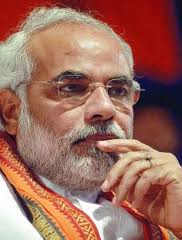
The video also showed an Indian Hindu politician confessing that Gujarat’s chief minister Narendra Modi had given the green light for the Hindu extremists to go ahead with their rampage.

“He (Modi) had given us three days to do whatever we could,” admitted Haresh Bhatt, a leader of Bajrang Dal, a hardline Hindu group affiliated to the nationalist Bharatiya Janata Party.

“He said he would not give us time after that, he said this openly,” he was quoted as saying by Reuters.

Modi, who is seeking a reelection in December state elections, earlier claimed that the massacre was a spontaneous reaction to the train fire.

Arvind Pandya, a Gujarat government counsel at a riot inquiry panel, said Modi’s “blood was boiling” when he first heard of the train fire.

“His reaction was like this, ‘if he were not a minister he would have burst bombs … detonated a few bombs in Juhapura’,” Pandya said, referring to a Muslim suburb in Gujarat’s main city Ahmedabad.

Indian Muslims said the videos were no surprise.

“None of these confessions are new to us. We have experienced all this firsthand,” said Shakeel Ahmed, a legal activist in Gujarat and a member of the Association for the Protection of Civil Rights.

He, however, said that the videotaped confessions mount pressures on the state government to act against the perpetrators.

“The perpetrators themselves are admitting to the heinous crimes,” he said.

“Whether it will bring justice depends on political will. Many of the accused are our rulers today. Who will investigate them?”

Right groups complain that little has been done to catch the culprits.

They insist that there was no trace of accountability on government officials who reportedly engineered the massacre.

Only about a dozen people have been convicted from 3,200 cases filed. Source

The complete coverage at tehelka.com

Posted in Conspiracy, Disclosure, South Asia | 3 Comments

Israelis Enjoy Torturing Palestinians – IOL


CAIRO — Israeli soldiers enjoy torturing Palestinians, both men and women, and many of them use it to discharge energy, according to a recent study by an Israeli psychologist.
“At one point or another of their service, the majority of the interviewees enjoyed violence,” Nufar Yishai-Karin, a clinical psychologist at the Hebrew University, told The Observer on Sunday, October 21.

Interviewing 18 Israeli soldiers and three officers, Yishai-Karin heard confessions of brutal assaults troops routinely commit against Palestinians.

All of the interviewees were among those serving with her at an army base in Rafah in the Gaza Strip.

After finishing service, Yishai-Karin spent seven years investigating soldiers’ abuse of Palestinians during the first intifada in the late 1980s and early 1990s.

Some of the interviews soldiers revealed how they enjoyed the intoxication of power when they abuse helpless Palestinians.

“It’s like a drug,” one solider told her.

“If I don’t go into Rafah and if there isn’t some kind of riot once in some week, I go nuts.”

God

For some of the Israeli soldiers, bashing the Palestinians made them feel important.

“You feel that you are the law. You are the law. You are the one who decides,” another soldier said.

“As though from the moment you leave the place that is called Eretz Yisrael [Israel] and go through the Erez checkpoint into the Gaza Strip, you are the law. You are God.”

With such pleasure in power, soldiers said, nothing was prohibited.

One soldier described an incident when a Palestinian passer-by was shot for no fault of his.

“We were in a weapons carrier when this guy, around 25, passed by in the street and, just like that, for no reason – he didn’t throw a stone, did nothing – bang, a bullet in the stomach, he shot him in the stomach and the guy is dying on the pavement and we keep going, apathetic,” he recalled.

“No one gave him a second look.”

A fourth soldier revealed how he had “no problem” abusing Palestinian women in particular, recalling when he brutally beat one woman for throwing a clog on him.

“I kicked her here [pointing to the crotch], I broke everything there. She can’t have children.”

Another woman’s fault was to spat at him.

“I gave her the rifle butt in the face. She doesn’t have what to spit with any more.”

Culture

Yishai-Karin found that soldiers start abusing Palestinians from as early as their first weeks of training.

Yishai-Karin found that the soldiers engage in violence against Palestinians from as early as their first weeks of basic training.

Soldiers described how their commanders encouraged brutality against helpless Palestinians and even endorsed it.

They recalled how one of their commanders began the first days of his leadership with beating up a four-year-old Palestinian child.

“So we do a first patrol with him. It’s 6am, Rafah is under curfew, there isn’t so much as a dog in the streets. Only a little boy of four playing in the sand,” one soldier remembers.

“He is building a castle in his yard.”

Once spotting his target, the Israeli commander suddenly started running with his soldiers around him.

“He grabbed the boy. I am a degenerate if I am not telling you the truth. He broke his hand here at the wrist, broke his leg here. And started to stomp on his stomach, three times, and left,” said the soldier.

“We are all there, jaws dropping, looking at him in shock.

“The next day I go out with him on another patrol, and the soldiers are already starting to do the same thing.”

The report findings, which recently found they way to mainstream Israeli media, sent shock waves in Israel, where new recruits are usually taught they are joining “the most ethical army in the world”.

Israeli author David Grossman said Yishai-Karin’s research is not about individuals but rather about hundreds and thousands “who carried out a kind of ‘privatization’ of a vast and general evil.”

Erlik Alhanan, the public face of Israeli refuseniks, has said that the number of soldiers who defy army orders to serve in the occupied territories is on the rise due to illegal army practices.

At least 80 percent of reservists who refuse to do their military service in the occupied Palestinian territories have lost confidence in the declared moral principles of the Israeli army.

Source

Related –

14 Ways to Torture Palestinian Detainees


Posted in Palestine | Leave a comment