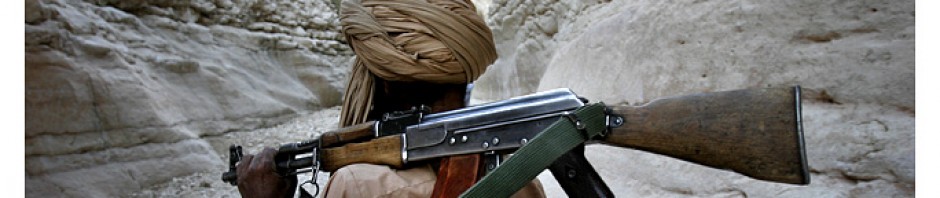
Beirut hit by deadly street battles

Fighting intensified after Hezbollah’s leader said the government’s actions were “tantamount to a declaration of war”

Eight people have been killed and 15 people wounded in Lebanon, according to security sources, as the country’s political crisis threatens to spiral out of control.

Fighting in Beirut intensified on Thursday, the second day of anti-government protests, after a speech by Hassan Nasrallah, the Hezbollah leader, in which he called a government crackdown on the Shia group “tantamount to a declaration of war”.

Government offer rejected

Saad al-Hariri, the governing coalition leader, proposed a deal on Thursday to end the crisis under which the government decisions that have infuriated Hezbollah would be considered a “misunderstanding” and be referred to the Lebanese army.

The move will give General Michel Suleiman, the commander of the army – which has been neutral in the confrontation so far – the option to suspend the implementation of the government decisions.

But Hezbollah’s al-Manar TV quoted an opposition source rejecting any ideas for ending the conflict other than Nasrallah’s demand that the measures be rescinded.

In several neighbourhoods across the capital automatic rifle fire could be heard as fighters in support of Hezbollah and the allied Amal group exchanged fire with pro-government fighters in the worst domestic fighting since the 1975-90 civil war.

Clashes were reported to have broken out in other parts of the country, with another seven people reported injured in the Beqaa valley.

The Lebanese army did not participate in the fighting.

But Robert Fisk, a journalist in Beirut, speaking to Al Jazeera, said that could change if the fighting escalated.

“If we have a situation where one group of people move into another group’s area – either Shia or Sunni – then the army may have to take much harsher measures and that immediately raises the question of ‘what is the future of the Lebanese army’, because it’s made up of all the citizens of this country, not just one group or the other,” Fisk said.

Gun battles

“The fighting seems to be spreading,” reported James Bays, Al Jazeera’s correspondent in Beirut. “It’s something all the political parties said they wanted to avoid.”

Thursday’s fighting occurred on Corniche Mazraa, a major thoroughfare in Beirut that has become a demarcation line between mainly Sunni and Shia neighbourhoods, and the nearby Ras el-Nabeh area.

The violence later spread to Khandaq el-Ghamiq, adjacent to the centre of the city.

Television footage showed armed and masked men taking cover on street corners next to shuttered shops.

Shootings and explosions were also reported near the office of Aisha Bakkar, the Sunni spiritual leader allied with the government, and in Ein el-Tineh where the opposition-aligned parliament speaker has his official residence.

Hezbollah speech

Fighting broke out after Nasrallah, in a televised address, said the political crisis in Lebanon had “entered a new phase” because of what Hezbollah claims are government moves against the Shia group, including launching an investigation into Hezbollah’s private telephone network.

“This decision is a declaration of war against the resistance [Hezbollah],” said Nasrallah.

“This decision [by the government] is designed to push the resistance and the military into direct confrontation.”

He warned that Hezbollah would act to stop any attempt by the government to dismantle the network.

Later, in his own televised address, al-Hariri, leader of the Lebanese parliamentary majority and son of the assassinated former prime minister Rafiq al-Hariri, put the blame back on Hezbollah, saying: “What fate are you dragging the Muslims to – are you dragging us back to civil war?”

He proposed a compromise solution spearheaded by the army – seen as neutral – to end the fighting and “save Lebanon from hell” and called for Hezbollah to lift its “siege” of the capital.

He also called for the immediate election of a consensus presidential candidate.

‘Calm and restraint’

In the US, the United Nations security council also called for “calm and restraint”, urging all sides to return to peaceful dialogue.

The council issued a non-binding policy statement, which lacks the force of a resolution, after a briefing by Terje Roed-Larsen, a UN special envoy to the Middle East, who warned that the situation in Lebanon was the worst since the civil war.

“At the top of the agenda at the Security Council today is the issue of armed militias in the streets of Beirut and elsewhere,” Roed-Larsen said, speaking to Al Jazeera after the briefing.

“What we are seeing today illustrates the necessities of integrating the Lebanese militias into the army. Unless this is done I fear that what we are seeing today will continue.”

The White House demanded Hezbollah stop “disruptive activities”.

“Hezbollah needs to make a choice – be a terrorist organisation or be a political party, but quit trying to be both,” Gordon Johndroe, a White House spokesman, said.

“They need to start playing a constructive role and stop their disruptive activities now.”

‘Tension rising’

Unrest began on Wednesday during a general strike, called by the main labour union over price increases and wage demands, which quickly developed into a confrontation between supporters of the government and the opposition.

Protests continued on Thursday, with many roads blocked by barricades of burning tyres.

The Lebanese army command issued a call for calm, saying that if the violence continued, it would affect the unity of the military.

Rula Amin, Al Jazeera’s correspondent in Beirut, reported that people were trying to flee the city.

“Some people are leaving the capital to remote villages, others are walking out of their homes with suitcases, heading for the airport by foot, hoping that any plane will take them,” she said.

“Tension is rising – today violence spread outside the capital … You can see more and more people on the street with guns.”

Saudi Arabia warned the opposition against an escalation of the situation.

“The kingdom urges the groups behind the escalation to reconsider their position, and to realise that leading Lebanon towards turmoil will not bring victory to any party except extremist external forces,” the state’s SPA news agency quoted an official as saying.

Fears that the political conflict in Lebanon could escalate into sectarian conflict were heightened when Mohammed Rashid Kabbani, Lebanon’s Sunni grand mufti, spoke against Hezbollah for the first time.

“Sunni Muslims in Lebanon have had enough,” Kabbani said in a televised address from his office.

The Sunni spiritual leader referred to Hezbollah as “armed gangs of outlaws that have carried out the ugliest attacks against the citizens and their safety”.

Source

Posted in Lebanon, Middle East | Leave a comment

Psychopaths always blame their victims

Four Palestinian children, all members of one family, were killed Monday morning in an Israel Defense Forces

I’m sure you haven’t heard on TV news that the IDF killed a Palestinian family of four small children and their mother, among others, as they were getting ready to eat breakfast. I mean, if an Israeli family was killed we’d be hearing about it non-stop; but this was just a Palestinian mother and her four little children. Just some collateral damage…

Four Palestinian children, all members of one family, were killed Monday morning in an Israel Defense Forces strike in the northern Gaza Strip, Palestinian sources reported. According to the report, an IDF shell hit a house in the town of Beit Hanoun, killing five members of the Abu Meatak family. Palestinian medics identified the dead children as sisters Rudina and Hana Abu Meatak, aged 6 and 3; and their brothers 4-year-old Saleh and 15-month-old Mousad. Their mother, Miyasar, was in her late 30s. Her two older children were critically wounded in the strike, the officials said.

A 15-year-old boy was also killed in the strike while making his way to school. Nine people were reportedly injured, three of them sustaining serious to critical wounds.

A Palestinian source in the Strip said that a member of the al-Quds Brigades, the Islamic Jihad’s military wing, was also killed by IDF soldiers.

The IDF reported that it had attacked a group of gunmen spotted near forces operating in Beit Hanoun. Soldier belonging to the Givati patrol brigade exchanged fire with Palestinian gunmen in the area. During the military activity, an IDF soldier was lightly injured in the leg and rushed to hospital.

It sounds like there was some gunfire exchanged between IDF soldiers and Palestinian gunman, slightly wounding an IDF soldier, and then a shell hit the house killing all these innocent civilians. Source article http://www.ynetnews.com/articles/0,7340,L-3536673,00.html.

The IDF is looking into the incident, but has yet to obtain a full picture of what happened. Military sources noted that a group of gunmen was spotted shortly after 8 am near Givati forces operating in the area. An aircraft fired at them and hit them, while tanks fired shells towards the area.

Translation: The IDF has yet to prepare an adequate excuse for the utter disregard of Palestinian lives. They need an excuse suitable for international consumption because, though they don’t care about these people who were killed, they know that some people will whine about it causing a slight inconvenience to Israeli public relations activities. So the IDF is ‘looking into the incident, but has yet to obtain a full picture of what happened’, which means they haven’t got the story down yet. They do know, however, that ‘a group of gunmen was spotted…near Givati forces’, and the IDF hit them with aircraft fire and then, just to be sure, fired tank shells toward the area. After all, ‘a group of gunmen’ must never be allowed near IDF forces, even if they gunmen are inside Gaza where they live. An IDF soldier patrolling Occupied Gaza could get injured and have to be rushed to hospital. So, you know, the IDF was just defending themselves.

“The area where the fighting is taking place is very crowded,” a source said. “The terror organizations are knowingly operating near civilians and putting them in danger. We are thoroughly looking into the circumstances of the incident.”

You see, it’s not the IDF’s fault that these people were killed because the ‘area where the fighting is taking place [Gaza, where the Palestinians live and can’t leave] is very crowded [right, because the Israelis have them trapped in there like animals and they can’t leave]…The terror organizations [aka Palestinian men trying to help their people survive] are knowingly operating near civilians [uhh, yeah, seeing as they’re all trapped inside a cage] and putting them in danger [or trying to save them from death by Occupation]’.

One of the options the army is looking into is whether the family members were hurt as a result of an explosion of weapons on the gunmen’s bodies.

Yeah, how do you know it wasn’t a Palestinian suicide bomber that murdered this Palestinian family by blowing up the entire house? Huh? That could happen.

Addressing the possibility that the family was hit by IDF fire, the source said, “This is an essential activity taking place within the populated areas in a bid to distance the terrorists from the border fence. If we don’t operate there, we’ll find the terror organizations on the border fence and inside Israel.”

OK OK…it’s possible that the IDF killed them, but listen…they Israelis have to fight the Palestinians over there in Gaza and the West Bank so that they don’t have to fight them in Israeli cities. Fighting in Israeli cities would just, like, totally wreck their beautiful democracy. Ask George Bush. This is totally moral.

We are pursuing a comprehensive strategy to win the war on terror. We’re taking the fight to the terrorists abroad so we do not have to face them here at home. (Applause.) We’re denying our enemies sanctuary and making it clear that America will not tolerate regimes that harbor or support terrorists. And we’re spreading freedom, because the terrorists know there is no room for them in a free and democratic Middle East. (Applause.) – George W. Bush speech, 7/4/05, West Virginia University, Morgantown, West Virginia

Source

Posted in Palestine | Leave a comment

Iran Ends Oil Transactions In U.S. Dollars – 30 Apr.08

OPEC’s Second-Largest Producer Now Pegs Petroleum To Euros And Yen 

Iranian oil workers seen at Tehran’s oil refinery, Iran, Nov. 17, 2007. Although OPEC has traditionally tied its price of oil to U.S. dollars, Iran has announced it has shifted sales of its oil to euros and yen

(AP) Iran, OPEC’s second-largest producer, has completely stopped conducting oil transactions in U.S. dollars, a top Oil Ministry official said Wednesday, a concerted attempt to reduce reliance on Washington at a time of tension over Tehran’s nuclear program and suspected involvement in Iraq.

Iran has dramatically reduced dependence on the dollar over the past year in the face of increasing U.S. pressure on its financial system and the fall in the value of the American currency. Continue reading

Posted in Economics, Empire, Iran | Leave a comment

Quote of the month – Prince Charles

“. . . we have underestimated the importance of 800 years of Islamic society and culture in Spain between the 8th and 15th centuries.

Many of the traits on which Europe prides itself came to it from Muslim Spain. Diplomacy, free trade, open borders, the techniques of academic research, of anthropology, etiquette, fashion, alternative medicine, hospitals, all came from this great city of cities. Mediaeval Islam was a religion of remarkable tolerance for its time, allowing Jews and Christians to practice their inherited beliefs, and setting an example which was not, unfortunately, copied for many centuries in the West.” – HRH, The Prince of Wales, Islam And The West 27th October 1993

Full transcript

Posted in Quotes | Leave a comment

Israel at 60 – Crusader Anxiety By Uri Avnery

Abu Abed, 84, returned recently to what remains of Hittin, the former Arab village in northern Israel where he was born. He fled with his family in 1948 

 EVERY TIME I hear the voice of David Ben-Gurion uttering the words “Therefore we are gathered here…” I think of Issar Barsky, a charming youngster, the little brother of a girl-friend of mine.

The last time we met was in front of the dining hall of Kibbutz Hulda, on Friday, May 14, 1948.

In the coming night my company was to attack al-Qubab, an Arab village on the road to Jerusalem, east of Ramle. We were busy with preparations. I was cleaning my Czech-made rifle, when somebody came and told us that Ben-Gurion was just making a speech about the founding of the state.

Frankly, none of us was very interested in speeches by politicians in Tel Aviv. The city seemed so far away. The state, we knew, was here with us. If the Arabs were to win, there would be no state and no us. If we won, there would be a state. We were young and self-confident, and did not doubt for a moment that we would win.

But there was one detail that I was really curious about: what was the new state to be called? Judea? Zion? The Jewish State?

So I hastened to the dining hall. Ben-Gurion’s unmistakable voice was blaring from the radio. When he reached the words “…namely the State of Israel” I had had enough and left.

Outside I came across Issar. He was in another company, which was to attack another village that night. I told him about the name of the state and said “take care of yourself!”

Some days later he was killed. So I remember him as he was then: a boy of 19, a smiling, tall Sabra full of joie de vivre and innocence.

THE CLOSER we come to the grandiose 60th anniversary festivities, the more I am troubled by the question: if Issar were to open his eyes and see us, still a boy of 19, what would he think of the state that was officially established on that day?

He would see a state that has developed beyond his wildest dreams. From a small community of 635,000 souls (more than 6000 of whom would die with him in that war) we have grown to more than seven million. The two great miracles we have wrought – the revival of the Hebrew language and the institution of Israeli democracy – continue to be a reality. Our economy is strong and in some fields – such a hi-tech – we are in the world super-league. Issar would be excited and proud.

But he would also feel that something had gone wrong in our society. The Kibbutz where we put up our little bivouac tents that day has become an economic enterprise, like any other. The social solidarity, of which we were so proud, has collapsed. Masses of adults and children live below the poverty line, old people, the sick and the unemployed are left to fend for themselves. The gap between rich and poor is one of the widest in the developed world. And our society, that once raised the banner of equality and justice, just clucks its collective tongue and moves on to other matters.

Most of all he would be shocked to discover that the brutal war, which killed him and wounded me, together with thousands of others, is still going on at full blast. It determines the entire life of the nation. It fills the first pages of the newspapers and heads the news bulletins.

That our army, the army that really was “we”, has become something quite different, an army whose main occupation us to oppress another people.

THAT NIGHT we indeed attacked al-Qubab. When we entered the village, it was already deserted. I broke into one of the homes. The pot was still warm, food was on the table. On one of the shelves I found some photos: a man who had obviously just combed his hair, a village woman, two small children. I still have them with me.

I assume that the village which was attacked by Issar that night presented a similar picture. The villagers – men, women, children – fled at the last moment, leaving their whole life behind them.

There is no escape from the historic fact: Israel’s Independence Day and the Palestinians’ Naqba (Catastrophe) Day are two sides of the same coin. In 60 years we have not succeeded – and actually have not even tried – to untie this knot by creating another reality.

And so the war goes on.

WITH THE 60th Independence Day approaching, a committee sat down to choose an emblem for the event. The one they came up with looks like something for Coca Cola or the Eurovision song contest.

The real emblem of the state is quite different, and no committee of bureaucrats has had to invent it. It is fixed to the ground and can be seen from afar: The Wall. The Separation Wall.

Separation between whom, between what?

Apparently between Israeli Kfar Sava and neighboring Palestinian Qalqiliyah, between Modi’in Illit and Bil’in. Between the State of Israel (and some more grabbed land) and the Occupied Palestinian Territories. But in reality, between two worlds.

In the fevered imagination of those who believe in the “clash of civilizations”, whether George Bush or Osama Bin-Laden – the Wall is the border between the two titans of history, Western civilization and Islamic civilization, two mortal enemies fighting a war of Gog and Magog.

Our Wall has become the front-line between these two worlds.

The wall is not just a structure of concrete and wire. More than anything else, the wall – like every such wall – is an ideological statement, a declaration of intent, a mental reality. The builders declare that they belong, body and soul, to one camp, the Western one, and that on the other side of the wall there begins the opposing world, the enemy, the masses of Arabs and other Muslims.

When was that decided? Who made the decision? How?

102 years ago, Theodor Herzl wrote in his ground-breaking oeuvre, Der Judenstaat, which gave birth to the Zionist movement, a sentence fraught with significance: “For Europe we shall constitute there [in Palestine] a sector of the wall against Asia, we shall serve as the vanguard of culture against barbarism.”

Thus, in 22 German words, the world-view of Zionism, and our place in it, was laid down. And now, after a delay of four generations, the physical wall is following the path of the mental one.

The picture is bright and clear: We are essentially a part of Europe (like North America), a part of culture, which is entirely European. On the other side: Asia, a barbaric continent, empty of culture, including the Muslim and Arab world.

One can understand Herzl’s world view. He was a man of the 19th century, and he wrote his treatise when white Imperialism was at its zenith. He admired it with all his soul. He endeavored (in vain) to arrange a meeting with Cecil Rhodes, the man who symbolized British colonialism. He approached Joseph Chamberlain, the British Colonial Secretary, who offered him Uganda, then a British colony. At the same time, he also admired the German Kaiser and his so well-ordered Reich, which carried out a horrible genocide in South-West Africa in the year of Herzl’s death.

Herzl’s maxim did not remain an abstract thought. The Zionist movement followed it from the first moment on, and the State of Israel continues to do so to this very day.

COULD IT have been different? Could we have become a part of the region? Could we have become a kind of cultural Switzerland, an independent island between East and West, bridging and mediating between the two?

One month before the outbreak of the 1948 war, seven months before the State of Israel was officially founded, I published a booklet entitled “War or Peace in the Semitic Region”. It began with the words:

“When our Zionist fathers decided to set up a “safe haven” in Palestine, they had the choice between two paths:

“They could appear in West Asia as a European conqueror, who sees himself as a bridgehead of the ‘white’ race and master of the ‘natives’, like the Spanish conquistadores and the Anglo-Saxon colonialists in America. Like, in their time, the Crusaders in Palestine.

“The other path was to see themselves as an Asian people returning to its homeland – seeing themselves as an heir to the political and cultural tradition of the Semitic region.”

The history of this country has seen dozens of invasions. They can be divided into two main categories.

There were the invaders who came from the West, such as the Philistines, the Greeks, the Romans, the Crusaders, Napoleon and the British. Such an invasion establishes a bridgehead, and its mental outlook is that of a bridgehead. The region beyond is hostile territory, its inhabitants enemies who have to be oppressed or destroyed. In the end, all of these invaders were expelled.

And there were the invaders who came from the East, such as the Emorites, the Assyrians, the Babylonians, the Persians and the Arabs. They conquered the land and became part of it, influenced its culture and were influenced by it, and in the end struck roots.

The ancient Israelites were of the second category. Even if there is some doubt about the Exodus from Egypt as described in the Books of Moses, or the Conquest of Canaan as described in the Book of Joshua, it is reasonable to assume that they were tribes that came in from the desert and infiltrated between the fortified Canaanite towns, which they could not conquer, as indeed described in Judges 1.

The Zionists, on the other hand, were of the first category. They brought with them the world-view of a bridgehead, a vanguard of Europe. This world-view gave birth to the Wall as a national symbol. It has to be changed entirely.

ONE OF our national peculiarities is a form of discussion where all the participants, whether from the Left or from the Right, use the clinching argument: “If we don’t do this and this, the state will cease to exist!” Can one imagine such an argument in France, Britain or the USA?

This is a symptom of “Crusader” anxiety. Even though the Crusaders stayed in this country for almost 200 years and produced eight generations of “natives”, they were never really sure of their continued existence here.

I am not worried about the existence of the State of Israel. It will exist as long as states exist. The question is: What kind of state will it be?

A state of permanent war, the terror of its neighbors, where violence pervades all spheres of life, where the rich flourish and the poor live in misery; a state that will be deserted by the best of its children?

Or a state that lives in peace with its neighbors, to their mutual benefit; a modern society with equal rights for all its citizens and without poverty; a state that invests its resources in science and culture, industry and the environment; where future generations will want to live; a source of pride for all its citizens?

That can be our objective for the next 60 years. I think this is what Issar would have wanted, too.

Uri Avnery is an Israeli writer and peace activist with Gush Shalom. He is o a contributor to CounterPunch’s book The Politics of Anti-Semitism.

After 60 Years, Arabs in Israel Are Outsiders – New York Times – 07 May.08

Israel – An evil state that will disappear one day

Soldiers charged with beating Palestinian senseless

Posted in Middle East, Palestine | Leave a comment

Are We Witnessing the Death of Israel by a Thousand Cuts? – Jonathon Power

Even Jimmy Carter, who single handedly (without much Jewish appreciation) has done more to make Israel secure than any other living person, can’t change the march of demographics. Within the boundaries of the State of Israel and the occupied territories there are 5.4 million Jews and 4.6 million Palestinians. The Palestinian birth rate is almost three times that of the Israeli Jews. If anything the Jewish population is starting to fall as an increasing number of Jews decide that Israel has no future for them and in significant numbers emigrate. The far seeing Richard Nixon, when asked by Patrick Buchanan and his wife, how he saw the future of Israel, turned down his thumb “like a Roman emperor at the gladiators’ arena”.

Perhaps we are witnessing the death of Israel by a thousand cuts, the attrition of conflict and the attrition of population. Maybe after all the rabbis of Vienna who were sent in 1897 on a fact-finding mission to Palestine to investigate whether it was a suitable place for Jewish settlement were right.

They reported back that the “bride was beautiful but married to another man.” The rabbis had been moved to visit Palestine by Theodore Herzl, an Austrian journalist, who had just published his highly influential book, “The Jewish State”, which launched the movement called “political Zionism”.

Herzl, a broad minded man, was happy to think of the new Israel in Argentina which had a considerable Jewish migration in the 19th century and was well away from the clutches of anti-Semitic Europe.

He was also inclined to accept the offer of Joseph Chamberlain, then the British colonial secretary, for a site on the Uasin Gishu plateau near Nairobi in what was then British East Africa. The Zionist Conference overruled him.

But when the British government finally gave in to Zionist lobbying and, in the words, of the Balfour Declaration of 1917, favored “the establishment in Palestine of a national home for the Jewish people” the only Jewish member of the Cabinet, Edwin Samuel Montague, denounced the whole project as a reconstruction of the tower of Babel.

“Palestine”, he said, “would become the world’s ghetto”. Lord Curzon, the former viceroy of India, observed that Britain had “a stronger claim to parts of France” than the Jews did to Palestine after two millennia of absence. He denounced it as an act of “sentimental idealism”.

There are few rewards in this life for being farsighted on political questions. The Zionists still have the bit between their teeth on the creation of a permanent Jewish state, even as they face self-destruction.

A few perhaps can see it coming and among the few is the Israeli Prime Minister Ehud Olmert.

In an interview last November he said, “If the day comes when the two-state solution collapses, and we face a South African-style struggle for equal voting rights (also for the Palestinians in the territories) then, as soon as that happens, the State of Israel is finished.”

For the Zionist this would be a terrible end. But need it be for rank and file Jews who just want to bring up their families and live in an atmosphere emptied of violence? (Read Israeli novelist Shifra Horn’s book, “Ode to Joy” if you want to smell the cordite and sense deep in the soul their everyday fear of being blown up.)

But unmistakably this is the direction events and demographics are moving and arguably the best thing that outsiders can now do for Israel is to stop trying to help organize the creation of a two-state solution and let the Israelis themselves look the Palestinians in the eye as the demographics bite. If the white South Africans can do it so can the Israelis. If this were the solution the Israelis would find that the only thing that most Palestinians would now want is a prosperous, capitalist economy that lives in peace with its neighbors.

The Jews would not be driven into the sea. But those who wanted to return to Europe, America or even Russia would be more than welcome. Both Germany and Russia, the great centers of anti-Semitism in the past, have seemed to have flushed that horror away.

Life does move on. Some problems, like apartheid, do get solved, even if not very long ago they seemed intractable.

The Jews should never have tried to turn back the historical clock by returning to Palestine after fleeing in AD 70.

But now they are there in such significant numbers their only solution is to honor the rest of the text of the Balfour Declaration.

“Nothing should be done that may prejudice the civil and religious rights of the existing non-Jewish communities in Palestine”, it said. This was the British condition. The Israelis overlook it today at their peril.

Source

jonatpower@aol.com

Posted in Disclosure, Empire, Middle East, Palestine | Leave a comment

Luxury hotels and a fun park: the new Green Zone – SMH – 06 May.08

Tigris Woods - An artist’s impression released by the US military envisages the ‘Tigris Woods Golf and Country Club’ in the Green Zone in Baghdad, Iraq. 

Forget the rocket attacks, concrete blast walls and lack of a sewer system. Now try to imagine luxury hotels, an amusement park, a shopping centre and even condos in the heart of Baghdad.

That’s all part of a five-year development “dream list” – or what some dub an improbable fantasy – to transform the US-protected Green Zone from a walled fortress into a centrepiece for Baghdad’s future.

The $US5 billion ($5.3 billion) plan has the backing of the Pentagon and apparently the interest of some deep pockets in the world of international hotels and development, the lead military liaison for the project has confirmed.

The first artist impressions released by the US military this week envisage a range of development on the banks of the Tigris, including a United Nations centre and the “Tigris Woods Golf and Country Club”.

For Washington, the driving motivation is to create a “zone of influence” around the new $US700 million ($739 million) US Embassy to serve as a kind of high-end buffer for the compound, whose total price tag will reach about $1 billion ($1.1 billion) after all the workers and offices are relocated over the next year.

“When you have $1 billion hanging out there and 1,000 employees lying around, you kind of want to know who your neighbours are. You want to influence what happens in your neighbourhood over time,” said Navy Captain Thomas Karnowski, who led the team that created the development plan.

Captain Karnowski said a deal already has been completed for Marriott International Inc. to build a hotel in the Green Zone.

A possible $1 billion ($1.1 billion) investment could also come from MBI International, a conglomerate that focuses on hotels and resorts and is led by Saudi Sheikh Mohamed Bin Issa Al Jaber, he said.

Elizabeth Caminiti, a Marriott spokeswoman, declined to comment. Phone calls and emails sent to London-based MBI were not returned.

Los Angeles-based holding company for equity firms C3 last week confirmed it was starting a $US500 million ($528 million) project to build an amusement park on the outskirts of the Green Zone in an area encompassing the Baghdad Zoo.

The first phase, a skateboard park, is scheduled to open this summer.

But any Green Zone project is literally starting from the ground up.

“There is no sewer system, no working power system. Everything here is done on generators. No road system repair work. There are no city services other than the minimal amount we provide to get by,” Captain Karnowski said.

For the moment, however, it’s mortars and rockets – not investment money – pouring into the Green Zone, which includes the US and British embassies, key Iraqi government offices and other international compounds.

Militants have escalated their shelling of the enclave since Iraqi forces began a crackdown on Shiite militias in late March.

But developers are clearly looking many years ahead and gambling that Baghdad could one day join the list of former war zones such as Sarajevo and Beirut that have rebounded and earned big paydays for early investors.

Even now, with violence in Baghdad again creeping up, the faint hints of the development plan have driven up the Green Zone’s already sky-high real estate prices.

Land that a few years ago was going for $US60 ($64) a square metre on 50-year leases in the zone is now going for up to $1000 ($1055) a square metre, American officials say.

Captain Karnowski noted that of 500 development projects carried out in Baghdad last year, not one was done in the Green Zone, with the exception of the building of the new American embassy.

The plan also envisions significantly reducing the non-Iraqi footprint in the Green Zone, an eight-square-kilometre area crisscrossed by four-metre-high blast walls and checkpoints.

About 50% of the area is now occupied by coalition forces, the US State Department or private foreign companies. If all were to go according to Captain Karnowski’s plan, only 5% of land in the Green Zone will be in foreigners’ hands in five years.

Privately, American diplomats say the plan is, at best, wishful thinking.

Security is nowhere near the level needed for major development projects. Then there is the question of whether the Iraqi government even wants US involvement in developing the centre of their capital.

One diplomat, who asked not to be named because of no authorisation to speak to the media, said they did not think Iraqis would want Washington to “turn this area into downtown Kansas City”.

But Both Captain Karnowski and Iraqi officials said the government of Iraqi Prime Minister Nouri al-Maliki is interested in hearing US ideas in developing the Green Zone, though many Iraqi leaders have expressed worries and words of caution.

“The Iraqi government wants to limit US power in the Green Zone,” a top adviser to al-Maliki said on condition of anonymity.

Iraqis also complain that the Americans – because they control security in the Green Zone – essentially hold a veto over the investors.
Captain Karnowski acknowledged that American officials would vet potential investors because of a “vested interest”.
Some Iraqi leaders even have drawn parallels to the US-backed development plan and what Saddam Hussein did in the area – known by its Iraqi name of Tashri during his regime.

Hussein stocked the neighbourhood with family and tribal allies, political loyalists and members of his elite Republican Guard. Captain Karnowski called the accusation “partially true”.

“Why do people build fences around their house? The intent is until such time as it’s much safer around here, you want to be able to influence what goes on,” he said.

The biggest hurdle to the plan is sorting out the true owners of property in the Green Zone, where “eminent domain by gun” was employed during the Saddam era, Captain Karnowski said.

The chaos after Saddam’s fall also added the murkiness.

“It’s a jungle here,” said Hussein, a 28-year-old from Lebanon who started a contracting company about a year ago in Baghdad and rents out living space in the Green Zone on the side. “It used to be like the Wild West – you grabbed some property and said, ‘this is mine’.”

Air Force Lieutenant Colonel Monte Harner leads the effort to discover who owns the titles and consolidate the areas held by the US military.

He said the Army plans to move a military hospital in the zone – now located in a former private medical facility – to a base nearby, freeing it up for Iraqi use. Also in the works is the consolidation of Green Zone housing used by American troops.

Sadiq al-Rikabi, a top adviser to al-Maliki, said there are also plans for development projects at the Baghdad airport west of the city, including a hotel.

American officials confirmed some projects would be carried out near the airport.

According to Captain Karnowski, the United States will spend $120 million ($127 million) to demolish buildings damaged by air strikes during the opening days of the war.

Both Captain Karnowski and Colonel Harner are aware their Green Zone plan is viewed as unrealistic by many, primarily US Embassy officials.

“If you talk to people at the State Department, they still believe a hotel isn’t going up. But it is a done deal,” Captain Karnowski said of the Marriott project.

Colonel Harner also believes even having a blueprint is important.

“You have to stake a goal in the sand before you can begin to move towards it,” he said. “Without a vision of what could be, you’re just treading water.”

Source

Posted in Disclosure, Iraq | 1 Comment

Califate – Time Magazine – Monday, Mar. 24, 1924

When Turkey went to war against the Allies in 1914, the most dreaded weapon in her armory was the threat of the Jehad or Holy War—power to declare which was vested in the office of the Califate. Dutifully the Calif pushed the button. Nothing much happened. The Jehad did not prevent the British Moslems and the French North African troops from fighting against the Central Powers, nor did it hold back the Arabs from declaring their independence and fighting as Allies of the British in Palestine. The Jehad proved to be a “dud” shell; but when the Grand National Assembly at Angora abolished the Califate and sent the Calif, Abdul Medjid, to Switzerland in exile (TIME, March 10), the dud proved to be a bomb. The reverberations of the explosion still resound throughout all Christendom as well as the Moslem world.

In Turkey, Mustapha Kemal Pasha last week announced that the Califate henceforth will be personified by the Turkish Parliament. London opinion” promptly accused Kemal of “desiring to set himself up as Sultan of the world’s 220,000,000 Moslems.”

From his asylum in Territet, Switzerland, the deposed Calif, Abdul Medjid issued a call to the Moslem population of the world to determine through their respective leaders what should be done with the Califate considering his exile. Said he: “My deposition and the abolition of the Califate is fundamentally sacrilegious and void!”

In Italy it was reported that the Mussolini Government has invited Abdul Medjid to reside in Italy or in an Italian possession in Africa. Should Abdul Medjid be upheld as Calif and accept this offer, it would give the Italians much of the moral power of a second Vatican, consolidating her Mediterranean position between Europe’s Catholics and Africa’s Moslems, and being of immediate advantage in her relations with the turbulent Senussi sect in his Tripoli possessions.

In France the acidity of feeling was accentuated by the fact that the Sultan of Morocco, who is amenable to French influence and who has never recognized the Califate of Constantinople, would be a candidate for the position of Calif, and could be relied upon to strengthen French prestige in Tunis, Algiers and Morocco, as well as in the Near East.

In Great Britain the Government of Ramsay MacDonald is officially standing aloof from the question. British Moslem possessions are so diversified as to share all dissensions in Moslem theology. However, it is generally felt that the quick action of setting up King Hussein Ibn Ali . of the Hedjaz as the first claimant to the Califate will have only one beneficiary, the British Empire.

King Hussein of the Hedjaz, with-in whose realm lie the holy cities of Mecca and Medina, last week accepted the office of Calif tendered him by the Arabs of the Hedjaz, Transjordania and the Grand Mufti of Jerusalem. In an interview he showed himself melancholy and foreboding over the consequences of his action. Said Hussein: “I have not sought or desired the Califate. It has been thrust upon me. From everywhere they come to me and say:

” ‘Islam must have a Calif to protect it, and the Califate must not die out. You are the only prince competent to fill it. You are the independent ruler of a great Mosjem and Arab state. In your charge are the holy cities. You are of the tribe of Koreish. Your orthodoxy and zeal for the faith are beyond all question. You are an Arab of Arabs!’

“If I had not accepted I would have failed in my duty and my people would have turned against me. The Arabs of Hedjaz, Trans jordania and Palestine have proclaimed me Calif. I do not know what the rest of the Moslem world will do. I hear rumors that the King of Egypt or the Emir of Afghanistan or the Sultan of Morocco may proclaim themselves Califs. My position is very critical.”

In Afghanistan. That the British Moslems will be satisfied with neither the Turkish Parliament nor a British protege as Calif is reported from London. The British Government has been privately informed that the 70,000,000 Indian Moslems refuse to accept King Hussein. This refusal is formidable because it carries the threat that if Hussein is backed by the British, the Indian Moslems will support the candidacy of the Emir of Afghanistan, who is increasingly anti-British.

Source

More Archives at Time Magazine Archive search page.

Posted in History, Religion of Abraham | Leave a comment

The Agenda Behind the Hoax – What the Iraq War is About – Paul Craig Roberts

The Bush Regime has quagmired America into a sixth year of war in Afghanistan and Iraq with no end in sight. The cost of these wars of aggression is horrendous. Official US combat casualties stand at 4,538 dead. Officially, 29,780 US troops have been wounded in Iraq. Experts have argued that these numbers are understatements. Regardless, these numbers are only the tip of the iceberg.

On April 17, 2008, AP News reported that a new study released by the RAND Corporation concludes that “some 300,000 U.S. troops are suffering from major depression or post traumatic stress from serving in the wars in Iraq and Afghanistan, and 320,000 received brain injuries.”

On April 21, 2008, OpEdNews reported that an internal email from Gen. Michael J. Kussman, undersecretary for health at the Veterans Administration, to Ira Katz, head of mental health at the VA, confirms a McClatchy Newspaper report that 126 veterans per week commit suicide. To the extent that the suicides are attributable to the war, more than 500 deaths should be added to the reported combat fatalities each month.

Turning to Iraqi deaths, expert studies support as many as 1.2 million dead Iraqis, almost entirely civilians. Another 2 million Iraqis have fled their country, and there are 2 million displaced Iraqis within Iraq.

Afghan casualties are unknown.

Both Afghanistan and Iraq have suffered unconscionable civilian deaths and damage to housing, infrastructure and environment. Iraq is afflicted with depleted uranium and open sewers.

Then there are the economic costs to the US. Nobel economist Joseph Stiglitz estimates the full cost of the invasion and attempted occupation of Iraq to be between $3 trillion and $5 trillion. The dollar price of oil and gasoline have tripled, and the dollar has lost value against other currencies, declining dramatically even against the lowly Thai baht. Before Bush launched his wars of aggression, one US dollar was worth 45 baht. Today the dollar is only worth 30 baht.

The US cannot afford these costs. Prior to his resignation last month, US Comptroller General David Walker reported that the accumulated unfunded liabilities of the US government total $53 trillion dollars. The US government cannot cover these liabilities. The Bush Regime even has to borrow the money from foreigners to pay for its wars in Iraq and Afghanistan. There is no more certain way to bankrupt the country and dethrone the dollar as world reserve currency.

The moral costs are perhaps the highest. All of the deaths, injuries, and economic costs to the US and its victims are due entirely to lies told by the President and Vice President of the US, by the Secretary of Defense, the National Security Advisor, the Secretary of State, and, of course, by the media, including the “liberal” New York Times. All of these lies were uttered in behalf of an undeclared agenda. “Our” government has still not told “we the people” the real reasons “our” government invaded Afghanistan and Iraq.

Instead, the American sheeple have accepted a succession of transparent lies: weapons of mass destruction, al Qaeda connections and complicity in the 9/11 attack, overthrowing a dictator and “bringing democracy” to Iraqis.

The great moral American people would rather believe government lies than to acknowledge the government’s crimes and to hold the government accountable.

There are many effective ways in which a moral people could protest. Consider investors, for example. Clearly Halliburton and military suppliers are cleaning up. Investors flock to the stocks in order to participate in the rise in value from booming profits. But what would a moral people do? Wouldn’t they boycott the stocks of the companies that are profiting from the Bush Regime’s war crimes?

If the US invaded Iraq for any of the succession of reasons the Bush Regime has given, why would the US have spent $750 million on a fortress “embassy” with anti-missile systems and its own electricity and water systems spread over 104 acres? No one has ever seen or heard of such an embassy before. Clearly, this “embassy” is constructed as the headquarters of an occupying colonial ruler.

The fact is that Bush invaded Iraq with the intent of turning Iraq into an American colony. The so-called government of al-Maliki is not a government. Maliki is the well paid front man for US colonial rule. Maliki’s government does not exist outside the protected Green Zone, the headquarters of the American occupation.

If colonial rule were not the intent, the US would not be going out of its way to force al Sadr’s 60,000 man militia into a fight. Sadr is a Shi’ite who is a real Iraqi leader, perhaps the only Iraqi who could end the sectarian conflict and restore some unity to Iraq. As such he is regarded by the Bush Regime as a danger to the American puppet Maliki. Unless the US is able to purchase or rig the upcoming Iraqi election, Sadr is likely to emerge as the dominant figure. This would be a highly unfavorable development for the Bush Regime’s hopes of establishing its colonial rule behind the facade of a Maliki fake democracy. Rather than work with Sadr in order to extract themselves from a quagmire, the Americans will be doing everything possible to assassinate Sadr.

Why does the Bush Regime want to rule Iraq? Some speculate that it is a matter of “peak oil.” Oil supplies are said to be declining even as demand for oil multiplies from developing countries such as China. According to this argument, the US decided to seize Iraq to insure its own oil supply.

This explanation is problematic. Most US oil comes from Canada, Mexico, and Venezuela. The best way for the US to insure its oil supplies would be to protect the dollar’s role as world reserve currency. Moreover, $3-5 trillion would have purchased a tremendous amount of oil. Prior to the US invasions, the US oil import bill was running less than $100 billion per year. Even in 2006 total US imports from OPEC countries was $145 billion, and the US trade deficit with OPEC totaled $106 billion. Three trillion dollars could have paid for US oil imports for 30 years; five trillion dollars could pay the US oil bill for a half century had the Bush Regime preserved a sound dollar.

The more likely explanation for the US invasion of Iraq is the neoconservative Bush Regime’s commitment to the defense of Israeli territorial expansion. There is no such thing as a neoconservative who is not allied with Israel. Israel hopes to steal all of the West Bank and southern Lebanon for its territorial expansion. An American colonial regime in Iraq not only buttresses Israel from attack, but also can pressure Syria and Iran from giving support to the Palestinians and Lebanese. The Iraqi war is a war for Israeli territorial expansion. Americans are dying and bleeding to death financially for Israel. Bush’s “war on terror” is a hoax that serves to cover US intervention in the Middle East in behalf of “greater Israel.”

Paul Craig Roberts was Assistant Secretary of the Treasury in the Reagan administration. He was Associate Editor of the Wall Street Journal editorial page and Contributing Editor of National Review. He is coauthor of The Tyranny of Good Intentions. He can be reached at: PaulCraigRoberts@yahoo.com

Source

Posted in Iraq | Leave a comment

Mongol

Mongol 

Award-winning Russian filmmaker Sergei Bodrov (PRISONER OF THE MOUNTAINS) illuminates the life and legend of Genghis Khan in his stunning historical epic, MONGOL.

Based on leading scholarly accounts and written by Bodrov and Arif Aliyev, MONGOL delves into the dramatic and harrowing early years of the ruler who was born as Temudgin in 1162. As it follows Temudgin from his perilous childhood to the battle that sealed his destiny, the film paints a multidimensional portrait of the future conqueror, revealing him not as the evil brute of hoary stereotype, but as an inspiring, fearless and visionary leader. MONGOL shows us the making of an extraordinary man, and the foundation on which so much of his greatness rested: his relationship with his wife, Borte, his lifelong love and most trusted advisor.

Sergei Bodrov (dir.)
Tadanobu Asano
Khulan Chuluun
Honglei Sun

Download Mongol

The making of a conqueror – SMH – 20 Jun.08

Super trooper ready to rule the world – SMH – 20 Jun.08

Posted in Trailers | 1 Comment