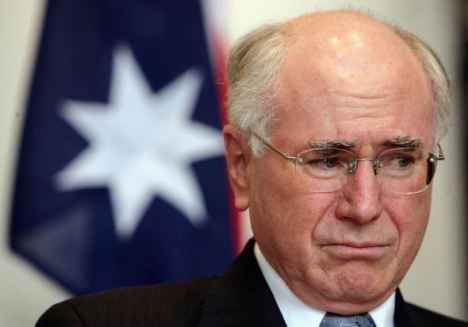
Warming Seats at the Hague – John Howard and War Crimes

By BINOY KAMPMARK

John Howard

The International Criminal Court, active since 2002, is getting busier, though much of its activity still remains buried in preparatory paperwork. It has begun fielding petitions on a growing list of war criminal suspects with some regularity. The first sign that more work would be coming its way came in March 2003 when the invasion of Iraq took place. The war crimes dossiers in the hands of activists and non-government groups began thickening.

Such activity was given a push by a collection of outraged and eloquent statements on the invasion by a few prominent people, none more distinguished than Harold Pinter. Pinter’s speech on the occasion of receiving the Nobel Prize of Literature in 2005 bears remembering. ‘The invasion of Iraq was a bandit act, an act of blatant state terrorism, demonstrating absolute contempt for the concept of international law.’ The lie of emancipation came packed in the forms of cluster bombs, depleted uranium and torture networks.

The candidates as potential bench warmers for the Hague dock are of course, President George W. Bush, and ex-Prime Ministers Tony Blair (Britain) and John Howard (Australia), an Anglo-centric, some might even say Anglospheric cabal that is now receiving the attention of innovative jurists and enterprising activists.

The latest update in the prosecution machine lies in a brief compiled by activists based in Australia on the subject of charging John Howard with an assortment of crimes within the jurisdiction of the ICC. This should not come as a surprise to Howard. As early as March 20, 2003, he was put on notice by 41 affiliates of the Victorian Peace Network, acting through the Australian firm Slater and Gordon, that government ministers would, in the event of an invasion of Iraq, be ‘investigated and, if appropriate, prosecuted for being complicit in excessive and unjustifiable loss of civilian lives and devastation of non-military infrastructure.’

Howard is more used to regarding the ICC as an acronym of cricket rather than crime. But a legal brief to a body more versed in punishing crimes of politics than code violations of a one-time imperial sport was lodged (June 14) by Melbourne-based activist Tim Anderson and John Valder, former Liberal Party National President. Other members of this eclectic group backing this move are Senator Lyn Allison of the now defunct Australian Democrats, prolific cartoonist Michael Leunig, renowned classical guitarist John Williams and American anti-war activist Cindy Sheehan.

The alleged war crimes, noted in the brief to the ICC, centre around ‘the unwarranted and excessively lethal armed attack and invasion of Iraq’ with specific war crimes against specific persons detailed in various annexes to the document. Pictures are appended, and the names of victims attached. John Howard, through his ‘express personal executive decision and action’ is alleged to have perpetrated ‘war crimes by ‘the conduct’ of such an unwarranted, excessive and disproportionate use of force.

Anderson and his colleagues had been active in compiling a list of petitioners to back a series of charges against the former prime minister. The charges in one specific petition are hefty. Complicity in the killing of civilians in Baghdad, Basra, Khormal, Babel, Nassariya, Najaf, Karbala and Anbar in March 2003 through an assortment of weapons comes first, followed by complicity in the killing of ten members of the Sabri tribespeople in Afghanistan in May 2002 and the killing of prisoners after the US-led ‘Anaconda’ operation in Afghanistan’s Shah-i-Kot in March 2002. Involvement in the attacks on the civilian population of Fallujah (April and November 2004) is also alleged; as is Howard’s connections with the international torture network established under the directives of the ‘war on terror’.

Such a process of investigation is necessary, if for no other reason than to overcome the vicious normality such acts as the Iraqi occupation have assumed.

The ICC is, however limited in how it can reach into the throes of politics. While the days of state impunity are seemingly numbered, much international law remains a creature of contract and diplomacy, rather than civics and morality. It is, for instance, curtailed by the ratification process – countries reluctant to participate don’t have to, and the Bush administration is a notable absentee, amongst other countries, from the process. We are then left with the heroic, if vain antics by concerned citizens, who cite the violation of local laws as the basis of their actions. But if the ICC does, as the Nuremberg trials were intended for, put forth a record, to indelibly memorialize the uncatalogued dead, to not merely unearth the mistakes but the crimes of a conflict, then it would have gone some way to achieving its purpose.

Binoy Kampmark was a Commonwealth Scholar at Selwyn College, University of Cambridge. Email: bkampmark@gmail.com

Source 

Posted in Disclosure, Middle East, Redemption, Redneckia | Leave a comment

WHAT THE BIBLE SAYS ABOUT MUHAMMAD (PBUH) THE PROPHET OF ISLAM

PDF Download

WHAT THE BIBLE SAYS ABOUT MUHAMMAD (PBUH) THE PROPHET OF ISLAM – Shiek Ahmad Deedat

Posted in Download, Religion of Abraham | Leave a comment

Oil and Racism By REZA FIYOUZAT

When Will the People Fight Back?
Oil and Racism
By REZA FIYOUZAT

It is customary to run into brazenly racist commentary coming out of the U.S. liberals and right-wingers alike, especially when it comes to the question of oil. Besides the occasional surreal headlines about congressional members suing OPEC, it is normal to read headlines urging OPEC member countries to increase production. It is as if we were at a restaurant, trying to get more service. ‘Hey waiter! More drinks over here!’

The more liberal ones, of course, take it to another level. In the context of ‘oil shortages’, when the right wingers assert that more internal exploration/extraction is needed, the inevitable liberal knee-jerk reaction is, ‘Of course not! Leave our wildlife alone!’

Shocking bulletin to Western ‘environmentalists’: ‘Oil Producing’ countries too have environments.

As it relates to the issue of oil, there is proliferation of a language and mentality that is racist to the core. The two variations, militarism and capitalistically defined ‘environmentalism’, are espoused by the right and the liberal wings respectively. The line of thinking starts out with something like this: Those damned Ay-rabs (say, Saudis) are holding us hostage (or, insert any other OPEC member the State Dept and media lackeys are bullying that day); and concludes with: So, we must reduce our dependence on foreign oil (with the adjective ‘foreign’ intoning a four-letter word). By all means, do!

But … Hostage to what? Hostage to our needs, hostage to our way of life. That’s about the gist of it. The attitude is as narcissistic as it is racist.

Is There a Shortage?
A component of the liberal racist argument is the quantitative comparisons of proven worldwide oil reserves. In an inverse pissing game, they paint a picture of an abundance of oil those, say, Saudis are ‘sitting on’ (260 billion barrels), compared to the measly sum available underneath the U.S. (a mere 21 billion; weep, weep!). This ’21 billion barrels’ is the figure usually given for the amount of oil available in the U.S.; Wikipedia gives this number, as do numerous mainstream and even some leftist journalists and writers. However, this is an erroneous figure.

According to a report prepared by the Dept of Interior, for the U.S. Congress, dated February 2006, the amount of actually recoverable oil available to the U.S. exploiters is more than five times the ‘official’ 21 billion barrels. “The total endowment of technically recoverable oil and gas on the [U.S. Outer Continental Shelf] is comprised of known resources—i.e., cumulative production, and estimates of remaining proved and unproved reserves and reserves appreciation—plus estimates of undiscovered resources. The estimate of the total hydrocarbon endowment … is 115.4 billion barrels of oil (Bbo) and 633.6 trillion cubic feet of gas,” (from the Executive Summary, p. vi-vii, emphasis added).
For comparison, the current proven reserves the Iraqis are ‘sitting on’ is likewise 115 Bbo.

Additionally, according to a 2004 report prepared by the Dept of Energy’s Office of Naval Petroleum and Oil Shale Reserves, “The vast extent of U.S. oil shale resources, amounting to more than 2 trillion barrels, has been known for a century. […] The huge resource base has stimulated several prior commercial attempts to produce oil from oil shale, but these attempts have failed primarily because of the historically modest cost of petroleum with which it competed. With the expected future decline in petroleum production historic market forces are poised to change and this change will improve the economic viability of oil shale,” (emphasis added). The market forces clearly are a-changing, so shale oil is no longer such an uneconomic energy source after all.

There are therefore vast amounts of available oil that consumers in the U.S. can start tapping into, thereby cutting their urge to wage wars of possession for energy resources of others. As you see, you do have your own oil, and lots of it, too. Just dig it up!

So, why is all this oil kept underground? As relates to oil, what are the strategic interests of the U.S. ruling classes? The view from the Third World is not complicated. The good singer once sang: God blessed the child who’s got his own. Well, the U.S. ruling classes sure have got their own, but what they really want is to keep their own. And the reason for that is: If the resources of other societies in the periphery are depleted first, the center can continue to hold its central place, strategically. It is really very simple.

Other understated facts:
1) Non-OPEC countries produce 60% of the oil available on the world market. Canada, for example, is the biggest exporter of oil to the U.S. Yet, do you ever read any headlines demanding the Canadians increase their oil production, or threatening to sue Canada for withholding higher levels of oil production and driving up the prices? Not very likely!

2) The real demand for oil has not increased at the same rate (or, in proportional percentages) as the increases in oil prices. Even given the increased demand (due to ‘insatiable appetites’ of the economies of India and China), surely the global gross output of products cannot have jumped by so much as to explain the rate of the increases in oil prices. The world aggregate production is the key, not merely the Chinese and Indian GNP growth. The production sites for specific commodities may have changed locations, hence the increase in demand for oil in some locations, but the world capitalist system as a whole has not increased its production levels by an amount that can explain the rise in energy costs.

3) Most oil companies secure their inventories through long-term contracts, such as five, ten- to thirty-year contracts, and at set prices. This means that the handful of monopolies that control about 70-80% or more of the distribution networks (the key element in control of oil prices) are getting their supplies mostly at prices set ten, twenty or even thirty years ago.

From the above, you can easily guess what shall be concluded: the oil price rises are a classic, right out of the playbook, gigantic scam.

Smile for the cameras, you’ve been had!

Environmental Racism
But what really and truly tortures millions like me is the racism in not seeing the adverse environmental effects of oil exploration/extraction in Third World countries, particularly in the Middle East.

Since the Americans do have their own oil to the same extent that the Iraqis got their own, why is it that oil companies don’t extract that oil? Environmental laws? Well, again, other people too have environments. You’ve destroyed theirs for about the past one hundred years, why not carefully and selectively disturb some of yours for the next century? Why are environmental concerns deemed so supreme in some habitats, and not relevant at all in other habitats? Do western environmentalists believe that the ‘environment’ stops at their national borders?

The mass media, such as the TV, is a good indicator of how the popular imagination is shaped. As regards reporting on environmental concerns of the lesser peoples, the singular instance of ‘coverage’ of such issues that comes to mind is when the mainstream media in the U.S. was particularly concerned about the effects of the Iraqi oil dumped into the Persian Gulf by Saddam Hussein; showing us what horrible monster Saddam was, dousing those poor birds! (Or, was the real outrage over all the oil not directed into engines?)

Since very little else is reported, we must assume that all the daily drillings and extractions going back a century; the fumes and the poisonous discharge from the wells and from the refineries and petrochemical plants lining the waterways of the Gulf; all the thousands of oil tankers, cargo ships and aircraft carriers — all that activity must be causing a lively proliferation of the most magnificent array of wildlife in the Gulf!

All manner of colonial carving up of our region has taken place over the last century. Vast amounts of wealth have been outright stolen from our societies. Just for one count, in 1901, William D’Arcy, a “millionaire London socialite” (according to Wikipedia), negotiated an oil concession that basically gave him the rights to explore, extract and take out whatever amount of oil he liked, from anywhere in Iran. Not bad. He extracted this ‘concession’ from a hugely corrupt, unpopular and in fact illegitimate absolutist monarch on his way out.

Under the auspices of the said ‘concession’, the British oil giant BP got its start; back then it was called Anglo-Persian Oil Company, and it made the first discovery of vast oil fields in 1908 in Masjed Soleiman, southwest of Iran. For the next forty-some years, this oil company was getting its oil supplies (with only a slight exaggeration) mostly for free. That’s the way you do it, not through ‘free market’! Money for nothing!

[Incidentally, the Iranian government would get itself a world of good publicity internationally and domestically if it stopped pursuing nuclear technology (which only introduces into our people’s environment the most noxious toxins, capable of extreme radioactive toxicity for thousands of years, in the best case scenario), and instead pursued an actionable lawsuit against BP for historical reparations.]

So, in lay language, we in the Middle East have been bucked again and again and again, in one form or another, for the past one hundred years. And all that, for what? For oil. And for all those one hundred years, our environments have been subjected to all those nasty damages that make American environmentalists cringe when any mention is made of drilling for oil in the Arctic National Wildlife Refuge. Isn’t one hundred years enough?

Here is another angle on the environmental nightmares people in the Middle East are currently subjected to, as a result of the American Way of Life: Uranium-enriched munitions used in the war of aggression against the Afghans and the Iraqis alike.

The U.S. Dept of Justice accused, jailed and tortured Jose Padilla until he went insane, for a probable fleeting thought at which he may have smiled, about possibly it would maybe not be such an evil and insane idea after all, in a hypothetical kind of way of conjuring a fantasy, that maybe if some asshole found a way of letting off a ‘dirty bomb’ … you know … What would it be like?

So, setting off dirty, radioactive bombs (even the thought of it) is very bad, a supreme crime even, right?

Well then, why is it that these same high-ranking authorities, along with thousands of other co-conspirators are in the open and official business of enabling and facilitating the obliteration of Iraq’s and Afghanistan’s environments with hundreds (by now perhaps thousands) of tons of radioactive dust produced through the use of uranium-enriched munitions, the tips of which explode upon impact into millions of highly radioactive and poisonous particles. These highly radioactive uranium dust particles then either remain in the air that people breath, or enter the water they drink, or go into the soil in which food is grown. And the half-life of uranium is four BIOLLION years.

Could it be that Henry Kissinger’s recommendations — regarding the imperialists’ need for the elimination of millions of people in the Third World — are being enacted?

Socialize It!
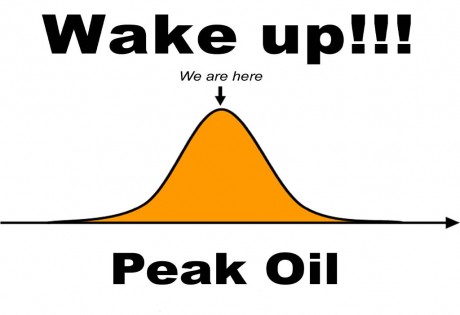
Peak Oil is a scam. When looked at superficially and if one’s outlook is that of the status quo, it sounds logical: when you have a finite resource, and your way of life burns that resource much faster than your way of life can replenish it; and once you get past the halfway point of what remains of that resource, your access to that resources will go into decline. Common sense enough. But, common sense is not always the best sense. In this case, the explanation provided doesn’t even add up to common sense.

Here is the real common sense, which the Peak Oil people pass right over. If, as these good folks tell us, we have already gone through about half of the stuff, then there is still half of it left! The first half took us through one century, so we have about another century to figure something out. OK, maybe less than one century because population has increased, world aggregate production has gone up, etc. But, in the meantime, other energy sources with related technologies are being developed, too. So, why so bleak?

Even this common sense is not a true sense. Peak Oil folks, to base their predictions of the looming doom, are using figures that are simply not correct. The very low estimate of 21 Bbo of available oil in the U.S. is one example. When actual figures are known, we shall see that the protests by the Peak Oilers may have been the smoke and mirrors necessary to actually foment more racism toward the people whose natural resources Uncle Sam is eyeing.

Also important, the Peak Oil people use capitalist vocabulary, while trying to shoehorn quasi-non-capitalist semantics into those bourgeois concepts. If they were to use their vocabulary correctly, they would say the following: The remaining oil is not as easy to get to as was the first half, so it will not be as profitable to dig up as the first half. The resource is there; it’s just not as profitable as before.

Rude bulletin to the Oil companies: Well, mother suckers, you have enjoyed gluttonous, astronomical profits for an entire century, it’s time to settle for a smaller take.

What the Peak Oilers never ask is: for whom is it not profitable to extract the oil? They don’t ask such questions because of where the answer may take them. Extracting oil may not be as profitable as before for those who seek to maximize their profits, but it can remain highly ‘profitable’ for a very long time for those who are concerned with meeting a need.

Another thing Peak Oilers forget about capitalism is that, according to capitalist logic, exactly in such conditions as exist right now in the ‘market’ those who want to maximize their profits actually have an incentive not to extract more oil. If a commodity is precious and rising in value, you can help the value rise further by holding onto your precious goods. It’s called hoarding; as old as capitalism.

Besides these lesser objections, the fundamental question not addressed by Peak Oilers is ownership relations. Maybe there is something fundamentally wrong with the proprietary relationships, especially over natural resources, dictated by the capitalist system.

We need to change our practices fundamentally and look at the concept of ‘resource management’ as one in need of social re-solutions. For example, let’s ask naive questions: Do these privately owned corporations, five or six of which control a majority of the vast worldwide oil resources, actually ‘produce’ the stuff? Of course not! They employ a bunch of available machinery (and in a truly free market, such machinery would be available for rent/lease/etc. to any entity) to drill large, sometimes vertical sometimes diagonal, sometimes short sometimes long holes that reach this resource just sitting there underground, and then to get the oil/gas out of the ground, bottle it up and present it in a form that can be used on a daily basis. Technically speaking, any group of people with the relevant knowledge and the necessary human-and-machine-power should be able to gain access to this oil.

So, the relevant and truly meaningful solutions to the riddle of oil must start out by questioning the legitimacy of private ownership over a natural resource that humans didn’t create; i.e. private property rights over things that came with the planet. If we accept private ownership over a natural resource such as oil, what objection can we raise to the privatization of the air we breathe?

Even assuming that a peak has been reached with regards to oil and we are past the 50% point of what remains, our answer to those who consider the remaining oil as not profitable is simple: by all means please step aside! We propose socializing this natural resource and digging it up ourselves.

The End of the World as We Know It? You Bet!
Here is some added motivation to go in the direction of socializing all natural resources. Some historians have described the big shifts (or quantum leaps) in the successive hegemonic structures of the world capitalist system as characteristically accompanied by particular industries/capitalists taking the lead in shaping each particular era (see, for example, Giovanni Arrighi’s The Long Twentieth Century).

One possible conclusion we can reach concerning the current round of historical events is that those with the greatest economic and political power to shape the next hegemonic structures are the military-oil-finance capitalists, who are unilaterally trying to rearrange the world into something resembling their wet dreams.

The outlines of such a possible future (if unchallenged soon) are already in place: permanent wars for decades; the intensification of the one-sided class warfare worldwide and at home; complete dissolution of civil liberties; extremely heightened levels of incarceration and proliferation of prison camps; increased poverty for increasing portions of the human species; the eventual depletion of most major energy resources of the Third World countries; and by the end of the process, a world fit for the lifestyles of only the wealthiest.

All these elements of a fascistic state must give the working classes a tremendous amount of substance against which to organize. In organizing a counter-offensive, any organization or political activist who wishes to advance the sovereignty of people and workers, must demand the socialization of all natural resources. It is time people realized that capitalism’s answers to questions of resource management have been utter failures on all key counts: socio-economically, politically and environmentally.

As explained above, there is no shortage of oil, and it is not disappearing that fast, and all the frenzy about its disappearance is covering up something more sinister, especially since the people most worried about the depletion of energy resources also have problems with ‘world population trends’; by which they mean there’s too many people in the Third World. Their rhetoric provides smooth winds for the sails of those who want to wage wars of possession over the resources of other peoples.

Henry Kissinger is well known for explaining that a fundamental problem facing imperialist planners in the U.S. is world population, particularly the Third World population. Capitalist world system’s capacity to feed and house does not cover more than an optimal number (which number falls far below the current population levels). As this system ages, it will be even less able to house and feed, and the leaders of the current world system know this too well. They have peered into the future and seen too many pissed off humans, which cannot be a pleasant prospect for the rulers. So, dissolution has become the solution.

For a declining world power with enough arms and weaponry to destroy the world many times over, what better way to remain powerful than to destroy others? One way of destroying is by bombs and bullets; and while you’re at it, use uranium munitions, hence besetting others’ environments with radioactive poisonous material that burns cancers into cells for thousands of years.

Another way to destroy others is sucking up all their resources.

But, just as important, if not more so, is the ‘others’ within: the U.S. ruling class can no longer provide even a modicum of a half decent existence for tens of millions of the citizens under its legal and formal jurisdiction, and the rulers have no intention of doing anything to better people’s lives. Meaning, tens of millions (and counting) of unpleased humans live here at home. And the rulers seem to think that it will get far worse; if the suspension of habeas corpus is any indication.

In U.S. history, the only other time that habeas corpus got suspended was during the Civil War (which, incidentally, means that this time around, it has been suspended for longer than it was during the Civil War!). In this light, it is easy to fancy that for the ruling classes in the U.S., a civil war is already underway. We the People have been ambushed. When will the people fight back? That is the question.

Reza Fiyouzat can be reached at: rfiyouzat@yahoo.com

Source
A Weak Dollar, Bad Fed Policies and Hedge Fund Speculators – Why Oil Prices Are So High – By PAUL CRAIG ROBERTS

Don’t Blame the Saudis – Gas Price Gouging By MIKE WHITNEY

America’s Free Lunch is Over – How Should the Middle East Invest Its Oil Profits? By MICHAEL HUDSON

Posted in Economics, Empire, Middle East | Leave a comment

The Pakistan Airstrikes – America the detested By BRIAN CLOUGHLEY

On the day that American airstrikes in Pakistan killed 11 Frontier Corps soldiers a committee of the US Congress in Washington released a report indicating that America was hated round the world. It recorded that “Anti-Americanism is at record levels thanks to US policies such as the war in Iraq, and Washington’s perceived hypocrisy . . . [The report] based on expert testimony and polling data reveals US approval ratings have fallen to record lows across the world since 2002, particularly in Muslim countries and Latin America.”

It is hardly surprising that America is so unpopular. The Bush Crusade against Muslims, his unconditional support of Israel, his deliberate confrontation with Russia, and the barely concealed intention of Washington’s extremists to overthrow governments in South America that object to US economic domination, are hardly a recipe for world-wide approval.

And the word ‘unpopular’ is less than adequate. What about ‘detested, loathed, abhorred, scorned, feared and despised’? Because that’s what the policies and actions of President Bush have led to over the past dreadful years.

The criminal attack in which two F-15 fighter-bombers and a B-1 bomber thundered down a dozen 500 pound bombs to smash into Pakistan’s territory killing its soldiers was not unusual. In the past four years there have been some dozen recorded strikes by US drones, artillery and aircraft that have slaughtered scores of Pakistani citizens. But nothing can be done about it, because these assaults on Pakistan’s sovereignty are approved by powerful figures in Washington whose mouthpieces are told to say such things as: “They [the dead Frontier Corps soldiers] got caught in the wrong place at the wrong time.”

Further, it was announced by the Pentagon that the attack that killed soldiers in blatant violation of Pakistan’s sovereignty was “a legitimate strike in self-defence.” One can only regard such utterances with contempt, because those who spoke in such a way, and those who ordered them to say what they did, have no concept of loyalty to a friendly country. Nor, for that matter, do they take the slightest heed of international law and custom. The Pentagon quickly distributed a video showing an attack that was said to be a strike on an “enemy” position. There was no indication of where it was, when it was, what ordnance was used, or results of the attack. It was a fatuously amateur exercise in attempted damage control. And of course, later, in the inevitable reassessment (for which read : “We’ve been found out and had better think up a more believable version of the lies we told”), it was revealed that “a US Air Force document indicates bombs were dropped on buildings near the border, and Pentagon spokesman Bryan Whitman conceded there may have been another strike that occurred outside the view of the drone’s camera.”

Yes : like the one that killed 11 Pakistani soldiers in “self-defence”. (Major Akbar, the regular army officer who was killed, was an fine soldier. He leaves a widow and two daughters, aged two and eight months. Any army that suffered such a loss by reason of an attack from a ‘friendly’ nation would be understandably angry.)

Pakistan’s Prime Minster, Mr Gilani, took a courageous and properly patriotic stance in condemning the attack when he said “We will take a stand for sovereignty, integrity and self-respect and we will not allow our soil [to be violated];” and Islamabad’s formal protest to Washington stated that the “senseless use of air power against a Pakistani border post” is “totally unacceptable”. The army was forthright in observing, again rightly, that the airstrikes that killed the Frontier Corps soldiers and an army major were a “completely unprovoked and cowardly act,” which was the sort of statement one would expect from the Chief of the Army Staff, an upright and civilized man, and his spokesman, Major General Athar Abbas (ditto).

It was slightly disturbing, however, that Pakistan’s representative in Washington, the highly intelligent Mr Hussain Haqqani, who has lived in the US for seven years and is still a professor at Boston University, was apparently instructed to deny that the government in Islamabad had considered the airstrikes as an intentional hostile act. He told Reuters that the incident would not cause Pakistan to reconsider its relationship with Washington, “but rather find ways of improving that partnership”.

So there appear to be two messages coming from Islamabad about the killing of Pakistani citizens : “totally unacceptable” and “cowardly act” on one hand ; and an opening to “improving partnership” on the other. But what partnership, what trust, can there be with a nation whose artillery, drones and bombers regularly kill citizens of Pakistan, be they civilians or soldiers?

There is little wonder that Bush America is so hated throughout the Muslim world – and elsewhere, come to that. It is difficult to deny that attacks such as those that killed Pakistan’s soldiers the other day are a demonstration of arrogance ; the open evidence of overweening complacency. America under Bush has become a conceited and insolent empire that cannot be held accountable for its acts of savagery. And there is little room for optimism concerning the next person in the White House, because in Washington the lust for domination, the determination to maintain total military, political and economic supremacy, has reached heights from which dislodgement is verging on the impossible. The world has become an even more dangerous and frightening place, thanks to the brazen barbarity and total unaccountability of the Bush regime.

Brian Cloughley’s website is www.briancloughley.com

Source

Posted in Empire, Pakistan | Leave a comment

Pipeline opens new front in Afghan war

Pipeline from Turkmenistan to Pakistan

OTTAWA — Afghanistan and three of its neighbouring countries have agreed to build a $7.6-billion (U.S.) pipeline that would deliver natural gas from Turkmenistan to energy-starved Pakistan and India – a project running right through the volatile Kandahar province – raising questions about what role Canadian Forces may play in defending the project.

To prepare for proposed construction in 2010, the Afghan government has reportedly given assurances it will clear the route of land mines, and make the path free of Taliban influence.

In a report to be released Thursday, energy economist John Foster says the pipeline is part of a wider struggle by the United States to counter the influence of Russia and Iran over energy trade in the region.

The so-called Turkmenistan-Afghanistan-Pakistan-India pipeline has strong support from Washington because the U.S. government is eager to block a competing pipeline that would bring gas to Pakistan and India from Iran.

The TAPI pipeline would also diminish Russia’s dominance of Central Asian energy exports.

Mr. Foster said the Canadian government has long ignored the broader geopolitical aspects of the Afghanistan deployment, even as NATO forces, including Canadian troops, could be called upon to defend the critical energy infrastructure.

“Government efforts to convince Canadians to stay in Afghanistan have been enormous,” he says in a report prepared for the Canadian Centre for Policy Alternatives, a left-of-centre think tank in Ottawa.

“But the impact of the proposed multibillion-dollar pipeline in areas of Afghanistan under Canadian purview has never been seriously debated.”

In an interview, Mr. Foster – a former economist with Petro-Canada, the World Bank and the Inter-American Development Bank – said he believes the TAPI project could provide major benefits for Afghanistan and the region generally. If the project proceeds – and serious obstacles remain – Afghanistan’s national government could reap $160-million (U.S.) a year in transit fees, an amount equivalent to half the government’s current revenue.

But he said the security issues remain daunting and the Canadian military could – wittingly or not – become embroiled in a “new great game” over energy security that is playing out in the region.

Acting Foreign Affairs Minister David Emerson – who chairs the cabinet committee on Afghanistan – would not comment on the pipeline yesterday. When asked about the project earlier this spring, he said only that Canada wants to see Afghanistan develop a “legitimate and legal economy that can sustain a credible, viable state.”

Backed by the opposition Liberals, the Conservative government has committed to keeping the Canadian Forces in Afghanistan until 2011, although there is growing skepticism that the engagement will end at that point.

New Democratic Party MP Paul Dewar said the government needs to be more forthcoming about the four-nation project and whether Canadian forces would end up guarding the pipeline.

Though experts remain skeptical that the project will get off the ground, the four countries appear determined to prove them wrong.

With the backing of Manila-based Asian Development Bank, ministers from the four countries met in late April and agreed to start construction of the pipeline by 2010, and begin supplying gas by 2015, although critical financial issues must still be worked out.

At a donor’s conference attended by a Canadian delegation last November, countries committed to “assist Afghanistan to become an energy bridge in the region” and to accelerate work on the TAPI pipeline “to develop a technically and commercially viable project.”

There was no public discussion of who would provide the security for the project.

The pipeline proposal goes back to the 1990s, when the Taliban government held talks with California-based Unocal Corp. – and its U.S. government backer – while considering a competing bid by Argentina’s Bridas Corp. Those U.S.-Taliban talks broke down in August, 2001. India, which desperately needs natural gas imports to fuel its growth, later joined the revived project.

Last week, U.S. Assistant Secretary of State Richard Boucher said the U.S. government has a “fundamental strategic interest” in Afghanistan that goes well beyond ensuring it is not used as a launching pad for terrorism, which was the original justification for the UN-sanctioned NATO mission of which Canada is a part.

That objective remains paramount, Mr. Boucher said, but he added that there is a “historic opportunity … of having an open Afghanistan that can act as a conduit for energy, ideas, people, trade, goods from Central Asia and other places down to the Arabian Sea.”

Stephen Blank, a professor at the U.S. Army War College, in Carlisle Barracks, Pa., said the U.S. government is particularly eager to provide an alternative to the proposed $7.5-billion (U.S.) Iran-Pakistan-India pipeline, which those three countries have agreed to pursue.

“From the U.S. viewpoint, the idea of blocking Iran is of paramount significance,” he said.

As well, the United States is pushing the TAPI pipeline as one of several natural gas export options from Central Asia that would bypass Russia, which until now has maintained a stranglehold on gas exports from the region.

But Dr. Blank – who has written extensively on energy-related geopolitics in the region – said he doesn’t believe the TAPI pipeline will be built any time soon due to security concerns.

Still, the project is seen as a key part of Afghanistan’s strategic development plan, which Canada and its NATO partners have endorsed as critical to establishing its political stability.

 Source

Posted in Disclosure | Leave a comment

Deals with Iraq are set to bring oil giants back

By Andrew E. Kramer

Thursday, June 19, 2008

BAGHDAD: Four Western oil companies are in the final stages of negotiations this month on contracts that will return them to Iraq, 36 years after losing their oil concession to nationalization as Saddam Hussein rose to power.

Exxon Mobil, Shell, Total and BP — the original partners in the Iraq Petroleum Company — along with Chevron and a number of smaller oil companies, are in talks with Iraq’s Oil Ministry for no-bid contracts to service Iraq’s largest fields, according to ministry officials, oil company officials and an American diplomat.

The deals, expected to be announced on June 30, will lay the foundation for the first commercial work for the major companies in Iraq since the American invasion, and open a new and potentially lucrative country for their operations.

The no-bid contracts are unusual for the industry, and the offers prevailed over others by more than 40 companies, including companies in Russia, China and India. The contracts, which would run for one to two years and are relatively small by industry standards, would nonetheless give the companies an advantage in bidding on future contracts in a country that many experts consider to be the best hope for a large-scale increase in oil production.

There was suspicion among many in the Arab world and among parts of the American public that the United States had gone to war in Iraq precisely to secure the oil wealth these contracts seek to extract. The Bush administration has said that the war was necessary to combat terrorism. It is not clear what role the United States played in awarding the contracts; there are still American advisers to Iraq’s Oil Ministry.

Sensitive to the appearance that they were profiting from the war and already under pressure because of record high oil prices, senior officials of two of the companies, speaking only on the condition that they not be identified, said they were helping Iraq rebuild its decrepit oil industry.

For an industry being frozen out of new ventures in the world’s dominant oil-producing countries, from Russia to Venezuela, Iraq offers a rare and prized opportunity.

While enriched by $140 per barrel oil, the oil majors are also struggling to replace their reserves as ever more of the world’s oil patch becomes off limits. Governments in countries like Bolivia and Venezuela are nationalizing their oil industries or seeking a larger share of the record profits for their national budgets. Russia and Kazakhstan have forced the major companies to renegotiate contracts.

The Iraqi government’s stated goal in inviting back the major companies is to increase oil production by half a million barrels per day by attracting modern technology and expertise to oil fields now desperately short of both. The revenue would be used for reconstruction, although the Iraqi government has had trouble spending the oil revenues it now has, in part because of bureaucratic inefficiency.

For the American government, increasing output in Iraq, as elsewhere, serves the foreign policy goal of increasing oil production globally to alleviate the exceptionally tight supply that is a cause of soaring prices.

The Iraqi Oil Ministry, through a spokesman, said the no-bid contracts were a stop-gap measure to bring modern skills into the fields while the oil law was pending in Parliament.

It said the companies had been chosen because they had been advising the ministry without charge for two years before being awarded the contracts, and because these companies had the needed technology.

A Shell spokeswoman hinted at the kind of work the companies might be engaged in. “We can confirm that we have submitted a conceptual proposal to the Iraqi authorities to minimize current and future gas flaring in the south through gas gathering and utilization,” said the spokeswoman, Marnie Funk. “The contents of the proposal are confidential.”

While small, the deals hold great promise for the companies.

“The bigger prize everybody is waiting for is development of the giant new fields,” Leila Benali, an authority on Middle East oil at Cambridge Energy Research Associates, said in a telephone interview from the firm’s Paris office. The current contracts, she said, are a “foothold” in Iraq for companies striving for these longer-term deals.

Any Western oil official who comes to Iraq would require heavy security, exposing the companies to all the same logistical nightmares that have hampered previous attempts, often undertaken at huge cost, to rebuild Iraq’s oil infrastructure.

And work in the deserts and swamps that contain much of Iraq’s oil reserves would be virtually impossible unless carried out solely by Iraqi subcontractors, who would likely be threatened by insurgents for cooperating with Western companies.

Yet at today’s oil prices, there is no shortage of companies coveting a contract in Iraq. It is not only one of the few countries where oil reserves are up for grabs, but also one of the few that is viewed within the industry as having considerable potential to rapidly increase production.

David Fyfe, a Middle East analyst at the International Energy Agency, a Paris-based group that monitors oil production for the developed countries, said he believed that Iraq’s output could increase to about 3 million barrels a day from its current 2.5 million, though it would probably take longer than the six months the Oil Ministry estimated.

Fyfe’s organization estimated that repair work on existing fields could bring Iraq’s output up to roughly four million barrels per day within several years. After new fields are tapped, Iraq is expected to reach a plateau of about six million barrels per day, Fyfe said, which could suppress current world oil prices.

The contracts, the two oil company officials said, are a continuation of work the companies had been conducting here to assist the Oil Ministry under two-year-old memorandums of understanding. The companies provided free advice and training to the Iraqis. This relationship with the ministry, said company officials and an American diplomat, was a reason the contracts were not opened to competitive bidding.

A total of 46 companies, including the leading oil companies of China, India and Russia, had memorandums of understanding with the Oil Ministry, yet were not awarded contracts.

The no-bid deals are structured as service contracts. The companies will be paid for their work, rather than offered a license to the oil deposits. As such, they do not require the passage of an oil law setting out terms for competitive bidding. The legislation has been stalled by disputes among Shiite, Sunni and Kurdish parties over revenue sharing and other conditions.

The first oil contracts for the majors in Iraq are exceptional for the oil industry.

They include a provision that could allow the companies to reap large profits at today’s prices: the ministry and companies are negotiating payment in oil rather than cash.

“These are not actually service contracts,” Benali said. “They were designed to circumvent the legislative stalemate” and bring Western companies with experience managing large projects into Iraq before the passage of the oil law.

A clause in the draft contracts would allow the companies to match bids from competing companies to retain the work once it is opened to bidding, according to the Iraq country manager for a major oil company who did not consent to be cited publicly discussing the terms.

Assem Jihad, the Oil Ministry spokesman, said the ministry chose companies it was comfortable working with under the charitable memorandum of understanding agreements, and for their technical prowess. “Because of that, they got the priority,” he said.

In all cases but one, the same company that had provided free advice to the ministry for work on a specific field was offered the technical support contract for that field, one of the companies’ officials said.

The exception is the West Qurna field in southern Iraq, outside Basra. There, the Russian company Lukoil, which claims a Saddam-era contract for the field, had been providing free training to Iraqi engineers, but a consortium of Chevron and Total, a French company, was offered the contract. A spokesman for Lukoil declined to comment.

Charles Ries, the chief economic official in the American Embassy in Baghdad, described the no-bid contracts as a bridging mechanism to bring modern technology into the fields before the oil law was passed, and as an extension of the earlier work without charge.

To be sure, these are not the first foreign oil contracts in Iraq, and all have proved contentious.

The Kurdistan regional government, which in many respects functions as an independent entity in northern Iraq, has concluded a number of deals. Hunt Oil Company of Dallas, for example, signed a production-sharing agreement with the regional government last fall, though its legality is questioned by the central Iraqi government. The technical support agreements, however, are the first commercial work by the major oil companies in Iraq.

The impact, experts say, could be remarkable increases in Iraqi oil output.

While the current contracts are unrelated to the companies’ previous work in Iraq, in a twist of corporate history for some of the world’s largest companies, all four oil majors that had lost their concessions in Iraq are now back.

But a spokesman for Exxon said the company’s approach to Iraq was no different from its work elsewhere.

“Consistent with our longstanding, global business strategy, ExxonMobil would pursue business opportunities as they arise in Iraq, just as we would in other countries in which we are permitted to operate,” the spokesman, Len D’Eramo, said in an e-mailed statement.

But the company is clearly aware of the history. In an interview with Newsweek last fall, the former chief executive of Exxon, Lee Raymond, praised Iraq’s potential as an oil-producing country and added that Exxon was in a position to know. “There is an enormous amount of oil in Iraq,” Raymond said. “We were part of the consortium, the four companies that were there when Saddam Hussein threw us out, and we basically had the whole country.”

Source

Oil Giants Get Ready to Return to Iraq – It Was Oil, All Along By BILL MOYERS and MICHAEL WINSHIP

Posted in Economics, Iraq | Leave a comment

Father of Pakistan’s bomb disowns confession – The Guardian – 30 May.08

AQ KHAN

Download Hear Declan Walsh speaking to Abdul Qadeer Khan

For four years Abdul Qadeer Khan, the father of Pakistan’s nuclear bomb, has lived in the shadows, confined to his Islamabad home since a tearful televised confession in which he admitted selling nuclear technology to Iran, North Korea and Libya. But yesterday the 76-year-old scientist returned to the spotlight with a bold new twist: that he had not meant a word of his earlier admission.

In his first western media interview since 2004, Khan said the confession had been forced upon him by President Pervez Musharraf. “It was not of my own free will. It was handed into my hand,” he told the Guardian. More worryingly, he swore never to cooperate with investigators from the International Atomic Energy Agency, despite persistent fears that nuclear technology traded by his accomplices could fall into terrorist hands.

“Why should I talk to them?” he said. “I am under no obligation. We are not a signatory to the NPT [nuclear non-proliferation treaty]. I have not violated international laws.” He said details of his clandestine nuclear supply network were “my internal affair and my country’s affair”.

Despite numerous requests from the IAEA and the US government, Pakistan has refused access to Khan, who is still considered a national hero. A spokesman at the UN watchdog’s headquarters in Vienna declined to respond to his comments.

Until this week Khan had been unseen and largely unheard since his February 2004 appearance on state television, in which he said he had hawked the country’s nuclear know-how abroad. He offered his “deepest regrets and unqualified apologies”. Since then Khan has been confined to his villa below the Margalla Hills in Islamabad, where he lives with his wife, Henny. He was initially subjected to tight restrictions. Telephone calls were monitored, internet access was forbidden and visitors were turned away by soldiers camped at his gate. He was allowed to leave the house in August 2006 only for a cancer operation in Karachi, which was successful.

But as Musharraf’s powers have ebbed over the past year, so have the ties on Khan been loosened. First he was allowed to have lunch with close friends, then last month he gave his first interview from his house arrest to a local Urdu language newspaper. Now he hopes that the newly elected prime minister, Yousaf Raza Gilani, will set him free.

“As long as you are living there is always hope,” he said, adding that he would wait for pressing economic and political crises to pass. In reality, he may be waiting for Musharraf to be forced out.

Yesterday the military dismissed speculation, prompted by changes in the army command, that Musharraf was about to quit as president. “A section of press is trying to sensationalise routine functional matters,” said a spokesman.

Khan has emerged as Pakistan celebrates the 10th anniversary of the 1998 test that catapulted the volatile nation into the nuclear club. Speaking by telephone, he displayed the mix of defiant nationalism and religious ardour that has endeared him to many Pakistanis.

Reports that nuclear technology was smuggled abroad were “western rubbish”, he said, and unfavourable accounts of his life were “shit piles”. He brusquely dismissed nicknames such as “the Merchant of Menace” from a Time magazine cover.

“It doesn’t bother me at all. They don’t like our God, they don’t like our prophet, they don’t like our holy book, the Qur’an. So how could they like me?” he said.

He dismissed reports that he owned 43 houses in Islamabad, had many bank accounts and owned a $10m hotel in Timbuktu, Mali. “The journalists should have gone and seen – it was an eight-room mud-brick house where the poor people reside,” he said, referring to the latter. Asked if he was rich he answered: “Never was, never will be.”

International nuclear investigators and the Pakistani government paint a very different picture. In 2005, Musharraf confirmed that Khan had supplied North Korea with centrifuges used to enrich uranium. This week the IAEA board received further confirmation linking Pakistan with Iran’s controversial nuclear programme.

Khan said yesterday that nuclear technology was freely available in the west to Iran or North Korea. “They were supplying to us, they were supplying to them … [to] anyone who could pay,” he said.

But for all his defiant talk, one subject remains out of bounds for Khan. Supporters claim he was made a scapegoat for Pakistani generals involved in nuclear trading. Khan refuses to discuss the issue. “I don’t want to talk about it. Those things are to forget about,” he said.

He denied speculation he had hidden evidence of military collusion with his daughter, Dina, who lives in London. “MI6 has spoken to my daughter, they have been to her house. I did not keep any official papers in my house or anywhere,” he said.

Khan directed Pakistan’s nuclear enrichment programme for 25 years. Born in pre-partition India – his family moved to Pakistan after 1947 – his passion for developing a nuclear bomb was driven by hatred of his country of birth.

Khan is worshipped as a hero at home, but the former CIA director George Tenet described him as “at least as dangerous as Osama bin Laden”, and fears of the damage wreaked by his smuggling network were realised when North Korea exploded a nuclear device in October 2006.

In Musharraf’s 2006 memoir, he said he sacked Khan after learning that he was “up to mischief”.

Khan blames this on the “self-seekers and sycophants” around Musharraf, who had allowed Pakistan to become a “banana republic”.

Backstory

The quest for a Pakistani nuclear bomb was launched by Benazir Bhutto’s father, Zulfikar Ali Bhutto, in 1972. “You men here will make it for me and for Pakistan,” he told a secret meeting of scientists and generals. Bhutto’s motive was to counter India’s more developed programme. His secret asset was metallurgist AQ Khan who, while working in a Dutch nuclear laboratory, smuggled secrets home. Khan returned to head the programme in 1976. Pakistan exploded its first nuclear device in 1998. The army has an estimated 50 nuclear warheads.

Source

Posted in Pakistan | Leave a comment

Peak oil hits new heights and the view is not pretty – SMH – 26 May.08

Peak Oil 

China’s devastating earthquake gave the people of Sichuan an early taste of a world that is running out of fuel.

Thousands of families slept in their cars outside petrol stations because the province’s oil infrastructure had been disrupted and its remaining fuel supplies diverted to the rescue effort. Truck drivers loitered patiently for local officials to raise their diesel rations beyond a paltry 100 yuan ($14), while taxi drivers refused to take reporters from Mianyang city to the earthquake disaster zone because they could not get enough petrol for the ride.

Kevin Tu, an energy consultant in Canada, says the earthquake and Chinese Government efforts to build huge strategic reserves in time for the Olympic Games in August will have a “huge impact” on the international market.

And yet oil demand in China and other developing countries is growing so fast, and the international market is so stretched, that international oil prices smashed through to new records this week. Sydney petrol stations were charging as much as $1.60 a litre, but there may be much worse to come. Australian petrol refineries are yet to receive oil that was bought at the new record prices.

On Thursday the world benchmark oil price hit $US135 a barrel. It has more than doubled in a year and is now higher than during the oil supply shocks of 1974 and 1980, even after adjusting for inflation.

Many politicians and the OPEC cartel of oil-exporting countries blame hedge fund speculators for pushing up the price. But the reality is probably less complicated and more serious.

“The only way to [artificially] drive prices up would be to physically hoard more oil, but stocks are at an all-time low,” says Peter Downes, a former Treasury official at the Centre for International Economics in Canberra.

The developed world is adjusting to a world of tight oil supply and high petrol prices. Australians are driving more efficient cars and drifting back to public transport. Even the United States, which consumes a quarter of the world’s oil, reduced its oil consumption in 2006.

The International Monetary Fund’s World Economic Outlook shows the rich countries that make up the OECD reduced oil consumption in each of the past two years. Japan, the world’s efficiency leader, dramatically reduced petrol consumption in the 1970s and still managed to reduce oil consumption by almost 10 per cent over the past decade. But energy efficiency improvements in the rich world are being swamped by the developing world’s rush towards rich-country living standards.

In 2003 China overtook Japan to be the world’s second largest oil consumer. China now consumes 50 per cent more oil than Japan. Chinese consumption has risen by more than 7 per cent a year since 1990.

At this growth rate, China would equal America’s current oil consumption by 2020 and double it by 2030.

About 1200 new cars are being added every day in Beijing alone. And yet only 3.3 in every 100 Chinese people own cars, compared with 77 in the United States. Chinese citizens consume one-third as much oil as Mexicans and one-twelfth as much as Americans. The country’s thirst for oil is at its early stages, and India is close behind.

The roads of Bangalore, India’s IT boom town, are perpetually gridlocked as the city’s new middle-class families rush to buy their first family cars. The number of new cars being sold in India is expected to surge from 1.3 million this year to 4 million a year over the next eight years. Last year about a dozen new car models were released in India. This year 75 new models are expected. One of them, the Tata Nano, will sell for about $2600 and open the dream of car ownership to a huge new cohort of Indian families.

India’s use of oil doubled between 1992 and 2005 and has continued to rocket.

China, India and other fast-growing developing countries have made matters worse with huge and rapidly growing fuel subsidies and price distortions, which they dare not end at a time when inflation has become a pressing political problem.

But developing world aspirations are colliding with the reality of finite oil supplies. This oil-price shock has been five years in the making but it may only just be beginning.

James Hamilton, professor of economics at the University of California, San Diego, believes the developing world will be forced to choose a different dream.

“I cannot imagine that the projected path for China will ever become a reality,” he wrote on his Econbrowser website this week. “Oil prices have to rise to whatever value it takes to prevent that from happening.”

There is simply not enough oil in the world for China, India and the developing world to emulate rich-world consumption standards.

Traditionally, economists have been sceptical about the idea of “peak oil” – a point at which oil production will necessarily decline – believing that rising prices will drive oil companies to do what ever it takes to extract more oil from previously inaccessible places, such as Canadian oil sands or Brazil’s offshore discoveries, kilometres beneath the seabed.

And yet oil prices have risen seven-fold in five years and there is little in new production or discoveries. Existing oil fields, meanwhile, are running out faster than anyone predicted. The further ahead that analysts look, the worse the problem gets. Investment bank Goldman Sachs now expects oil prices to average $US141 in the second half of this year, before rising as high as $US200.

Tellingly, this week the price of oil to be delivered years into the future rose three times as fast as prices for delivery this July. On Friday it cost more than $US145 to buy oil for delivery in 2016 – up an astonishing $US19 in just one week. While OPEC oil producers are deliberately curtailing production, they, too, will face physical limits.

Downes predicts world oil production will peak between 2020 and 2030. Some outlying commentators say the moment will arrive even sooner. Germany’s Energy Research Group says the phrase “peak oil” is grammatically misleading because oil production has peaked.

For Australian motorists, the question is what international oil price will it take to force developing world consumers to choose a different path, and what will that do to the Australian economy.

It is a little known fact that only about one-third of the oil used in Australia is dispensed to consumers at the petrol pump. The rest is embedded in transport costs for other goods as well as in oil products such as plastic.

This indirect, larger oil shock impact may take nine months to flow through to consumer prices. And while Australia and the world survived oil prices rising by $US40 in four years to the middle of last year, they have now watched prices jump a further $US75 in 12 months. At the same time, prices for almost all other commodities have shot through the roof.

“You add all these together and it roughly equates to what we saw in 1980 and 1974 – major supply side shocks,” Downes says. “Financial markets have a false sense of security about what impact this will have.”

Downes estimates the recent commodity price shock will push inflation up by about 2 percentage points across the OECD, including Australia, at a time when inflation is already uncomfortably high.

Citigroup’s chief economist in Australia, Paul Brennan, yesterday said he has calculated that an average oil price of $US141 a barrel this year would push inflation up by 3.5 percentage points across the Asian region and take 1.5 percentage points off regional gross domestic product growth.

Australia remains a lucky country. It may import a lot of oil but it is a huge net exporter of energy and resource commodities. The oil price shock is part of a broader commodities boom that will continue to make Australians richer. Mortgaged home owners will pay the price, if the Reserve Bank is again compelled to raise interest rates to keep inflation under control.

Source

Useful Websites

Life after the oil crash

Peakoil.com

http://www.hubbertpeak.com/

The Wolf at the Door – A beginners guide to Peak Oil

Posted in Economics, Empire | Leave a comment

McCain’s Spiritual Guide

And this:

McCain Endorser Hagee: God Sent Hitler, Jews Have Dead Souls

John Hagee: God will kill non-Christians with meteors

Posted in Empire, Redneckia, Video | Leave a comment

Palestine Pre – 1947

Posted in Palestine, Video | 1 Comment