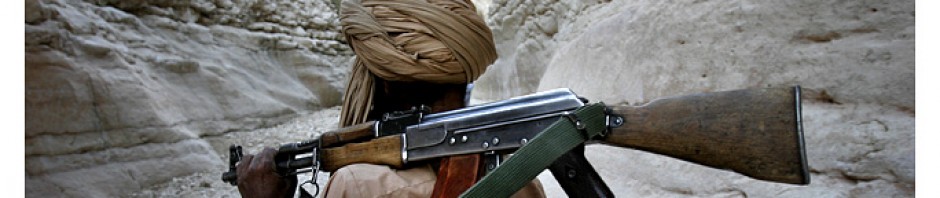
Israel’s massacre in Gaza proves beyond doubt that the treacherous Muslim rulers must be removed


Israel finally launched its ground offensive in Gaza after carpet bombing the strip indiscriminately, slaughtering and massacring hundreds. Many across the world – Muslim and non-Muslim have watched in horror as Israel continued to churn out lies and as pictures of Israeli bombardment beamed around the world. Even the usual pro-Israeli influential elements within the global media have been unable to defend Israel as images of dead bodies dumped outside hospitals were beamed around the world.


The response by the Ummah to the events of Gaza globally has shown that after undergoing centuries of decline the ummah has responded as one body. The outpouring of emotion and the demonstrations around the world show that although geographically Muslims are dispersed around the world they viewed Israel’s massacre in Gaza as against a section of the Ummah and not as Palestinians or foreigners.

This shows that the Ummah has responded as one body to the attacks and we also see this has also been the case with the general onslaught the West has been leading against Muslims since 9/11.

Muslims currently all over the world are reacting as one body to the onslaught against their brothers and sisters.

This treachery of the rulers has reached a new watershed as their collaboration has been in open rather then in secret. Only 20 years ago many thinkers and scholars in the Muslim world could not sense the treachery of the Muslim rulers. However, after the first Gulf war, which was perpretrated under the pretext of the Iraqi invasion of Kuwait, both the American animosity and the complicity of the Muslim rulers became evident. Not only did the Gulf regimes lose credibility for allowing the American troops bases in the Hijaz and other places, but so too the Islamic scholars who justified the war. Muslims could sense the gulf between themselves and the rulers.

The role of the rulers been completely exposed; Egypt has been exposed by Israel’s most respected daily paper, Haaretz, of being informed of the attack days before it was carried out. The Arab rulers rather then sending their armies have instead attempted to attack Iran for its so called support of HAMAS. All the rulers in the Muslim world have done nothing other then attack HAMAS for causing the crisis and this has now proven to all that Israel can only carry out such attacks due to the treachery of the Muslim rulers. We have now reached a point where the fault line between the rulers and the Ummah is bigger than ever. 

If we look at the recent history of the Muslim world and the relationship between the people and the rulers, we can see that this relationship has become tenuous and now the Muslims hold concepts and sentiments that fundamentally contradict that of the Muslim rulers. This gulf was not present for most of the last century.

We have witnessed how Jamal Abdul Nasser enjoyed the strongest relationship with the people. He was seen as the Arab saviour due to his wresting of the Suez Canal from the British and his stand against Israel. The Muslims believed that Jamal Abdul Nasser was reflective of them.

The Muslims hailed Yasser Arafat as one of the lions of Islam. Arafat managed to enlist hundreds of thousands of young Arab men to his rallying call for Jihad against the Israeli occupiers.

The Muslim Ummah until the late 1980’s were oblivious to the actions of King Fahd and the other Gulf rulers due to their economic prosperity and the influence of the Saudi backed scholars and movements.

The relationship between the rulers and the ruled in the Muslim world was always weak; people were apathetic to their failings for a whole host of reasons. The chasm was initially masked due to the relative strength of Arab nationalism and other ideas such as Ba’athism and Socialism. In some of the Gulf States, economic prosperity masked the underlying chasm. This was the case until 9/11. The attacks on the twin towers brought to the forefront that Muslims have a completely different view to how life should be organised relative to the West. When Muslims from the west were found fighting alongside the Taliban this sent shockwaves around the Western world, as such Muslims who were born in the West placed their loyalty with the Ummah rather then the nation they were born in. The subsequent war in Iraq and the complacency of the rulers proved to many that the Muslim rulers share virtually nothing with the Ummah.

The question that needs to be asked is: if the values the Ummah wants to live by are different to the values that are implemented over them then why do the Muslims continue to abide by these values and allow the rulers who implement them to rule over them? The answer to this is that the rulers in the Muslim world do not maintain their power by sharing a close affinity with their people, but rather through brutal methods of force and torture in order to subjugate the masses. This point is well established and does not need explanation. This has been the case for many years now and is not a new development.

Today the Muslim rulers are in political chains; trapped between subservience to an ever demanding America and the West and fear of removal by their own people. Only this week online news reports quoted unidentified diplomatic sources as saying that Egyptian authorities have arrested a number of high-ranking army officers and put military police on high alert following signs of growing resentment within the army over the way President Hosni Mubarak has handled the current situation in Gaza.

With this in mind the following points should be remembered as we move forward:

  • – The Ummah globally needs to beware that the treachery of the rulers continues without shame. The Muslim rulers are deceiving the Ummah by allowing demonstrations, protests and vigils. Such actions are not enough. Muslims globally must push the rulers with all ability to mobilise the armies to fight.

  • – At the same time the Ummah should expose the treachery of the rulers for not doing actions which will save the Ummah and push the armies of the Muslim world to remove such traitors. The armies will only move if they feel the Ummah globally is against such rulers who are now a liability.

  • – The armies of the Muslim world themselves are part of the Ummah. They feel the problems of the Ummah. Most of the Arab rulers actually gain their legitimacy by having the army on their side and without them they are useless. A strong message needs to be sent to the armies that its time for change, which requires the removal of the rulers.

  • – Muslims in the West should also be careful in working with non-Muslim groups. Many Socialist and lefty organisations are attempting to respond to Israel’s massacre making their view the best organised response in the face in injustice. It should be remembered such movements are calling for the establishment of an independent Palestinian state and lobbying Western governments who created Israel and continue to collaborate with them to solve the problem they created.

  • – Whilst Muslims are forced to accept the legitimacy of Israel, Israel on the other hand is never condemned for not accepting a state for Muslims. An independent Palestine in reality is a jail for Muslims and unfortunately many Muslims have fallen prey to this. Israel never disengaged from Gaza, it simply relocated its settlers to seized West Bank land to strengthen its hold on the territory. It redeployed to new positions so it could re-enter Gaza at will. It has ensured it controls Gaza’s airspace and coastline, movement within and between Gaza and the West Bank and virtually all other aspects of Muslim lives. Since HAMAS’s January 2006 electoral victory Israel has falsely labelled HAMAS a terrorist organization, cut off all outside aid, imposed a crippling economic embargo, imprisoned 1.5 million Muslims in isolation, inflicted devastating human suffering and stepped up oppression in an all too familiar pattern: repeated incursions, killings, targeted assassinations, mass arrests, incarcerations and torture.

Source

Posted in Palestine | Leave a comment

How Israel is Multiplying Hamas by a Thousand By URI AVNERY

JUST AFTER MIDNIGHT, Aljazeera’s Arabic channel was reporting on events in Gaza. Suddenly the camera was pointing upwards towards the dark sky. The screen was pitch black. Nothing could be seen, but there was a sound to be heard: the noise of airplanes, a frightening, a terrifying droning.

It was impossible not to think about the tens of thousands of Gazan children who were hearing that sound at that moment, cringing with fright, paralyzed by fear, waiting for the bombs to fall.

* * *

“ISRAEL MUST defend itself against the rockets that are terrorizing our Southern towns,” the Israeli spokesmen explained. “Palestinians must respond to the killing of their fighters inside the Gaza Strip,” the Hamas spokesmen declared.

As a matter of fact, the cease-fire did not collapse, because there was no real cease-fire to start with. The main requirement for any cease-fire in the Gaza Strip must be the opening of the border crossings. There can be no life in Gaza without a steady flow of supplies. But the crossings were not opened, except for a few hours now and again. The blockade on land, on sea and in the air against a million and a half human beings is an act of war, as much as any dropping of bombs or launching of rockets. It paralyzes life in the Gaza Strip: eliminating most sources of employment, pushing hundreds of thousands to the brink of starvation, stopping most hospitals from functioning, disrupting the supply of electricity and water.

Those who decided to close the crossings – under whatever pretext – knew that there is no real cease-fire under these conditions.

That is the main thing. Then there came the small provocations which were designed to get Hamas to react. After several months, in which hardly any Qassam rockets were launched, an army unit was sent into the Strip “in order to destroy a tunnel that came close to the border fence”. From a purely military point of view, it would have made more sense to lay an ambush on our side of the fence. But the aim was to find a pretext for the termination of the cease-fire, in a way that made it plausible to put the blame on the Palestinians. And indeed, after several such small actions, in which Hamas fighters were killed, Hamas retaliated with a massive launch of rockets, and – lo and behold – the cease-fire was at an end. Everybody blamed Hamas.

* * *

WHAT WAS THE AIM? Tzipi Livni announced it openly: to liquidate Hamas rule in Gaza. The Qassams served only as a pretext.

Liquidate Hamas rule? That sounds like a chapter out of “The March of Folly”. After all, it is no secret that it was the Israeli government which set up Hamas to start with. When I once asked a former Shin-Bet chief, Yaakov Peri, about it, he answered enigmatically: “We did not create it, but we did not hinder its creation.”

For years, the occupation authorities favored the Islamic movement in the occupied territories. All other political activities were rigorously suppressed, but their activities in the mosques were permitted. The calculation was simple and naive: at the time, the PLO was considered the main enemy, Yasser Arafat was the current Satan. The Islamic movement was preaching against the PLO and Arafat, and was therefore viewed as an ally.

With the outbreak of the first intifada in 1987, the Islamic movement officially renamed itself Hamas (Arabic initials of “Islamic Resistance Movement”) and joined the fight. Even then, the Shin-Bet took no action against them for almost a year, while Fatah members were executed or imprisoned in large numbers. Only after a year, were Sheikh Ahmed Yassin and his colleagues also arrested.

Since then the wheel has turned. Hamas has now become the current Satan, and the PLO is considered by many in Israel almost as a branch of the Zionist organization. The logical conclusion for an Israeli government seeking peace would have been to make wide-ranging concessions to the Fatah leadership: ending of the occupation, signing of a peace treaty, foundation of the State of Palestine, withdrawal to the 1967 borders, a reasonable solution of the refugee problem, release of all Palestinian prisoners. That would have arrested the rise of Hamas for sure.

But logic has little influence on politics. Nothing of this sort happened. On the contrary, after the murder of Arafat, Ariel Sharon declared that Mahmoud Abbas, who took his place, was a “plucked chicken”. Abbas was not allowed the slightest political achievement. The negotiations, under American auspices, became a joke. The most authentic Fatah leader, Marwan Barghouti, was sent to prison for life. Instead of a massive prisoner release, there were petty and insulting “gestures”.

Abbas was systematically humiliated, Fatah looked like an empty shell and Hamas won a resounding victory in the Palestinian election – the most democratic election ever held in the Arab world. Israel boycotted the elected government. In the ensuing internal struggle, Hamas assumed direct control over the Gaza Strip.

And now, after all this, the government of Israel decided to “liquidate Hamas rule in Gaza” – with blood, fire and columns of smoke.

* * *

THE OFFICIAL NAME of the war is “Cast Lead”, two words from a children’s song about a Hanukkah toy.

It would be more accurate to call it “the the Election War”.

In the past, too, military action has been taken during election campaigns. Menachem Begin bombed the Iraqi nuclear reactor during the 1981 campaign. When Shimon Peres claimed that this was an election gimmick, Begin cried out at his next rally: “Jews, do you believe that I would send our brave boys to their death or, worse, to be taken prisoner by human animals, in order to win an election?” Begin won.

Peres is no Begin. When, during the 1996 election campaign, he ordered the invasion of Lebanon (operation “Grapes of Wrath”), everybody was convinced that he had done it for electoral gain. The war was a failure and Peres lost the elections and Binyamin Netanyahu came to power.

Barak and Tzipi Livni are now resorting to the same old trick. According to the polls, Barak’s predicted election result rose within 48 hours by five Knesset seats. About 80 dead Palestinians for each seat. But it is difficult to walk on a pile of dead bodies. The success may evaporate in a minute if the war comes to be considered by the Israeli public as a failure. For example, if the rockets continue to hit Beersheba, or if the ground attack leads to heavy Israeli casualties.

The timing was chosen meticulously from another angle too. The attack started two days after Christmas, when American and European leaders are on holiday until after New Year. The calculation: even if somebody wanted to try and stop the war, no one would give up his holiday. That ensured several days free from outside pressures.

Another reason for the timing: these are George Bush’s last days in the White House. This blood-soaked moron could be expected to support the war enthusiastically, as indeed he did. Barack Obama has not yet entered office and had a ready made pretext for keeping silent: “there is only one President”. The silence does not bode well for the term of president Obama.

* * *

THE MAIN LINE was: not to repeat the mistakes of Lebanon War II. This was endlessly repeated on all the news programs and talk shows.

This does not change the fact: the Gaza War is an almost exact replica of the second Lebanon war.

The strategic concept is the same: to terrorize the civilian population by unremitting attacks from the air, sowing death and destruction. This poses no danger to the pilots, since the Palestinians have no anti-aircraft weapons at all. The calculation: if the entire life-supporting infrastructure in the Strip is utterly destroyed and total anarchy ensues, the population will rise up and overthrow the Hamas regime. Mahmoud Abbas will then ride back into Gaza on the back of Israeli tanks.

In Lebanon, this calculation did not work out. The bombed population, including the Christians, rallied behind Hizbullah, and Hassan Nasrallah became the hero of the Arab world. Something similar will probably happen this time, too. Generals are experts on using weapons and moving troops, not on mass psychology.

Some time ago I wrote that the Gaza blockade was a scientific experiment designed to find out how much one can starve a population and turn its life into hell before they break. This experiment was conducted with the generous help of Europe and the US. Up to now, it did not succeed. Hamas became stronger and the range of the Qassams became longer. The present war is a continuation of the experiment by other means.

It may be that the army will “have no alternative” but to re-conquer the Gaza Strip because there is no other way to stop the Qassams – except coming to an agreement with Hamas, which is contrary to government policy. When the ground invasion starts, everything will depend on the motivation and capabilities of the Hamas fighters vis-à-vis the Israeli soldiers. Nobody can know what will happen.

* * *

DAY AFTER DAY, night after night, Aljazeera’s Arabic channel broadcasts the atrocious pictures: heaps of mutilated bodies, tearful relatives looking for their dear ones among the dozens of corpses spread out on the ground, a woman pulling her young daughter from under the rubble, doctors without medicines trying to save the lives of the wounded. (The English-language Aljazeera, unlike its Arab-language sister-station, has undergone an amazing about face, broadcasting only a sanitized picture and freely distributing Israeli government propaganda. It would be interesting to know what happened there.)

Millions are seeing these terrible images, picture after picture, day after day. These images are imprinted on their minds forever: horrible Israel, abominable Israel, inhuman Israel. A whole generation of haters. That is a terrible price, which we will be compelled to pay long after the other results of the war itself have been forgotten in Israel.

But there is another thing that is being imprinted on the minds of these millions: the picture of the miserable, corrupt, passive Arab regimes.

As seen by Arabs, one fact stands out above all others: the wall of shame.

For the million and a half Arabs in Gaza, who are suffering so terribly, the only opening to the world that is not dominated by Israel is the border with Egypt. Only from there can food arrive to sustain life and medicaments to save the injured. This border remains closed at the height of the horror. The Egyptian army has blocked the only way for food and medicines to enter, while surgeons operate on the wounded without anesthetics.

Throughout the Arab world, from end to end, there echoed the words of Hassan Nasrallah: The leaders of Egypt are accomplices to the crime, they are collaborating with the “Zionist enemy” in trying to break the Palestinian people. It can be assumed that he did not mean only Mubarak, but also all the other leaders, from the king of Saudi Arabia to the Palestinian President. Seeing the demonstrations throughout the Arab world and listening to the slogans, one gets the impression that their leaders seem to many Arabs pathetic at best, and miserable collaborators at worst.

This will have historic consequences. A whole generation of Arab leaders, a generation imbued with the ideology of secular Arab nationalism, the successors of Gamal Abd-al-Nasser, Hafez al-Assad and Yasser Arafat, may be swept from the stage. In the Arab space, the only viable alternative is the ideology of Islamic fundamentalism.

This war is a writing on the wall: Israel is missing the historic chance of making peace with secular Arab nationalism. Tomorrow, It may be faced with a uniformly fundamentalist Arab world, Hamas multiplied by a thousand.

MY TAXI DRIVER in Tel-Aviv the other day was thinking aloud: Why not call up the sons of the ministers and members of the Knesset, form them into a combat unit and send them off to head the coming ground attack on Gaza?

Uri Avnery is an Israeli writer and peace activist with Gush Shalom. He is a contributor to CounterPunch’s book The Politics of Anti-Semitism.

Source

The Real Goal of the Gaza Assault By JONATHAN COOK

Are All Americans Guilty? – Whatever Happened to Western Morality? By PAUL CRAIG ROBERTS

Stealing Gaza

A Rubber Stamp for U.S. Dictats – UN Complicity in Israel’s Massacre in Gaza – By OMAR BARGHOUTI

A Defining Moment for the Human Rights Movement – Israel’s Dogs of War By SONJA KARKAR

Posted in Disclosure, Palestine | Leave a comment

Accomplice in Cairo – Mr. Mubarak, Tear Down That Wall! By FRANKLIN LAMB

Egyptian President Hosni Mubarak and the Israeli PM Ehod Olmert - File 2007

“I’m not calling for a coup d’etat, but go talk to your leaders and tell them you do not accept what is happening in Gaza”.

Hezbollah Sec-Gen Hasan Nasrallah calling for Egyptians “in millions” to demonstrate their support for opening the Rafah crossing from Gaza to Egypt, 28 December 2008

Giggling like smitten teenagers, exchanging Channakah and Eid greetings (neither acknowledges the more Shi’a associated Ashoura) Hosni Mubarak and Tzipi Livni ‘hooked up’ this past week in Cairo to discuss Gaza.

Both spoke of their desire to see Corporal Shalit returned safely. Both knew Israel’s former Mossad operative, current Foreign Minister, and Prime Minister wannabe had a permission slip from the Bush Administration for all-out war against the Palestinians in the 25 by 6 mile territorial snippet along the Eastern Mediterranean. When the correct photo-op was selected for public distribution, it showed a concerned and dour Egyptian President brooding with arching brow.

The duo focused on ‘diplomatic logistics and cover’ and the urgency to crush Hamas. They appeared oblivious to all who happened to be in the vicinity of American rockets and bombs or institutions leveled by waves of F-16 fighter jets and missiles kept in ready use from the $ 200 million worth of spare parts supplied by US taxpayers from 200l-2006, as well as 186 million gallons of JP-8 aviation jet fuel , and thousands of TOW, Hellfire and “bunker buster” bombs and missiles, freed up for delivery to Israel last year when the Bush administration signed a $ 1.3 billion contract with Raytheon.

What was not on the agenda was what both knew but ignored. The fate of 1.5 million people, one of the highest population densities in the world with nearly 60 per cent of its population 16 years or younger and nearly 75 per cent of whom are malnourished, and according to one recent estimate by the World Health Organization, 46 per cent of whom are afflicted with acute anemia, with 30 per cent suffering from stunted growth as a result of chronic malnutrition and who would need an escape via Rafah.

One wonders if the dynamic duo discussed the fact that 10 per cent of these children have permanent brain damage or that eighty-two per cent are afflicted with post-traumatic stress disorder; the great majority of them having witnessed death first-hand or that more than eighty per cent of the population as a whole is dependent on food aid? Were Mubrak and Livni aware of reports that the sonic booms associated with Israeli overflights have caused widespread deafness, especially among children?

The UN and eyewitnesses such as members of the Free Gaza Project report that unemployment is rampant – upwards of 60 per cent with most Gazans subsisting on less than $2 a day.

Shooting fish in a barrel

Even a cursory examination of the events which began on December 27, 2008 require that Mohammad Hosni Mubarak be added as an accomplice to the pending International Criminal Court (ICC) case concerning international crimes being committed by Israel with American weapons.

HOKOK, the Beirut- and Washington DC-based International Coalition against Impunity, which filed a case against Israeli political leaders regarding Israeli crimes committed in Gaza with the International Criminal Court at The Hague on December 10, 2008, will send international lawyers back to the ICC on January 15, 2009, to amend its complaint under the Rome Statute and indict Egypt’s Mubarak among the Defendants.

To his great credit, Professor Richard Falk, the United Nations Special Rapporteur on Human Rights in the Palestinian Territories and professor emeritus of international law at Princeton University, has joined HOKOK’s call for the International Criminal Court to investigate Israeli violations and determine whether the Israeli leaders responsible for the Gaza siege should be indicted and prosecuted for violations of international criminal law.

The Case against Mohammad Hosni Mubarak

Mubarak knew that Gazans would need a safety valve, an escape route from the coming carnage, which according to the Washington-based Council for the National Interest (CNI), appears to be another Sharpeville Massacre. CNI points out that “Nearly fifty years ago, the South African regime attacked a crowd protesting the conditions in the Bantustan of Sharpeville and in a matter of minutes killed some 69 black South Africans. Eventually, after world reaction to this “incident,” sanctions were imposed and they led to the end of apartheid in South Africa. Using American weapons, Israel has just indiscriminately killed more than four times that number in Gaza. In 1960 there were 20 million black South Africans and today there are only one and a half million Palestinians in Gaza. So the first two days of the American-supported Israeli attempt to wipe out Hamas is sixty times as criminal as the Sharpeville massacre.

Mubarak’s actions make him complicit in International Crimes outlawed by Article 2 of the Convention on Genocide by assisting in the killing members of a specific ethnic group; causing serious bodily or mental harm to members of the group; deliberately inflicting on the group conditions of life calculated to bring about its physical destruction in whole or in part.

By sealing its border with Gaza and forcing back many Palestinians at gunpoint who were trying to escape the slaughter, Mubarak violates basic Islamic, Christian and Judaic morality that requires that he open the cork of the bottle and let these men, women and children live. So does international law. Otherwise he is actively responsible and complicit in Israel’s project of creating a situation where Palestinians, in Rafael Eitan’s infamous phrase, “will only be able to scurry around like drugged roaches in a bottle.”

By denying the possibility of a broad range of necessities – food, cooking or heating oil, water, electricity, shelter, medicines, for a population unable to be self-sufficient at the end of decades of occupation, and locking them inside Gaza in a blazing holocaust, amidst millions of gallons of untreated sewage is criminal conduct: Mubarak is complicit.

By forcing Palestinians from Gaza back into killing fields and subjecting them to massive collective punishment, Mubarak is in flagrant violation of international humanitarian law as laid down in Article 33 of the Fourth Geneva Convention.

On Monday morning, Israeli planes bombed a mosque. The house next to the mosque collapsed and inside, five sisters aged 2 to 10 years old were killed. Mubarak is helping Israel turn Gaza into a modern version of the Warsaw ghetto.

By slamming and sealing the life saving escape route Moubarak signs on to the effects of the scorn of international revulsion, the genocide, the political objective, the empirical objectives of Western dominance of the Middle East for a Greater Israel alongside an Egyptian Kingdom, the religious fanaticism, the psychopathology and the indiscriminate brutality and ruthlessness.

Mubarak’s actions make him complicit in International Crimes outlawed by Article 2 of the Convention on Genocide by assisting in the killing members of a specific ethnic group; causing serious bodily or mental harm to members of the group; deliberately inflicting on the group conditions of life calculated to bring about its physical destruction in whole or in part.

Some believe Egypt’s President went further. London-based newspaper al-Quds al-Arabi quote sources who say Egyptian intelligence minister deliberately misled the Palestinian organization about IDF intentions. Hamas sources say this is why the movement’s compounds were not evacuated: “Egypt collaborated with Israel in its Gaza attack and lulled Hamas into thinking the Israel Defense Forces would not attack Gaza”, Al Quda al-Arabi claimed. The report, based on Arab diplomatic sources, claims that Egyptian Intelligence Minister Omar Suleiman told a number of Arab leaders that Israel was intending to attack the Gaza Strip in a limited manner in order to pressure the Palestinian organization into agreeing to a renewed ceasefire.

Hamas sources close to former Palestinian Foreign Minister Mahmoud al-Zahar also reported that Egypt told Hamas on Friday evening that Israel had agreed to begin negotiations about a potential ceasefire and would not attack Gaza before Cairo had attempted to settle the issue.

These sources noted that, in general, Hamas’ internal ministry orders the evacuation of its security compounds following any Israeli threat of operative action. They had not done so this time based on Egypt’s assurance that Israel wouldn’t attack and based on the assumption that an IDF attack would not be launched on Saturday.

Colluding with Israel, the Bush administration and the Palestinian Authority in this aggression toward the Palestinians of Gaza, Mubarak reminds one of the Jews who served the Nazis as capos inside the ghettos of German controlled Europe during World War II.

Hasan Nasrallah has reminded the Egyptian people of their duty, and once it becomes widely known that Mubarak cooperated with Israel as an adjunct of its colonial army in the assault against Gaza he may be deposed as un-redeemable. Rejecting the Resistance to Zionism, Mubarak invites Revolution.

Lebanon reacts to the Gaza Massacre

Lebanon has witnessed no fewer than 30 demonstrations and day and night student vigils against the Gaza slaughter during the past 72 hours. Tens of thousands of people massed in the southern suburbs of Beirut and packed the surrounding streets for a Hezbollah-led protest rally yesterday, calling for support for Gaza as it underwent its third day of Israeli attacks. Three more demonstrations are planned for this evening.

Sunday saw a joint Fatah-Hamas demonstration which included Osama Hamdan and Fatah’s Abass Zaki outside the UN HQ known as ESCWA (Economic and Social Commission for Western Asia). Hezbollah plans daily demonstrations until Gaza is free according to its Media Office.
All alongside countless smaller manifestations composed of smaller groups, boy and girl scouts from various confessions, individuals, shopkeepers, and increased attendance in Mosques and Churches, some of the latter ringing bells, throughout Lebanon.

The sewage and rain flooded alleys of Beirut’s Palestinian Refugee Camps, Shatila, Burj Burajneh and the smaller Mar Elias Camp, are filled with equally steadfast refugees in support of their countrymen to the south.

Franklin Lamb, an international lawyer and researcher currently based in Beirut, drafted for HOKOK, the International Coalition against Impunity, its Complaint/Submission filed on December 10, 2008 (the 60th Anniversary of the signing of the Universal Declaration of Human Rights) with the Internationally Criminal Court in The Hague. The Case charges Israel with continuing crimes in Gaza and throughout Occupied Palestine. In January 2009 HOKOK will petition the ICC to include Mohammad Hosni Mubarak as an additional defendant in the Case. Lamb can be reached at fplamb@sabrashatila.org

Source

Posted in Egypt, Palestine | Leave a comment

Israel Has No Intention of Granting a Palestinian State – If Hamas Did Not Exist By JENNIFER LOEWENSTEIN

Let us get one thing perfectly straight. If the wholesale mutilation and degradation of the Gaza Strip is going to continue; if Israel’s will is at one with that of the United States; if the European Union, Russia, the United Nations and all the international legal agencies and organizations spread across the globe are going to continue to sit by like hollow mannequins doing nothing but making repeated “calls” for a “ceasefire” on “both sides”; if the cowardly, obsequious and supine Arab States are going to stand by watching their brethren get slaughtered by the hour while the world’s bullying Superpower eyes them threateningly from Washington lest they say something a little to their disliking; then let us at least tell the truth why this hell on earth is taking place.

The state terror unleashed from the skies and on the ground against the Gaza Strip as we speak has nothing to do with Hamas. It has nothing to do with “Terror”. It has nothing to do with the long-term “security” of the Jewish State or with Hizbullah or Syria or Iran except insofar as it is aggravating the conditions that have led up to this crisis today. It has nothing to do with some conjured-up “war” – a cynical and overused euphemism that amounts to little more the wholesale enslavement of any nation that dares claim its sovereign rights; that dares assert that its resources are its own; that doesn’t want one of the Empire’s obscene military bases sitting on its cherished land.

This crisis has nothing to do with freedom, democracy, justice or peace. It is not about Mahmoud Zahhar or Khalid Mash’al or Ismail Haniyeh. It is not about Hassan Nasrallah or Mahmoud Ahmadinejad. These are all circumstantial players who have gained a role in the current tempest only now that the situation has been allowed for 61 years to develop into the catastrophe that it is today. The Islamist factor has colored and will continue to color the atmosphere of the crisis; it has enlisted the current leaders and mobilized wide sectors of the world’s population. The primary symbols today are Islamic – the mosques, the Qur’an, the references to the Prophet Muhammad and to Jihad. But these symbols could disappear and the impasse would continue.

There was a time when Fatah and the PFLP held the day; when few Palestinians wanted anything to do with Islamist policies and politics. Such politics have nothing to do with primitive rockets being fired over the border, or smuggling tunnels and black-market weapons; just as Arafat’s Fatah had little to do with stones and suicide bombings. The associations are coincidental; the creations of a given political environment. They are the result of something entirely different than what the lying politicians and their analysts are telling you. They have become part of the landscape of human events in the modern Middle East today; but incidentals wholly as lethal, or as recalcitrant, deadly, angry or incorrigible could just as soon have been in their places.

Strip away the clichés and the vacuous newspeak blaring out across the servile media and its pathetic corps of voluntary state servants in the Western world and what you will find is the naked desire for hegemony; for power over the weak and dominion over the world’s wealth. Worse yet you will find that the selfishness, the hatred and indifference, the racism and bigotry, the egotism and hedonism that we try so hard to cover up with our sophisticated jargon, our refined academic theories and models actually help to guide our basest and ugliest desires. The callousness with which we in indulge in them all are endemic to our very culture; thriving here like flies on a corpse.

Strip away the current symbols and language of the victims of our selfish and devastating whims and you will find the simple, impassioned and unaffected cries of the downtrodden; of the ‘wretched of the earth’ begging you to cease your cold aggression against their children and their homes; their families and their villages; begging you to leave them alone to have their fish and their bread, their oranges, their olives and their thyme; asking you first politely and then with increasing disbelief why you cannot let them live undisturbed on the land of their ancestors; unexploited, free of the fear of expulsion; of ravishment and devastation; free of permits and roadblocks and checkpoints and crossings; of monstrous concrete walls, guard towers, concrete bunkers, and barbed wire; of tanks and prisons and torture and death. Why is life without these policies and instruments of hell impossible?

The answer is because Israel has no intention of allowing a viable, sovereign Palestinian state on its borders. It had no intention of allowing it in 1948 when it grabbed 24 per cent more land than what it was allotted legally, if unfairly, by UN Resolution 181. It had no intention of allowing it throughout the massacres and ploys of the 1950s. It had no intention of allowing two states when it conquered the remaining 22 per cent of historic Palestine in 1967 and reinterpreted UN Security Council Resolution 248 to its own liking despite the overwhelming international consensus stating that Israel would receive full international recognition within secure and recognized borders if it withdrew from the lands it had only recently occupied.

It had no intention of acknowledging Palestinian national rights at the United Nations in 1974, when –alone with the United States—it voted against a two-state solution. It had no intention of allowing a comprehensive peace settlement when Egypt stood ready to deliver but received, and obediently accepted, a separate peace exclusive of the rights of Palestinians and the remaining peoples of the region. It had no intention of working toward a just two-state solution in 1978 or 1982 when it invaded, fire-bombed, blasted and bulldozed Beirut so that it might annex the West Bank without hassle. It had no intention of granting a Palestinian state in 1987 when the first Intifada spread across occupied Palestine, into the Diaspora and the into the spirits of the global dispossessed, or when Israel deliberately aided the newly formed Hamas movement so that it might undermine the strength of the more secular-nationalist factions.

Israel had no intention of granting a Palestinian state at Madrid or at Oslo where the PLO was superseded by the quivering, quisling Palestinian Authority, too many of whose cronies grasped at the wealth and prestige it gave them at the expense of their own kin. As Israel beamed into the world’s satellites and microphones its desire for peace and a two-state solution, it more than doubled the number of illegal Jewish settlements on the ground in the West Bank and around East Jerusalem, annexing them as it built and continues to build a superstructure of bypass roads and highways over the remaining, severed cities and villages of earthly Palestine. It has annexed the Jordan valley, the international border of Jordan, expelling any ‘locals’ inhabiting that land. It speaks with a viper’s tongue over the multiple amputee of Palestine whose head shall soon be severed from its body in the name of justice, peace and security.

Through the home demolitions, the assaults on civil society that attempted to cast Palestinian history and culture into a chasm of oblivion; through the unspeakable destruction of the refugee camp sieges and infrastructure bombardments of the second Intifada, through assassinations and summary executions, past the grandiose farce of disengagement and up to the nullification of free, fair and democratic Palestinian elections Israel has made its view known again and again in the strongest possible language, the language of military might, of threats, intimidation, harassment, defamation and degradation.

Israel, with the unconditional and approving support of the United States, has made it dramatically clear to the entire world over and over and over again, repeating in action after action that it will accept no viable Palestinian state next to its borders. What will it take for the rest of us to hear? What will it take to end the criminal silence of the ‘international community’? What will it take to see past the lies and indoctrination to what is taking place before us day after day in full view of the eyes of the world? The more horrific the actions on the ground, the more insistent are the words of peace. To listen and watch without hearing or seeing allows the indifference, the ignorance and complicity to continue and deepens with each grave our collective shame.

The destruction of Gaza has nothing to do with Hamas. Israel will accept no authority in the Palestinian territories that it does not ultimately control. Any individual, leader, faction or movement that fails to accede to Israel’s demands or that seeks genuine sovereignty and the equality of all nations in the region; any government or popular movement that demands the applicability of international humanitarian law and of the universal declaration of human rights for its own people will be unacceptable for the Jewish State. Those dreaming of one state must be forced to ask themselves what Israel would do to a population of 4 million Palestinians within its borders when it commits on a daily, if not hourly basis, crimes against their collective humanity while they live alongside its borders? What will suddenly make the raison d’etre, the self-proclaimed purpose of Israel’s reason for being change if the Palestinian territories are annexed to it outright?

The lifeblood of the Palestinian National Movement flows through the streets of Gaza today. Every drop that falls waters the soil of vengeance, bitterness and hatred not only in Palestine but across the Middle East and much of the world. We do have a choice over whether or not this should continue. Now is the time to make it.

Jennifer Loewenstein is the Associate Director of the Middle East Studies Program at the University of Wisconsin-Madison. She can be reached at amadea311@earthlink.net

Source

The real goal of the slaughter in Gaza

In Pictures: Massacre of Gazan Children


Posted in Palestine | Leave a comment

Robert Fisk: The rotten state of Egypt is too powerless and corrupt to act

President Hosni Mubarak of Egypt a country where ‘the idea of service has simply ceased to exist’

There was a day when we worried about the “Arab masses” – the millions of “ordinary” Arabs on the streets of Cairo, Kuwait, Amman, Beirut – and their reaction to the constant bloodbaths in the Middle East. Could Anwar Sadat restrain the anger of his people? And now – after three decades of Hosni Mubarak – can Mubarak (or “La Vache Qui Rit”, as he is still called in Cairo) restrain the anger of his people? The answer, of course, is that Egyptians and Kuwaitis and Jordanians will be allowed to shout in the streets of their capitals – but then they will be shut down, with the help of the tens of thousands of secret policemen and government militiamen who serve the princes and kings and elderly rulers of the Arab world.

Egyptians demand that Mubarak open the Rafah crossing-point into Gaza, break off diplomatic relations with Israel, even send weapons to Hamas. And there is a kind of perverse beauty in listening to the response of the Egyptian government: why not complain about the three gates which the Israelis refuse to open? And anyway, the Rafah crossing-point is politically controlled by the four powers that produced the “road map” for peace, including Britain and the US. Why blame Mubarak?

To admit that Egypt can’t even open its sovereign border without permission from Washington tells you all you need to know about the powerlessness of the satraps that run the Middle East for us.

Open the Rafah gate – or break off relations with Israel – and Egypt’s economic foundations crumble. Any Arab leader who took that kind of step will find that the West’s economic and military support is withdrawn. Without subventions, Egypt is bankrupt. Of course, it works both ways. Individual Arab leaders are no longer going to make emotional gestures for anyone. When Sadat flew to Jerusalem – “I am tired of the dwarves,” he said of his fellow Arab leaders – he paid the price with his own blood at the Cairo reviewing-stand where one of his own soldiers called him a “Pharaoh” before shooting him dead.

The true disgrace of Egypt, however, is not in its response to the slaughter in Gaza. It is the corruption that has become embedded in an Egyptian society where the idea of service – health, education, genuine security for ordinary people – has simply ceased to exist. It’s a land where the first duty of the police is to protect the regime, where protesters are beaten up by the security police, where young women objecting to Mubarak’s endless regime – likely to be passed on caliph-like to his son Gamal, whatever we may be told – are sexually molested by plain-clothes agents, where prisoners in the Tora-Tora complex are forced to rape each other by their guards.

There has developed in Egypt a kind of religious facade in which the meaning of Islam has become effaced by its physical representation. Egyptian civil “servants” and government officials are often scrupulous in their religious observances – yet they tolerate and connive in rigged elections, violations of the law and prison torture. A young American doctor described to me recently how in a Cairo hospital busy doctors merely blocked doors with plastic chairs to prevent access to patients. In November, the Egyptian newspaper Al-Masry al-Youm reported how doctors abandoned their patients to attend prayers during Ramadan.

And amid all this, Egyptians have to live amid daily slaughter by their own shabby infrastructure. Alaa al-Aswani wrote eloquently in the Cairo paper Al-Dastour that the regime’s “martyrs” outnumber all the dead of Egypt’s wars against Israel – victims of railway accidents, ferry sinkings, the collapse of city buildings, sickness, cancers and pesticide poisonings – all victims, as Aswani says, “of the corruption and abuse of power”. Opening the Rafah border-crossing for wounded Palestinians – the Palestinian medical staff being pushed back into their Gaza prison once the bloodied survivors of air raids have been dumped on Egyptian territory – is not going to change the midden in which Egyptians themselves live.

Sayed Hassan Nasrallah, the Hizbollah secretary general in Lebanon, felt able to call on Egyptians to “rise in their millions” to open the border with Gaza, but they will not do so. Ahmed Aboul Gheit, the feeble Egyptian Foreign Minister, could only taunt the Hizbollah leaders by accusing them of trying to provoke “an anarchy similar to the one they created in their own country.”

But he is well-protected. So is President Mubarak.

Egypt’s malaise is in many ways as dark as that of the Palestinians. Its impotence in the face of Gaza’s suffering is a symbol of its own political sickness.

Source

Posted in Egypt, Empire, Middle East, Palestine | Leave a comment

Angels and Demons in Mumbai By CONN HALLINAN

Two things emerge from last month’s horrendous attack on Mumbai: one is how interconnected South Asia is with the rest of the world. The other is how the Carter Administration’s ill-conceived strategy in Afghanistan more than 30 years ago still reverberates throughout the region. Decades of subversion, terrorism and invasion have created what historian Vijay Prashad calls a “cauldron” from which has emerged avenging angels and dark demons in equal measure.

Consider for a moment the following:

1) Lashkar-e-Taiba, the organization that launched the terror attack, was organized not in Pakistan, but in Kunar Province, Afghanistan as part of the U.S. war on the Soviet Union. Its patron, Pakistan’s Inter-Services Intelligence Agency (ISI) later turned it against Indian troops occupying Kashmir, but initially the organization was one of a number of Muslim extremist groups, including the Taliban, cobbled together by Pakistan, the U.S. CIA, and Saudi Arabia.

2) When the U.S. invaded Afghanistan in 2001, it drove the Taliban into Pakistan’s Northwest Territories and tribal lands. When the organization began a comeback in 2004, the Bush Administration pressured the Pakistanis to send troops into the region to fight the insurgents and seal off the border. No one in recorded history has ever successfully subdued the Pashtun tribes who inhabit the area, and the Pakistani Army soon found itself under siege. While Islamabad’s invasion did nothing to quell the Taliban’s infiltration into Afghanistan, it did spark the creation of a homegrown Pakistan Taliban, which has launched scores of attacks and recently destroyed the Islamabad Marriot Hotel.

3) For years, the U.S. has tried to leverage India away from its traditional foreign policy of non-alignment and neutrality. It has particularly wanted to rope New Delhi into its campaign to surround China with hostile bases and allies. Under the rightwing Bharatiya Janata Party (BJP) government, India signed onto the U.S. anti-ballistic missile system and, under the current government, has expanded military ties and cooperation with Washington.

Most of all, India wanted to break out of the nuclear isolation imposed on it and Pakistan after both countries tested nuclear weapons in 1998. Under strictures imposed on the two countries, no member of the 45-nation Nuclear Suppliers Group could sell uranium to either one unless they agreed to sign the Nuclear Non-Proliferation Treaty (NNPT). This was particularly onerous for India because the country has limited domestic supplies of uranium ore.

The White House saw an opportunity: craft a deal that lets India buy uranium ore without having to sign the NNPT in exchange for increased military ties with the U.S. and for sending aid and road building engineers to Afghanistan. The so-called 1-2-3 Agreement allows India to purchase uranium for its civilian program and use its domestic sources for its weapons program. Not only will this spark a nuclear arms competition between Pakistan and India, it threatens t o unravel the NNPT, one of the few remaining treaties that prevents a worldwide nuclear arms race.

For Pakistan, the U.S.-India quid pro quo is deeply threatening. On the one hand, Indian involvement in Afghanistan squeezes off Islamabad’s “strategic depth,” a place to retreat to in the event of a war with the much more powerful Indian Army. On the other, the 1-2-3 Agreement means Pakistan has to ramp up its nuclear weapons and missile programs in the midst of a devastating economic crisis that has seen inflation rise 15 percent and food insecurity spread to 86 percent of the population.

4) The Carter and Reagan Administrations’ jihad against the Russians translated into supporting whomever would aid the infiltration of mujihideen into Afghanistan and later back the 2001American invasion. If that meant backing military dictators like Mohammad Zia-ul-Haq and Pervez Musharraf, who crushed democracy and filled the pockets of their feudal supporters with gold, so be it. The result, of course, was entrenched extremists groups—some of whom eventually blew up the World Trade Towers and the Pentagon—and weak civilian control over the government.

Over the past year, the wave of U.S. attacks on Pakistani targets using remote controlled robot aircraft has helped to undermine the current civilian government.

5) Part of the Bush Administration’s wooing of India involved turning a blind eye to Kashmir, one of the most dangerous flash points in the world. When India and Pakistan refused to accept a United Nations-sponsored referendum that would have allowed Kashmiris to decide if they wanted to opt for India, Pakistan, or autonomy, it set off a vicious shadow war between New Delhi and Islamabad. The Pakistani ISI infiltrated fighters to attack Indian troops in Kashmir, and Indian troops responded with savage repression. This past August, the Indian Army brutally crushed the largest non-violent demonstrations in Kashmir’s history. An estimated 80,000 people have died over the past 20 years, and the area has spawned terrorist attacks throughout India.

Pakistan and India have a long history of mutual grievances, but as each country is drawn deeper and deeper into the orbit of the U.S. and its allies, those grievances have become more dangerous. In the 1999 Kargil border incident, both countries came distressingly close to a nuclear exchange, and there are elements in both countries that talk quite openly about the possibility of a nuclear war. The 1-2-3 Agreement, and the nuclear arms race it will ignite, adds yet another explosive ingredient to the volatile “cauldron” that makes up Indian-Pakistani relations.

To date, the response of both countries to the Mumbai attack has been measured.

India has accused Pakistanis of being behind the attack, but has not charged that the Islamabad government was directly involved. It has also refrained from any overt military moves as it did following the 2001 terrorist attack on India’s Parliament.

Pakistan, which denies any official involvement in the Mumbai assault, has raided a Lashkar-e-Taiba training camp and apparently arrested some of the organization’s leaders. Pakistani President Asif Ali Zardari condemned the attackers as “enemies of civilization” and called on India to work with Islamabad “together to track down the terrorists who caused mayhem in Mumbai, attacked New York, London and Madrid in the past, and destroyed the Marriott Hotel in Islamabad.”

Left parties in both India and Pakistan have called for restraint. India’s Communists want their government to rely on the UN, not the Indian Air Force, and Pakistan’s Communists are calling for a “unified commitment…to combat extremism and terrorism in all its shades and colors.”

There are, however, actors on both sides who see an advantage in having India and Pakistan at one another’s throats. Lashkar-e-Tabia and other extremist Pakistani groups would like nothing more than to increase the polarization between Hindus and Muslims. So would their ideological counterparts in India, rightwing Hindu extremists in the BJP and the semi-fascist Rashtriya Swayamsevak Sangh (RSS). The BJP has already made “national security” the centerpiece of its election campaign, and the Party’s general secretary has called for India to respond the same way the Bush Administration did in the aftermath of 9/11.

Such a response, “Knocks at the doors of insanity,” says P. Sainath, India’s leading investigative reporter and last year’s winner of the Ramon Magsaysay Award, Asia’s equivalent of the Pulitzer Prize.

The Indian journalist is currently teaching a class in the graduate school of journalism at UC Berkeley.

Sainath points out that the result of the American response to 9/11 was two disastrous wars, close to a million deaths and, according to Nobel Laureate economist Joseph Stiglitz, a three trillion dollar butcher’s bill for the Iraq War. That figure, says Sainath, is “about three times India’s GDP.”

Rather than talking of war and revenge, Sainath suggests that the most important thing both sides can do it to act in way that “denies the authors of this outrage the success of their goal.” To that end he sees resisting polarization along religious and ethnic lines as critical. And rather than “undermining the constitution,” as the Bush Administration did in the aftermath of 9/11, he calls for “shredding chauvinism and jingoism.”

In his commentary in the New York Times, Zardari argues “reconciliation and rapprochement is the best revenge against the dark forces that are trying to provoke a confrontation between Pakistan and India, and ultimately a clash of civilization.”

As for Americans: isn’t it time we examine our part in setting loose the avenging angels and dark demons that have brought South Asia to the edge of an abyss?

Conn Hallinan is an analyst for Foreign Policy in Focus.

Source

Pushing Pakistan Over the Edge By PETER LEE

Defining Their Loyalty – Indian Muslims – By WAJAHAT ALI and AHMED RASHID

Posted in India, South Asia | Leave a comment

Hamid Gul on The Alex Jones Show

Part 1

Part 2

Part 3

Part 4

Part 5

Related:

False flag :  False flag operations are covert operations conducted by governments, corporations, or other organizations, which are designed to appear as though they are being carried out by other entities. The name is derived from the military concept of flying false colors; that is, flying the flag of a country other than one’s own. False flag operations are not limited to war and counter-insurgency operations, and have been used in peace-time; for example, during Italy’s strategy of tensionContinue reading…..

Also:

10 false flags operations that shaped our world

Setting up a new False Flag? With Pakistan as the patsy this time?

Posted in Conspiracy | Leave a comment

Total Defeat for U.S. in Iraq By PATRICK COCKBURN

Iraq

On November 27 the Iraqi parliament voted by a large majority in favor of a security agreement with the US under which the 150,000 American troops in Iraq will withdraw from cities, towns and villages by June 30, 2009 and from all of Iraq by December 31, 2011. The Iraqi government will take over military responsibility for the Green Zone in Baghdad, the heart of American power in Iraq, in a few weeks time. Private security companies will lose their legal immunity. US military operations and the arrest of Iraqis will only be carried out with Iraqi consent. There will be no US military bases left behind when the last US troops leave in three years time and the US military is banned in the interim from carrying out attacks on other countries from Iraq.

The Status of Forces Agreement (SOFA), signed after eight months of rancorous negotiations, is categorical and unconditional. America’s bid to act as the world’s only super-power and to establish quasi-colonial control of Iraq, an attempt which began with the invasion of 2003, has ended in failure. There will be a national referendum on the new agreement next July, but the accord is to be implemented immediately so the poll will be largely irrelevant. Even Iran, which had furiously denounced the first drafts of the SOFA saying that they would establish a permanent US presence in Iraq, now says blithely that it will officially back the new security pact after the referendum. This is a sure sign that Iran, as America’s main rival in the Middle East, sees the pact as marking the final end of the US occupation and as a launching pad for military assaults on neighbours such as Iran.

Astonishingly, this momentous agreement has been greeted with little surprise or interest outside Iraq. On the same day that it was finally passed by the Iraqi parliament international attention was wholly focused on the murderous terrorist attack in Mumbai. For some months polls in the US showed that the economic crisis had replaced the Iraqi war as the main issue facing America in the eyes of voters. So many spurious milestones in Iraq have been declared by President Bush over the years that when a real turning point occurs people are naturally sceptical about its significance. The White House was so keen to limit understanding of what it had agreed in Iraq that it did not even to publish a copy of the SOFA in English. Some senior officials in the Pentagon are privately criticizing President Bush for conceding so much to the Iraqis, but the American media are fixated on the incoming Obama administration and no longer pays much attention to the doings of the expiring Bush administration.

The last minute delays to the accord were not really about the terms agreed with the Americans. It was rather that the leaders of the Sunni Arab minority, seeing the Shia-Kurdish government of prime minister Nouri al-Maliki about to fill the vacuum created by the US departure, wanted to barter their support for the accord in return for as many last minute concessions as they could extract. Some three quarters of the 17,000 prisoners held by the Americans are Sunni and they wanted them released or at least not mistreated by the Iraqi security forces. They asked for an end to de-Baathication which is directed primarily at the Sunni community. Only the Shia cleric Muqtada al-Sadr held out against the accord to the end, declaring it a betrayal of independent Iraq. The ultra-patriotic opposition of the Sadrists to the accord has been important because it has made it difficult for the other Shia parties to agree to anything less than a complete American withdrawal. If they did so they risked being portrayed as US puppets in the upcoming provincial elections at the end of January 2009 or the parliamentary elections later in the year.

The SOFA finally agreed is almost the opposite of the one which US started to negotiate in March. This is why Iran, with its strong links to the Shia parties inside Iraq, ended its previous rejection of it. The first US draft was largely an attempt to continue the occupation without much change from the UN mandate which expired at the end of the year. Washington overplayed its hand. The Iraqi government was growing stronger as the Sunni Arabs ended their uprising against the occupation. The Iranians helped restrain the Mehdi Army, Muqtada’s powerful militia, so the government regained control of Basra, Iraq’s second biggest city, and Sadr City, almost half Baghdad, from the Shia militias. The prime minister Nouri al-Maliki became more confident, realizing his military enemies were dispersing and, in any case, the Americans had no real alternative but to support him. The US has always been politically weak in Iraq since the fall of Saddam Hussein because it has few real friends in the country aside from the Kurds. The leaders of the Iraqi Shia, 60 per cent of the total population, might ally themselves to Washington to gain power, but they never intended to share power with the US in the long term.

The occupation has always been unpopular in Iraq. Foreign observers and some Iraqis are often misled by the hatred with which different Iraqi communities regard each other into underestimating the strength of Iraqi nationalism. Once Maliki came to believe that he could survive without US military support then he was able to spurn US proposals until an unconditional withdrawal was conceded. He could also see that Barack Obama, whose withdrawal timetable was not so different from his own, was going to be the next American president. Come the provincial and parliamentary elections of 2009, Maliki can present himself as the man who ended the occupation. Critics of the prime minister, notably the Kurds, think that success has gone to his head, but there is no doubt that the new security agreement has strengthened him politically.

It may be that, living in the heart of the Green Zone, that Maliki has an exaggerated idea of what his government has achieved. In the Zone there is access to clean water and electricity while in the rest of Baghdad people have been getting only three or four hours electricity a day. Security in Iraq is certainly better than it was during the sectarian civil war between Sunni and Shia in 2006-7 but the improvement is wholly comparative. The monthly death toll has dropped from 3,000 a month at its worst to 360 Iraqi civilians and security personnel killed this November, though these figures may understate the casualty toll as not all the bodies are found. Iraq is still one of the most dangerous places in the world. On December 1, the day I started writing this article, two suicide bombers killed 33 people and wounded dozens more in Baghdad and Mosul. Iraqis in the street are cynical about the government’s claim to have restored order. “We are used to the government always saying that things have become good and the security situation improved,” says Salman Mohammed Jumah, a primary school teacher in Baghdad. “It is true security is a little better but the government leaders live behind concrete barriers and do not know what is happening on the ground. They only go out in their armoured convoys. We no longer have sectarian killings by ID cards [revealing that a person is Sunni or Shia by their name] but Sunni are still afraid to go to Shia areas and Shia to Sunni.”

Security has improved with police and military checkpoints everywhere but sectarian killers have also upgraded their tactics. There are less suicide bombings but there are many more small ‘sticky bombs’ placed underneath vehicles. Everybody checks underneath their car before they get into it. I try to keep away from notorious choke points in Baghdad, such as Tahrir Square or the entrances to the Green Zone, where a bomber for can wait for a target to get stuck in traffic before making an attack. The checkpoints and the walls, the measures taken to reduce the violence, bring Baghdad close to paralysis even when there are no bombs. It can take two or three hours to travel a few miles. The bridges over the Tigris are often blocked and this has got worse recently because soldiers and police have a new toy in the shape of a box which looks like a transistor radio with a short aerial sticking out horizontally. When pointed at the car this device is supposed to detect vapor from explosives and may well do so, but since it also responds to vapor from alcohol or perfume it is worse than useless as a security aid.

Iraqi state television and government backed newspapers make ceaseless claims that life in Iraq is improving by the day. To be convincing this should mean not just improving security but providing more electricity, clean water and jobs. “The economic situation is still very bad,” says Salman Mohammed Jumah, the teacher. “Unemployment affects everybody and you can’t get a job unless you pay a bribe. There is no electricity and nowadays we have cholera again so people have to buy expensive bottled water and only use the water that comes out of the tap for washing.” Not everybody has the same grim vision but life in Iraq is still extraordinarily hard. The best barometer for how far Iraq is ‘better’ is the willingness of the 4.7 million refugees, one in five Iraqis who have fled their homes and are now living inside or outside Iraq, to go home. By October only 150,000 had returned and some do so only to look at the situation and then go back to Damascus or Amman. One middle aged Sunni businessman who came back from Syria for two or three weeks, said: “I don’t like to be here. In Syria I can go out in the evening to meet friends in a coffe bar. It is safe. Here I am forced to stay in my home after 7pm.”

The degree of optimism or pessimism felt by Iraqis depends very much on whether they have a job, whether or not that job is with the government, which community they belong to, their social class and the area they live in. All these factors are interlinked. Most jobs are with the state that reputedly employs some two million people. The private sector is very feeble. Despite talk of reconstruction there are almost no cranes visible on the Baghdad skyline. Since the Shia and Kurds control of the government, it is difficult for a Sunni to get a job and probably impossible unless he has a letter recommending him from a political party in the government. Optimism is greater among the Shia. “There is progress in our life, says Jafar Sadiq, a Shia businessman married to a Sunni in the Shia-dominated Iskan area of Baghdad. “People are cooperating with the security forces. I am glad the army is fighting the Mehdi Army though they still are not finished. Four Sunni have reopened their shops in my area. It is safe for my wife’s Sunni relatives to come here. The only things we need badly are electricity, clean water and municipal services.” But his wife Jana admitted privately that she had warned her Sunni relatives from coming to Iskan “because the security situation is unstable.” She teaches at Mustansariyah University in central Baghdad which a year ago was controlled by the Mehdi Army and Sunni students had fled. “Now the Sunni students are coming back,” she says, “though they are still afraid.”

They have reason to fear. Baghdad is divided into Shia and Sunni enclaves defended by high concrete blast walls often with a single entrance and exit. The sectarian slaughter is much less than it was but it is still dangerous for returning refugees to try to reclaim their old house in an area in which they are a minority. In one case in a Sunni district in west Baghdad, as I reported here some weeks ago, a Shia husband and wife with their two daughters went back to their house to find it gutted, with furniture gone and electric sockets and water pipes torn out. They decided to sleep on the roof. A Sunni gang reached them from a neighboring building, cut off the husband’s head and threw it into the street. They said to his wife and daughters: “The same will happen to any other Shia who comes back.” But even without these recent atrocities Baghdad would still be divided because the memory of the mass killings of 2006-7 is too fresh and there is still an underlying fear that it could happen again.

Iraqis have a low opinion of their elected representatives, frequently denouncing them as an incompetent kleptocracy. The government administration is dysfunctional. “Despite the fact,” said independent member of parliament Qassim Daoud, “that the Labor and Social Affairs is meant to help the millions of poor Iraqis I discovered that they had spent only 10 per cent of their budget.” Not all of this is the government’s fault. Iraqi society, administration and economy have been shattered by 28 years of war and sanctions. Few other countries have been put under such intense and prolonged pressure. First there was the eight year Iran- Iraq war starting in 1980, then the disastrous Gulf war of `1991, thirteen years of sanctions and then the five-and-a-half years of conflict since the US invasion. Ten years ago UN officials were already saying they could not repair the faltering power stations because they were so old that spare parts were no longer made for them.

Iraq is full of signs of the gap between the rulers and the ruled. The few planes using Baghdad international airport are full foreign contractors and Iraqi government officials. Talking to people on the streets in Baghdad in October many of them brought up fear of cholera which had just started to spread from Hilla province south of Baghdad. Forty per cent of people in the capital do not have access to clean drinking water. The origin of the epidemic was the purchase of out of date chemicals for water purification from Iran by corrupt officials. Everybody talked about the cholera except in the Green Zone where people had scarcely heard of the epidemic. .

The Iraqi government will become stronger as the Americans depart. It will also be forced to take full responsibility for the failings of the Iraqi state. This will be happening at a bad moment since the price of oil, the state’s only source of revenue, has fallen to $50 a barrel when the budget assumed it would be $80. Many state salaries, such as those of teachers, were doubled on the strength of this, something the government may now regret. Communal differences are still largely unresolved. Friction between Sunni and Shia, bad though it is, is less than two years ago, though hostility between Arabs and Kurds is deepening. The departure of the US military frightens many Sunni on the grounds that they will be at the mercy of the majority Shia. But it is also an incentive for the three main communities in Iraq to agree about what their future relations should be when there are no Americans to stand between them. As for the US, its moment in Iraq is coming to an end as its troops depart, leaving a ruined country behind them.

Patrick Cockburn is the author of ‘The Occupation: War, resistance and daily life in Iraq’, a finalist for the National Book Critics’ Circle Award for best non-fiction book of 2006. His new book ‘Muqtada! Muqtada al-Sadr, the Shia revival and the struggle for Iraq’ is published by Scribner.

Source

Posted in Empire, Iraq | Leave a comment

Its not fascism when we do it..

Video – Gujarat: Getting away with Murder

Fate of Muslims in india – Warning graphic. Note the Police just standing and watching. No longer available

Bosnia mosque burnt down on Eid day

SARAJEVO: A mosque in southeastern Bosnia was burnt to the ground early on Monday as Muslims celebrated the Eidul Azha religious holiday, state television reported.

Police said they were investigating the cause of the blaze in Fazlagica Kula, a village near the town of Gacko, which left only the mosque’s minaret standing. The village is in Bosnia’s Serb republic, an autonomous region that makes the country along with the Muslim-Croat federation. Few Muslim families have returned into the Serb-controlled area after the 1992-95 war. The Bosnian Muslims or Bosniaks account for nearly half the population in Bosnia, alongside Roman Catholic Croats and Orthodox Serbs. reuters

Dutch right-wing lawmaker plans int’l tour with anti-Islam film

BRUSSELS, Dec. 8 (Xinhua) — Dutch right-wing lawmaker Geert Wilders plans to make an international tour with his film Fitna which is critical of Islam, Dutch newspaper De Volkskrant reported Monday.

Wilders said on Sunday that he will show the film in Israel, the United States, Britain and France.

Wilders, leader of the anti-immigration and anti-Islam Party for Freedom (PVV), released the film on the Internet in March. The17-minute film depicts Islam as a religion which encourages acts of terrorism. It sparked widespread protests in many muslim countries, and supermarkets in some countries boycotted Dutch products.

Wilders said he wants to use the tour “to build alliances for freedom and against the Islamization of the West.”

Wilders will go to the United States in the spring to receive the American Freedom Award for “showing courage and dedication in defense of freedom.”

Last week, Dutch National Coordinator for Counter-terrorism Tjibbe Joustra said the Netherlands is facing a “higher than ever” threat of a terrorist attack, mainly due to the film made by Wilders. He said the country is increasingly being mentioned in terrorist communications.

Vandals hit French Muslim graves

The cemetery’s Muslim graves have been targeted three times in two years
The graves of as many as 500 Muslim war veterans have been vandalised in northern France, in an attack President Nicolas Sarkozy said was “repugnant”.

Gravestones were daubed with swastikas and letters spelling out anti-Islamic slogans at France’s biggest military graveyard near Arras in the north-east.

The attack took place on the eve of Islam’s Eid al-Adha festival, when Muslims visit the graves of loved ones.

Dozens of police searched the graveyard on Monday as an investigation began.

It is the third time the Muslim sector of the Notre Dame de Lorette cemetery has been attacked.

President Sarkozy called the latest incident “abject and revolting” and said it was “the expression of a repugnant racism directed against the Muslim community of France”.

The cemetery holds the graves of tens of thousands of soldiers killed in World War I, including those of 576 Muslims.

The authorities estimated that about 500 graves were damaged. Vandals had sprayed letters on the tombstones which, when linked together, formed anti-Islamic insults, the French news agency AFP said.

The local prosecutor says the damage resembles another act of vandalism in April, for which two young men with neo-Nazi sympathies were later jailed.

One of them had already been jailed for a previous attack on Muslim graves at the cemetery.

Police say security has been reinforced but the site remains difficult to guard.

Posted in Redneckia | Leave a comment

India’s Leaders Need to Look Closer to Home – The Assault on Mumbai By TARIQ ALI

200811279162946734_8.jpg

The terrorist assault on Mumbai’s five-star hotels was well planned, but did not require a great deal of logistic intelligence: all the targets were soft. The aim was to create mayhem by shining the spotlight on India and its problems and in that the terrorists were successful. The identity of the black-hooded group remains a mystery.

The Deccan Mujahedeen, which claimed the outrage in an e-mail press release, is certainly a new name probably chosen for this single act. But speculation is rife. A senior Indian naval officer has claimed that the attackers (who arrived in a ship, the M V Alpha) were linked to Somali pirates, implying that this was a revenge attack for the Indian Navy’s successful if bloody action against pirates in the Arabian Gulf that led to heavy casualties some weeks ago.

The Indian Prime Minister, Manmohan Singh, has insisted that the terrorists were based outside the country. The Indian media has echoed this line of argument with Pakistan (via the Lashkar-e-Taiba) and al-Qaeda listed as the usual suspects.

But this is a meditated edifice of official India’s political imagination. Its function is to deny that the terrorists could be a homegrown variety, a product of the radicalization of young Indian Muslims who have finally given up on the indigenous political system. To accept this view would imply that the country’s political physicians need to heal themselves.

Al Qaeda, as the CIA recently made clear, is a group on the decline. It has never come close to repeating anything vaguely resembling the hits of 9/11.

Its principal leader Osama bin Laden may well be dead (he certainly did not make his trademark video intervention in this year’s Presidential election in the United States) and his deputy has fallen back on threats and bravado.

What of Pakistan? The country’s military is heavily involved in actions on its Northwest frontier where the spillage from the Afghan war has destabilized the region. The politicians currently in power are making repeated overtures to India. The Lashkar-e-Taiba, not usually shy of claiming its hits, has strongly denied any involvement with the Mumbai attacks.

Why should it be such a surprise if the perpetrators are themselves Indian Muslims? Its hardly a secret that there has been much anger within the poorest sections of the Muslim community against the systematic discrimination and acts of violence carried out against them of which the 2002 anti-Muslim pogrom in shining Gujarat was only the most blatant and the most investigated episode, supported by the Chief Minister of the State and the local state apparatuses.

Add to this the continuing sore of Kashmir which has for decades been treated as a colony by Indian troops with random arrests, torture and rape of Kashmiris an everyday occurrence. Conditions have been much worse than in Tibet, but have aroused little sympathy in the West where the defense of human rights is heavily instrumentalised.

Indian intelligence outfits are well aware of all this and they should not encourage the fantasies of their political leaders. Its best to come out and accept that there are severe problems inside the country. A billion Indians: 80 percent Hindus and 14 percent Muslims. A very large minority that cannot be ethnically cleansed without provoking a wider conflict.

None of this justifies terrorism, but it should, at the very least, force India’s rulers to direct their gaze on their own country and the conditions that prevail. Economic disparities are profound. The absurd notion that the trickle-down effects of global capitalism would solve most problems can now be seen for what it always was: a fig leaf to conceal new modes of exploitation.

Tariq Ali’s latest book, ‘The Duel: Pakistan on the Flight Path of American Power’ is published by Scribner.

Source

Posted in India, South Asia | 4 Comments