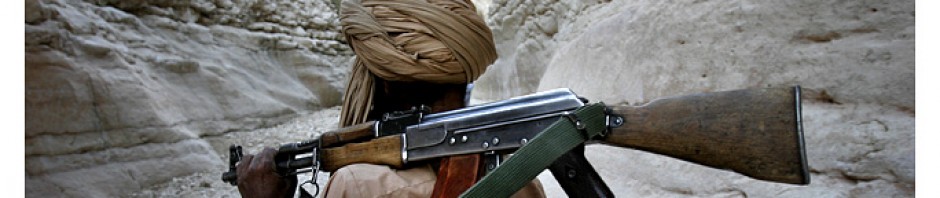
Obama Takes on the Muslim World – John Taylor

In the immediate aftermath of the 9/11 attacks, George W. Bush recognized that Israel’s endless war on the Palestinians, a grossly unequal struggle waged with the military, financial, and diplomatic support of the United States, had put America at risk. For a brief moment, Bush spoke strongly of the need to establish a Palestinian state and bring the Israeli-Palestinian conflict to a speedy and just conclusion. Bush even demanded an end to Israeli incursions into the West Bank and the targeted assassinations of Palestinian leaders.

In very little time, the president realized that acknowledging America’s own foreign policy in the Middle East had put America in the terrorist crosshairs was unlikely to be a vote-getter, particularly among the Republican Party’s Evangelical faithful, who view the establishment of the state of Israel as the fulfillment of Old Testament prophecy. So the president, with the eager support of both parties and a tame corporate media, chose the explanation that foreigners willing to fly airplanes into buildings must hate America’s freedom and openness, our margaritas and miniskirts. This facile and entirely specious assertion was a much more palatable explanation for 9/11 than that American intervention, particularly U.S. support of corrupt Arab kings and potentates, a blank check for Israeli adventurism, and a murderous embargo on the Iraqi people, had provoked an intense hatred of the U.S. among a small but growing percentage of Muslims around the world.

Fast forward though the invasion of Iraq, justified by entirely bogus intelligence, through years of fighting in Afghanistan, bringing nothing but misery to the Afghan people, and through Israel’s brutal pounding of Lebanon and Gaza, to the election of a new American president determined to make a fresh start with the Muslim world. Barack Obama’s visit to Cairo in June of last year to deliver a much-ballyhooed speech seemed to break with the policies of the Bush administration, which had been perceived, especially in the Arab states, as blatantly anti-Arab and anti-Muslim. As part of Obama’s determination to change America’s profile among the world’s billion Muslims, he subsequently insisted that Israel end all settlement activity in Palestinian lands captured in the 1967 Arab-Israeli war, a stance consistent with international law and favored by most of America’s allies.

As Bush learned in 2001, pressure on Israel, no matter how justified, takes courage and has political costs. The Democratic Party has long received a large proportion of its financial support from Israel’s friends in the United States, and Israel has many advocates in the Obama administration, the best example being the president’s chief of staff, Rahm Emanuel, who served in the Israeli army. So President Obama quickly surrendered to Israel’s American constituency, dropped his insistence that settlement of Palestinian lands cease, and began to pressure the Palestinian Authority’s weakling President Mahmoud Abbas to resume negotiations without preconditions.

To put a seal on Obama’s humiliation at the hands of right-wing Israeli politicians Bibi Netanyahu and Avigdor Lieberman, the Obama administration sidelined the Goldstone Report detailing war crimes during the Gaza war (“willful killings and willful causing great suffering” to the civilian population and “collective punishment intentionally inflicted by the government of Israel on the people of the Gaza Strip”), signed a multi-year, $30 billion defense protocol with the Israelis, and rebuked U.S. Middle East negotiator George Mitchell for saying quite accurately that the U.S. had once withheld U.S. loan guarantees as a way showing displeasure at settlement activity.

At the same time, President Obama did nothing to alleviate the sufferings of 1.4 million desperate Palestinians under Israeli siege in Gaza. How bad are conditions in Gaza? Some 80 percent of its residents rely on foreign assistance, and unemployment is above 40 percent. Medical supplies, fuel, and food are routinely held up at the Israeli border. Half of Gaza’s schools have not been repaired from Israel’s onslaught a year ago. Almost unbelievably, the Obama administration has made suffering in Gaza worse by pressuring the Egyptian government to close smuggling tunnels connecting Gaza with Egyptian Sinai, which provided an alternative means of moving a trickle of goods around the Israeli blockade. Although Americans may close their eyes to the miserable existence Israel is inflicting on the people of Gaza, who have done nothing to harm the United States and do not threaten us in any way, Americans may be certain that our complicity has not gone unnoticed across the Muslim world.

The Obama administration has also maintained the Bush administration’s hostility to Syria. The Commerce Department recently vetoed the sale of European-manufactured Airbus commercial airliners to Syrian Air, which the Commerce Department was apparently able to do because 10 percent of the aircraft’s components are made in the U.S. Just what American strategic objective is furthered by forcing Syrians to fly around in clapped-out, Soviet-vintage commercial aircraft is unknown. Will the Syrian man in the street love us for putting his life at risk when he flies from Damascus to Aleppo? Or is this simply another case in which the interests of Israel trump those of the U.S.?

It is also worth noting that Gen. David Petraeus, that most political of all generals, has continued to accuse Syria of supporting the Sunni insurgency in Iraq. This charge is beyond absurd. Why would the government in Damascus seek to undermine the regime in Baghdad when both governments are closely allied with Iran? It is of course possible that some of the 1.5 Sunni Iraqi refugees in Syria are covertly supporting resistance in Iraq, but that is as might be expected and reflects the desperate mess the U.S. has created in Iraq, where some 25 percent of the population has fled to Syria or Jordan, or are internally displaced.

Although President Obama also sought a “new beginning” with Iran, he never directed any of the policy changes that would make that possible. Crucially, the U.S. continues to spend hundreds of millions of dollars annually to bring about regime change in Iran, prompting Iran’s spiritual leader, Ayatollah Khamenei, to remark, “Money, arms, and organizations are being used by the Americans directly across our western border to fight the Islamic Republic.” U.S. anti-Iranian activities range from protecting the MEK terrorist group in Iraq for use in cross-border raids and subversion to funding American NGOs, whose support of “Twittering revolutionaries” on the streets of Tehran may be passed off as “promoting democracy” in the West, but which looks to the Iranian government like just another American attempt to destabilize the Islamic Republic.

American diplomacy certainly does not aim for reconciliation with Iran. Secretary of State Hillary Clinton has sought international help, particularly in Europe, to impose “crippling” sanctions on the country. After a meeting with Bibi Netanyahu, Obama himself agreed to set up an American-Israeli working group to consider what coercive steps could be taken against Iran if it did not abandon nuclear enrichment. And American officials have continued to threaten military action over Tehran’s nuclear program, even though there is no meaningful data to overturn the most recent National Intelligence Estimate on Iran, which held that the country gave up work on an atomic weapon in 2003. To suggest that Iran, with a military budget one one hundredth of what the U.S. spends on its armed forces, is a threat to the U.S. is the height of absurdity. To brand Iran a proliferator for its low-level enrichment of uranium while ignoring Israel’s 200 nuclear weapons is the height of hypocrisy.

In Afghanistan, the Obama administration added 17,000 U.S. troops last year and is in the process of adding 30,000 more. In eight years of war, the U.S. has brought misery to the civilian population and a gang of corrupt politicians to power in Kabul in an obviously bogus election. What is the Obama administration going to do in the next seven years that hasn’t been tried in the last eight? To give the situation a bit of perspective, the last man to pacify Afghanistan was Alexander the Great in the 4th century B.C. Why Gen. McChrystal thinks an American-trained Afghan army recruited from various ethnic minorities in the north of the country will ever suppress an insurgency centered on Pashtun tribes, which comprise almost half the population of Afghanistan, is difficult to fathom. Well, no one would ever confuse McChrystal with Alexander, except maybe Victor Davis Hanson.

The war in Afghanistan has now spilled over into Pakistan, where administration pressure on the Pakistani army to fight the Taliban and its allies has produced hundreds of thousands of refugees and is destabilizing the country. America’s contribution to the widening war has been drone strikes on suspected Taliban leaders. The U.S. is also conducting anti-terrorist operations in Somalia and Yemen in the same way. The problem with this strategy is twofold. First, the drone would be a great weapon if it only killed the bad guys. Many drone strikes (and strikes from conventional aircraft, for that matter) have killed completely innocent people, undoubtedly increasing the number of America’s enemies. Second, where the U.S. relies on an ally’s intelligence service for targeting data, as in Yemen, there is a very good chance that enemies of the local regime, not al-Qaeda, are being hit.

Sometimes the Obama administration lashes out at the Muslim world in ways that are difficult to comprehend. In the wake of the failed underwear bombing, the TSA named 14 countries whose citizens would receive “full-body pat-downs” before boarding U.S.-bound aircraft: Afghanistan, Algeria, Cuba, Iraq, Iran, Lebanon, Libya, Nigeria, Pakistan, Saudi Arabia, Somalia, Syria, Sudan, and Yemen. Obviously, any suspicious passenger ought to be selected for special screening, but the TSA’s message seems to be that if someone hails from Syria or Algeria, they possess murderous intent, thus confirming to millions of Muslims that the U.S. is deeply prejudiced against them.

As long as the Obama administration believes it can bomb, starve, invade, occupy, and intimidate the Muslim world into submission, and as long as the administration willingly makes Israel’s enemies America’s enemies, the U.S. will be a terrorist target and locked into endless wars in faraway places.Source

Posted in Disclosure, Economics, Middle East | Leave a comment

How America Makes Its Enemies Disappear – The Intelligence Factory By PETRA BARTOSIEWICZ

Editors’ Note: This week the trial of one of the most wanted women in the war on terrorism begins in a federal courtroom in Manhattan. The defendant, Aafia Siddiqui, is a 37-year-old, MIT-educated neuroscientist and suspected Al Qaeda operative. Siddiqui lived in the U.S. for ten years before mysteriously vanishing from her hometown in Karachi in 2003, along with her three children, two of whom are American born. By some accounts she is Al Qaeda royalty, having allegedly married Ammar al Baluchi, who is the nephew of Khalid Sheikh Mohammed and one of the five accused 9/11 plotters expected to face trial in the same courthouse as Siddiqui herself. But human rights groups say Siddiqui is no extremist and have long suspected foul play in her disappearance. They believe she was detained and illegally interrogated by Pakistani intelligence at the behest of the U.S. The issue of U.S. complicity in “enforced disappearances” has received little media attention, but the practice begun under Bush has continued apace in the Obama administration. Overseas intelligence gathering is increasingly outsourced to amenable foreign regimes who act as interrogators on our behalf, detaining and torturing the “truth” out of sources who often don’t have much to offer. The practice is a blatant violation of human rights and in the worst instances nothing less than torture by proxy. Opening statements in Siddiqui’s trial begin Jan. 19. We have reprinted here an investigation into her case, “The Intelligence Factory: How America Makes its Enemies Disappear,” by freelance journalist Petra Bartosiewicz. The article first appeared in the November 2009 issue of Harper’s magazine. A PDF version is also available at www.harpers.org.

Continue reading

Posted in Conspiracy, Empire, Ideaology, South Asia | Leave a comment

Terrorist Haven or Chess Piece? Something About Yemen By CONN HALLINAN

“The instability in Yemen is a threat to regional stability and even global stability”U.S. Secretary of State Hillary Clinton. “Yemen is a regional and global threat”British Prime Minister Gordon Brown

“Yemen could be the ground of America’s next overseas war if Washington does not take preemptive action to root out al-Qaeda there”

U.S. Sen. Joe Lieberman (D-Conn)

Yemen—a country slightly smaller than France with a population of 22 million—perches on the southern tip of the Arabian Peninsula. It is the poorest country in the region, with one of the most explosive birthrates in the world. Unemployment hovers above 40 percent and projections are that its oil—which makes up 70 percent of its GDP—will run out in 2017, as will water for the capital, Sana, in 2015.

It is a bit of a patchwork nation. It was formerly two countries—North Yemen and the Democratic People’s Republic of Yemen (south), which merged in 1990 and fought a nasty civil war in 1994.

The current government of President Ali Abdullah Saleh is corrupt, despotic, and presently fighting a two-front war against northern Shiites, called “Houthis,” and separatist-minded southerners. Based in the north, Saleh’s government has limited influence outside of the capital. Whoever runs the place, according to The Independent’s Middle East reporter Patrick Cockburn, has to contend with “tribal confederations, tribes, clans, and powerful families. Almost everybody has a gun, usually at least an AK-47 assault rifle, but tribesmen often own heavier armament.”

To make things even more complex, Yemen’s northern neighbor, Saudi Arabia, has sent troops and warplanes to back up Saleh. According to Reuters, “The conflict in Yemen’s northern mountains has killed hundreds and displaced tens of thousands.” Aid groups put the number of refugees at 150,000. The Saleh government and the Saudis claim the Shiia uprising is being directed by Iran— there is no evidence to back up the charge—thus escalating a local civil war to a regional face off between Riyadh and Teheran.

And this is a place that Hillary, Gordon and Joe think we need to intervene?

In a sense, of course, the U.S. is already in Yemen, and was so even before the attempted bombing Christmas Day of a Northwest Airlines flight by a young Nigerian. For most Americans, Yemen first appeared on their radar screens when the USS Cole was attacked in the port of Aden by al-Qaeda in 1990, killing 17 sailors. It reappeared this past November when a U.S. Army officer linked to a Muslim cleric in Yemen killed 13 people at Fort Hood, Colorado. The Christmas Day attacker said he was trained by al-Qaeda, and the group took credit for the failed operation.

But U.S. involvement in Yemen goes back almost 40 years. In 1979, the Carter Administration blew a minor border incident between north and south Yemen into a full-blown East- West crisis, accusing the Soviets of aggression. The White House dispatched an aircraft carrier and several warships to the Arabian Sea, and sent tanks, armored personal carriers and warplanes to the North Yemen government.

The tension between the two Yemens was hardly accidental. According to UPI, the CIA funneled $4 million a year to Jordan’s King Hussein to help brew up a civil war between the conservative North and the wealthier and socialist south.

The merger between the two countries never quite took. Southern Yemenis complain that the north plunders its oil and wealth and discriminates against southerners. Demonstrations and general strikes by the Southern Movement demanding independence have increased over the past year. The Saleh government has generally responded with clubs, tear gas and guns.

When Yemen refused to back the 1991 Gulf War to expel Iraq from Kuwait, the U.S. cancelled $70 million in foreign aid to Sana and supported a decision by Saudi Arabia to expel 850,000 Yemeni workers. Both moves had a catastrophic impact on the Yemeni economy that played a major role in initiating the current instability gripping the country.

In 2002 the Bush administration used armed drones to assassinate several Yemenis it accused of being al-Qaeda members. The New York Times reported that the Obama administration launched a cruise missile attack Dec. 17 at suspected al-Qaeda members that, according to Agence France Presse, killed 49 civilians, including 23 children and 17 women. The attack has sparked widespread anger throughout Yemen that al-Qaeda organizers have heavily exploited.

So is the current uproar over Yemen a case of a U.S. administration overreacting and stumbling into yet another quagmire in the Middle East? Or is this talk about a “global danger” just a smokescreen to allow the Americans to prop up the increasingly isolated and unpopular regime in Saudi Arabia?

Maybe both, but at least one respected analyst suggests that the game in play is considerably larger than the Arabian Peninsula and may have more to do with the control of the Indian Ocean and the South China Sea than with hunting down al-Qaeda in the Yemeni wilderness.

The Asia Times’ M.K. Bhadrakumar, a career Indian diplomat who served in Afghanistan, Kuwait, Pakistan, and Turkey, argues that the current U.S. concern with Yemen is actually about the strategic port of Aden. “Control of Aden and the Malacca Straits will put the U.S. in an unassailable position in the ‘great game’ of the Indian Ocean,” he writes.

Aden controls the strait of Bab el-Mandab, the entrance to the Red Sea though which passes 3.5 million barrels of oil a day. The Malacca Straits, between the southern Malay Peninsula and the Indonesian island of Sumatra, is one of the key passages that link the Indian Ocean with the South China Sea and the Pacific Ocean.

Bhadrakumar says the Indian Ocean and the Malacca Straits are “literally the jugular veins of the Chinese economy.” Indeed, a quarter of the world’s sea-borne trade passes through the area, including 80 percent of China’s oil and gas.

In 2005 the Bush Administration pressed India to counter the rise of China by joining an alliance with South Korea, Japan, and Australia. As a quid pro quo for coming aboard, Washington agreed to sell uranium to India, in spite of New Delhi’s refusal to sign the Nuclear Non-Proliferation Agreement. Only countries that sign the Treaty can purchase uranium in the international market. The Bush administration also agreed to sell India the latest in military technology. The Obama administration has continued the same policies.

China and India have indeed beefed up their naval forces in the Indian Ocean and South China Sea. Beijing is also developing a “string of pearls”— ports that will run from East Africa to Southeast Asia. India has just established a formal naval presence in Oman at the entrance to the strategic Persian Gulf.

According to Bhadrakumar, the growing U.S. rapprochement with Myanmar and Sri Lanka is aimed at checkmating China’s influence in both nations, and cutting off efforts by Beijing to reduce its reliance on ocean-borne energy transportation by constructing land-based pipelines. China just opened such a pipeline to Central Asia.

“The U.S., on the contrary, is determined that China remain vulnerable to the choke points between Indonesia and Malaysia,” writes the former Indian diplomat.

Checkmating China would also explain some of the pressure that the Obama administration is exerting on Pakistan.

“The U.S. is unhappy with China’s efforts to reach the warm waters of the Persian Gulf through the Central Asian region and Pakistan. Slowly but steadily, Washington is tightening the noose around the neck of the Pakistani elites—civilian and military—and forcing them to make a strategic choice between the U.S. and China,” writes Bhadrakumar.

This would help explain the increasing tension between China and India over a Himalayan border region that has sparked a military buildup in Chinese-occupied Tibet and India’s Arunachai Pradesh state. Former Indian Air Marshall Fali Homi told the Hindustan Times that China was now a bigger threat than Pakistan, and former Indian National Security Advisor Brajesh Mishra predicts an India-China war within five years.

“Energy security” has been at the heart of U.S. foreign policy for decades. The 1980’s “Carter Doctrine” made it explicit that the U.S. would use military if its energy supplies were ever threatened. Whether the administration was Republican or Democratic made little difference when it came to controlling gas and oil supplies, and the greatest concentration of U.S. military forces is in the Middle East, where 60 percent of the world’s energy supplies lie.

Except for using Special Forces and supplying weapons, it is unlikely that the U.S. will intervene in a major way in Yemen. But through military aid it can exert a good deal of influence over the Sana government, including extracting basing rights.

The White House has elevated the 200 or so “al-Qaeda in the Arabian Peninsula” members in Yemen into what the President calls a “serious problem,” and there are dark hints that the country is on its way to becoming a “failed state,” the green light for a more robust intervention.

However, as Jon Alterman, Middle East Director of the Center for Strategic and International Studies, argues, “The problems in Yemen are not fundamentally problems that military operations can solve.”

But then the “problems” of Yemen may be simply a prelude for a much wider and potentially dangerous strategy focused on China.

“The U.S. cannot give up on its global dominance without putting up a real fight,” says Bhadrakumar. “And the reality of all such momentous struggles is that they cannot be fought piecemeal. You cannot fight China without occupying Yemen.”

Conn Hallinan can be reached at: ringoanne@sbcglobal.net

Source

Heading for Another Quagmire – The Quiet American Goes to Yemen By URI AVNERY

Posted in Empire, Ideaology, Middle East | Leave a comment

“Kill a Turk … ” The Turkish Incident By URI AVNERY

I TRIED to resist the temptation to tell the same classical Jewish joke a second time, but circumstances delivered a plausible excuse.
Almost every Jew knows the sentence “Kill a Turk and rest.” The whole story goes like this:


In Czarist Russia, a Jewish boy is called up for the war against the Turks.


His tearful mother takes leave of him at the railway station and implores him: “Don’t overexert yourself! Kill a Turk and rest. Kill another Turk and rest again…”


“But mother!” the boy interrupts her. “What if the Turk kills me?”


“Kills you?!” the mother exclaims in sheer disbelief, “But why? What have you done to him?”


Jewish jokes reflect Jewish reality. So this joke became true this week.


UNFORTUNATELY THE joke is on us. It happened like this:


Turkish television aired a rather primitive series, in which Mossad operatives kidnap Turkish children and hide them in the Israeli embassy. Valiant Turkish agents free the children and kill the evil ambassador.

One can ignore such an obnoxious story altogether or protest mildly. But our illustrious Foreign Minister thought that this was the right occasion to demonstrate to all and sundry that we are no longer abject ghetto Jews who take everything lying down, but proud, upright Jews of a new breed.
So the Deputy Foreign Minister, Danny Ayalon, summoned the Turkish ambassador to the Foreign Office in Jerusalem for a carefully staged exhibition of national pride.


When the ambassador arrived, he was surprised to see the place crawling with TV crews and journalists. He was left waiting for a considerable time and then shown into a room where three solemn officials, including Ayalon, were perched on high chairs. He was seated on a low sofa without arms, and had no choice but sit in a reclining position.


Not satisfied with this, Ayalon expressly requested the media people (in Hebrew) to pay attention to the difference in height between the chairs and the sofa, to the absence of the Turkish flag on the table, as well as to the fact that the Israelis did not smile and did not shake hands.


Perhaps Ayalon drew his inspiration from a memorable scene in Charlie Chaplin’s movie The Great Dictator, in which Hitler and Mussolini sit on barber’s chairs, each of them jacking his chair up so as to tower above the other, until both chairs topple over.


Ayalon then delivered (again in Hebrew) a sharp rebuke – all Israeli media used this word rather than the diplomatic term “protest”.


Well satisfied with his work, Ayalon saw to it that it got maximum exposure in the media, especially on television.


The Turkish reaction was, of course, violent. Turks are more sensitive about their national dignity then most (witness their reactions to allegations about the Armenian massacre almost a hundred years ago), so they were foreseeably upset.


Ayalon got, of course, the unreserved backing of his minister, mentor and party boss, Avigdor Lieberman, who was full of praise.


A few weeks before, Lieberman had assembled all the Israeli ambassadors from around the world, some 150 of them, for a pep talk. He rebuked them for not properly defending the honor of Israel and announced a radical new policy: from now on, the main duty of an Israeli ambassador is to stand up for the dignity of his country, attack anyone who criticizes Israel and leave no insult unanswered, be it big or small. This should take precedence over all other diplomatic duties.


No one in the audience, which was mainly composed of long-standing career diplomats, dared to get up and point out that there may be more important Israeli interests, such as good relations with foreign governments, military and intelligence ties and economic matters. Except for one ambassador – who smiled and was soundly rebuked – nobody demurred.


In less that a year in office, Lieberman has already broken a lot of diplomatic china. He has insulted several friendly governments. In one noteworthy case, he publicly rebuked the Norwegians for celebrating the anniversary of their national writer, Knut Hamsun, who had sympathized with the Nazis. In another case, he attacked the Swedish government for not protesting publicly against an article by a minor scribbler in a Swedish newspaper, in which he made the ridiculous accusation that Israeli soldiers kill Palestinians in order to sell their organs for transplants. Lieberman’s exaggerated reaction turned this into world news.


His tendency to insult foreign governments – a rather original trait for a foreign minister – may have been exacerbated by the refusal of many of his foreign colleagues to meet with him, considering him a racist or an outright fascist – as, indeed, do most Israelis.


When Netanyahu set up his government and appointed Lieberman as his foreign minister, the news was at first met with incredulity. A more absurd appointment could hardly be imagined. But Netanyahu needed him, and could offer him neither the Treasury, which he wanted to lead himself by proxy, nor the defense ministry, which is the private domain of Ehud Barak. The foreign ministry, which few people in Israel take seriously, was the only viable alternative.


Therefore, Netanyahu could not criticize these two Neanderthals, Lieberman and Ayalon, and their antics. But Barak was hopping mad.


As it so happens, Barak is due to visit Turkey tomorrow. The relations between the Israeli and the Turkish defense establishments are as close as can be. Not only is there a certain ideological affinity between the two army commands – both consider themselves as the guardians of national values and look down with contempt on the politicians – but the generals of the two countries are real buddies. Also, the Israeli defense industry depends very much on Turkish orders, about a billion dollars annually.


Lately, some dispute has arisen about drones supplied by Israel, and relations have deteriorated. Barak’s visit is therefore considered very important. Some Israeli commentators believe that the whole Ayalon affair was a not so subtle ploy by Lieberman to sabotage his cabinet rival.
Be that as is may, the whole Israeli establishment realized that Ayalon’s stupid charade has done great damage. He was obliged to retract, and did so in a graceless, half-hearted manner, without first finding out whether this would satisfy the Turks. It did not – and the Turks, becoming more and more furious, demanded a clear and abject apology. This demand was presented as an ultimatum – until midnight on Wednesday, or else. Else meant the recall of the ambassador and the downgrading of relations.
Netanyahu caved in. Ayalon apologized again, this time unequivocally, and the Turks graciously accepted. Barak will be going to Turkey.


Behind this childish episode lurks the more serious problem of Turkish-Israeli relations.


The Turkish Prime Minister, Recep Tayyip Erdogan, reminded Israel this week that Turkey has always welcomed Jews. He was alluding to an historic chapter that is never quite acknowledged here: When Catholic Spain expelled hundreds of thousands of Jews in 1492 (some speak of as many as 800,000), the vast majority of them settled in the Ottoman Empire, from Marrakesh to Sarajevo. While Jews in Christian Europe were tortured by the Spanish inquisition and suffered untold persecutions, expulsions and pogroms, culminating in the Holocaust, they flourished for centuries under the benevolent rule of the Muslim Ottomans.


These historic memories were, alas, erased during the short period of Zionist relations with the Turkish administration in Palestine in the early 20th century. Every Israeli child learns about the lovely Sarah Aharonson, a member of a pro-British spy ring in World War I, who committed suicide after being tortured by the Terrible Turks.


Cordial relations were resumed only when masses of Israeli tourists started to arrive at Turkish resorts and were surprised by the warmth of their reception. The tourists love it.


SO WHAT is happening now? Turks, like all Muslims, were upset by last year’s Gaza War and the horrifying pictures they saw on TV. Erdogan, echoing these sentiments as a good politician would, attacked the Israeli policy on several occasions, cancelled joint army maneuvers and once left a public debate with President Shimon Peres in a huff.


After being shown the cold shoulder by the European Union, Turkey has turned towards its Arab neighbors and Iran, seeking to act as a mediator between East and West. It also began to mediate between Israel and Syria, until it realized that the Israeli government had no desire at all to make peace, which would compel it to dismantle settlements and return territory.


The relationship between Turkey and Israel will probably return to normal, if not to its former degree of warmth. Turkey needs the help of the pro-Israel lobby in Washington. (Ayalon himself has in the past been sent there to help repel efforts to recognize the Armenian genocide). Israel needs Turkey as an ally and arms buyer.


So what about the joke? Well, it serves as a reminder that provoking the Turks is not necessarily a good idea.


Uri Avnery is an Israeli writer and peace activist with Gush Shalom.

Source

Posted in Middle East, Zionism | Leave a comment

The Myth of Muslim Conquest By PATRICK HAENNI and SAMI AMGHAR

A question worries Europe: is Islam inherently expansionist and out to conquer the world? Yes, say those Swiss who voted against the construction of minarets. They see this expansionism underpinned by a desire for political control, sometimes imputed to the nature of Islamic ideology (pro-birth, proselytising, invasive), sometimes to the tactics of its main players (the Islamists and their agendas). Yussuf al-Qaradawi, a well-known moderate Sunni cleric, seemed to endorse this in his Al Jazeera broadcast of December 6, “Sharia and life,” on the Swiss referendum. He confirmed that conquest would happen and that all humans would be united by the word of God.

Questions about the nature of Islam are fair: like Christianity, Islam sets out to save humanity, a message implicit in the history of its prophecies. But what does religious expansionism mean in concrete terms? From a sociological point of view it can involve an aggressive move (political, propagandist, armed), increased religiosity (conversion or revivalism), or demographics.

In continental Europe the Muslim Brotherhood and the Turkish Milli Gorus (founded in the 1970s by a former Turkish prime minister, Necmettin Erbakan, and strong among Europe’s Turkish population) are groups with a political agenda. They seek the creation of an Islamic state, built not on universalist beliefs (Islam represents a religion for everyone) but aiming at domination, following the goal of guiding the world assumed by Hassan al-Banna, founder of the Muslim Brotherhood. They did not settle in Europe in the 1950s for those reasons, but because it provided a base for their fight in North Africa and the Middle East. That Muslim populations made their homes in Europe took them by surprise and caused them problems.

Being a minority community in Europe counters all the strategic plans of the agents of political Islam, trapping them in a dilemma: should they preach or lobby? The first option would put them in territory already occupied by the Salafist movement and the Tabligh organization. Salafism is a reformist branch of Islam which grew up during the 19th century and bases itself on the prophet Muhammad’s teachings and the first generation of Muslims (the word salaf means ancestor). The Tablighi organisation, created in India during the 1920s but now scattered round the world, believes its principal task is to proclaim Islam’s message through proselytising to other Muslims.

These are both both groups that the political scientist Olivier Roy calls neo-fundamentalist. The second option would put the onus on them to find enough activists in a European context; pushing to become figures of authority can reduce their appeal to fellow Muslims suspicious of compromise with the powers that be.

The Brotherhood’s predicament illustrates this well: by playing the institutional card they have, over time, lost their revolutionary verve, abandoned major causes and turned their backs on sensitive issues such as Palestine or, in France, wearing the hijab. Young Muslims criticize them and sometimes distance themselves from the Brothers because of their middle-class ways and their accommodation with the authorities. Even the charismatic Tariq Ramadan (whose appeal to young French Muslims was high) was disowned by former supporters when, in 2005, he put together a working party commissioned by the UK’s government (under Tony Blair) to investigate religious extremism.

That the proponents of political Islam find it hard to adopt credible strategies in the West benefits neo-fundamentalist movements, which reject conventional political involvement. These form a nebulous grouping of which the most important is Wahhabi or “scientific” Salafism (salafiyya ilmiyya); originating in Saudi Arabia, its characteristics are sectarian rigor and dogmatic radicalism – although remote from any idea of jihad or holy war. This variety of Salafism recruits from people disappointed in political Islam and in long-established neo-fundamentalist groups such as the Tablighis.

Far from proposing a fresh program aimed at political control, this type of Salafism offers the bitter fruit of a depoliticized Islam and an ideological narrative that argues for withdrawing from western society, avoiding it: a community based on faith replaces one based on culture (Tunisian, Moroccan) and is very critical of the traditional Islam practiced by ordinary families. In this way Salafism builds its own sectarian logic. Silent on the issue of the hijab, its protagonists offer no help when imams are expelled and they do not take part in demonstrations of solidarity with Palestine.

This call for withdrawal operates less in normal family or community life than among the numbers of newly Islamized young (known as the firqa najiyya). Salafism challenges the role of traditional imams, setting itself up in opposition to the real-life Muslim world and successful with those in distress, particularly the young. It does very little recruiting in strongly nationalistic communities like those from the Comoros or the Turks.

Its aim is not to conquer the West or establish Islamic ghettoes, but hijra (exodus), a return to Islamic countries – or failing that, to countries like the UK or Canada that are thought to be more tolerant to Muslims. So the young whom it attracts find themselves stuck, simply waiting, as their parents before them, instead of becoming involved in western society. But where their parents lived with the myth of returning to their land of origin, these young Salafists desire to leave their country of birth.

The formulation of any credible political program is blocked because they are a minority and because evangelical initiatives (the call for da’wa and the desire to return to Islam) now take place independently of any political design. Nor is armed jihad. In Europe, jihadism is lived as a quest for sacrifice, not as politics by other means. Militant groups, like al-Qaida or the Metin Kaplan movement (a radical movement founded in Germany in 1984, accused of many terrorist attempts), share the same sectarian mindset as non-combatant Salafists. Jihadists accuse of apostasy (takfir) all those adversaries they would like to fight: Jews and Christians, Muslims claimed not to practice properly – even the Muslim Brotherhood. There is no attempt to create a West of ghetto counter-cultures. On the contrary, the radical nature of jihadism, and Salafism drives them to break ties with the community and local area where people live, and with the mosque – which it sees as too easily controlled by the authorities, compromised because it is a place for community dialogue. Jihadist recruiting takes place in internet cafés, sports clubs, prisons.

The new jihadists have pushed hatred to the limits. They have no precise objective (a land or state to liberate or win over, or political party to reform, or regime to bring down); their aim is restricted to armed struggle and its media impact, along with the destruction of the symbols of political imperialism (the US and its allies).

If the militant dynamic of the Islamists no longer pushes for conquest, can it still use the back door of religious renewal and so tip European societies’ political balance or create Islamized spaces within them?

It’s easy to mistake the high visibility of Islam in the West for a massive return to piety in Muslim communities. But for the last 20 years religious observance has stagnated, even slightly waned. Its reappearance is at an individual level, not as part of a shared project, even if it stems from a desire for communal solidarity, and corresponds most of all to the need to rediscover identity and roots.

Two wide currents are found in the present religious revival. First, marketplace Islam: religiosity freed from the Islamist obsession with politics, and distinguished by a search for cultural normalization of the Muslim identity. Fashionable Islamic streetwear (combining jeans, trainers and the hijab), halal pop and Muslim Up (a French soft drink like cola) all express an affirmation of Islam rooted in mass culture. Religion does not offer a complete solution but it does represent a concern for ethics in a globally accepted western culture. (Whereas neo-fundamentalism seeks to break with the western way but has no expansionist aims because its followers are waiting to leave.)

Choices are individual

As for converts, they exist only in small numbers and work both ways, though the balance favors Islam. In France, according to the interior ministry, about 800 Muslims become Christians each year (usually evangelical), against 4,000 converts to Islam. Religious returnees are very visible, particularly in the physical appearance and clothes of born again Muslims and converts – men with beards, veiled women – but they are hardly institutionalized. Choices are individual, not those of organizations, and they have no wider meaning.

So this new kind of religiosity is both more public and less political. It poses an ideological problem in a country as strongly secular as France but it does not constitute a political threat or a security risk – except when jihadists are involved.

The fairy stories about ghettos being Muslim enclaves about to be hijacked by Islamist agents hatching plans of collective rupture with society are equally wrong. Even if the concentration of Muslim population in some areas may show signs of social control, it doesn’t amount to a politically driven, communitarian strategy. It seems, rather, the consequence of complex economic, social and political processes, combined with the attitude of the powers that be – not only in countries like Holland and the UK where multiculturalism is encouraged, but also in France. The race for the Muslim vote, the occasional allocation of social housing on ethnic criteria, the search for local community figures to keep an eye on the deprived French suburbs, and the desire to control Islam through the French Council of the Muslim Faith (CFCM) created in 2003 – all smack of multicultural behavior.

However the Muslim Brotherhood, whose power base lies in the middle classes, has not made its mark in the French suburbs. The complete failure of the fatwa calling for calm issued by the Union of Islamic Organizations in France (UOIF, an organisation with links to the Brotherhood) during the 2005 riots in France proved that, and not for the first time. And if the Salafists are present in the suburbs, they are not in control either. Their influence remains limited; they have no experience of structuring a strong social movement in such a way as to acquire a leadership role; and their objective remains not to create Islamized or rebel urban spaces but a return to the dar al-Islam (lands of Islam).

In the areas where most Muslims live, individual values are emerging today in a strong way alongside consumer society. Witness the growth of mixed marriages, including those of immigrant women, the problems of the Muslim associations, weakened parental authority and the very few religion-based schools. (Emmanuel Todd also shows in Le destin des immigrés that the rate of mixed marriages for Algerian women grew from 6.2 per cent to 27.5 per cent between 1975 and 1990. For Moroccan women it increased from 4 per cent to 13 per cent.) There are also the setbacks suffered when activists have tried to put together multicultural lists for local elections.

Twenty years ago, when there was no such thing as a Muslim part of town, any return to religion always took place within the context of an organization. In contrast, today, a Muslim environment – with all its social and religious customs, bookshops, places of worship, halal butchers – has made for re-Islamization on a highly individualistic basis, even for the first generation of immigrants.

The European context of a modern nation state and democracy, and Islam’s minority status, are not conducive to establishing a dialogue between religion and politics. And within the Islamist circles authorized to take part in the political game, there is a desire to separate the da’wa (preaching) from the politics. Meanwhile, because the Islamists have proved unable to formulate a coherent project, forms of neo-fundamentalism such as Salafism have emerged, banishing politics to the distant realms of millennial dreams.

However, many Muslims who seek to play a public role now see this in terms of pure (secular) politics. Some Muslim Brothers make themselves heard within traditional political parties, both on the left and right. And Muslims (for instance, the Muslim Brothers who dominated the scene in the 1990s, and the Indigenes de la République (a French movement calling for an end to discrimination) in the 2000s are presenting their demand for rights for a population of immigrant origin as a matter of cultural, and secular, identity.

These diverse processes of rupture between religion and politics reveal an implicit recognition that the idea of conquest is illusory. Whether old dreams of expansionism linger on is immaterial. What is important is that such a possibility has been ruled out by the transformations that have taken place at the heart of Muslim society.

Translated by Robert Waterhouse

Patrick Haenni is senior researcher at the Fondation Religioscope and co-author, with Stéphane Lathion, of Les Minarets de la discorde. Eclairage sur un débat suisse et européen (Infolio, Paris, 2009).

Sami Amghar is a sociologist at the Ecole des hautes etudes en sciences sociales, Paris.

Source

Posted in Ideaology, Religion of Abraham | Leave a comment

The Yemen Hidden Agenda: Behind the Al-Qaeda Scenarios, A Strategic Oil Transit Chokepoint

On December 25 US authorities arrested a Nigerian named Abdulmutallab aboard a Northwest Airlines flight from Amsterdam to Detroit on charges of having tried to blow up the plane with smuggled explosives. Since then reports have been broadcast from CNN, the New York Times and other sources that he was “suspected” of having been trained in Yemen for his terror mission. What the world has been subjected to since is the emergence of a new target for the US ‘War on Terror,’ namely a desolate state on the Arabian Peninsula, Yemen. A closer look at the background suggests the Pentagon and US intelligence have a hidden agenda in Yemen.

For some months the world has seen a steady escalation of US military involvement in Yemen, a dismally poor land adjacent to Saudi Arabia on its north, the Red Sea on its west, the Gulf of Aden on its south, opening to the Arabian Sea, overlooking another desolate land that has been in the headlines of late, Somalia. The evidence suggests that the Pentagon and US intelligence are moving to militarize a strategic chokepoint for the world’s oil flows, Bab el-Mandab, and using the Somalia piracy incident, together with claims of a new Al Qaeda threat arising from Yemen, to militarize one of the world’s most important oil transport routes. In addition, undeveloped petroleum reserves in the territory between Yemen and Saudi Arabia are reportedly among the world’s largest.

The 23-year-old Nigerian man charged with the failed bomb attempt, Abdulmutallab, reportedly has been talking, claiming he was sent on his mission by Al Qaeda in the Arabian Peninsula (AQAP), based in Yemen. This has conveniently turned the world’s attention on Yemen as a new center of the alleged Al Qaeda terror organization.

Notably, Bruce Riedel, a 30-year CIA veteran who advised President Obama on the policy leading to the Afghan troop surge, wrote in his blog of the alleged ties of the Detroit bomber to Yemen, “The attempt to destroy Northwest Airlines Flight 253 en route from Amsterdam to Detroit on Christmas Day underscores the growing ambition of Al Qaeda’s Yemen franchise, which has grown from a largely Yemeni agenda to become a player in the global Islamic jihad in the last year…The weak Yemeni government of President Ali Abdallah Salih, which has never fully controlled the country and now faces a host of growing problems, will need significant American support to defeat AQAP.”[1].

Some basic Yemen geopolitics

Before we can say much about the latest incident, it is useful to look more closely at the Yemen situation. Here several things stand out as peculiar when stacked against Washington’s claims about a resurgent Al Qaeda organization in the Arabian Peninsula.

In early 2009 the chess pieces on the Yemeni board began to move. Tariq al-Fadhli, a former jihadist leader originally from South Yemen, broke a 15 year alliance with the Yemeni government of President Ali Abdullah Saleh and announced he was joining the broad-based opposition coalition known as the Southern Movement (SM). Al-Fadhli had been a member of the Mujahideen movement in Afghanistan in the late 1980’s. His break with the government was reported in Arab and Yemeni media in April 2009. Al-Fadhli’s break with the Yemen dictatorship gave new power to the Southern Movement (SM). He has since become a leading figure in the alliance.

Yemen itself is a synthetic amalgam created after the collapse of the Soviet Union in 1990, when the southern Peoples’ Democratic Republic of Yemen (PDRY) lost its main foreign sponsor. Unification of the northern Yemen Arab Republic and the southern PDRY state led to a short-lived optimism that ended in a brief civil war in 1994, as southern army factions organized a revolt against what they saw as the corrupt crony state rule of northern President Ali Abdullah Saleh. President Saleh has held a one-man rule since 1978, first as President of North Yemen (the Yemen Arab Republic) and since 1990 as President of the unified new Yemen. The southern army revolt failed as Saleh enlisted al-Fadhli and other Yemeni Salafists, followers of a conservative interpretation of Islam, and jihadists to fight the formerly Marxist forces of the Yemen Socialist Party in the south.

Before 1990, Washington and the Saudi Kingdom backed and supported Saleh and his policy of Islamization as a bid to contain the communist south.[2] Since then Saleh has relied on a strong Salafist-jihadi movement to retain a one-man dictatorial rule. The break with Saleh by al-Fadhli and his joining the southern opposition group with his former socialist foes marked a major setback for Saleh.

Soon after al-Fadhli joined the Southern Movement coalition, on April 28, 2009 protests in the southern Yemeni provinces of Lahj, Dalea and Hadramout intensified. There were demonstrations by tens of thousands of dismissed military personnel and civil servants demanding better pay and benefits, demonstrations that had been taking place in growing numbers since 2006. The April demonstrations included for the first time a public appearance by al-Fadhli. His appearance served to change a long moribund southern socialist movement into a broader nationalist campaign. It also galvanized President Saleh, who then called on Saudi Arabia and other Gulf Cooperation Council states for help, warning that the entire Arabian Peninsula would suffer the consequences.

Complicating the picture in what some call a failed state, in the north Saleh faces an al-Houthi Zaydi Shi’ite rebellion. On September 11, 2009, in an Al-Jazeera TV interview, Saleh accused Iraq’s Shi’ite opposition leader, Muqtada al-Sadr, and also Iran, of backing the north Yemen Shi’ite Houthist rebels in an Al-Jazeera TV interview. Yemen’s Saleh declared, “We cannot accuse the Iranian official side, but the Iranians are contacting us, saying that they are prepared for a mediation. This means that the Iranians have contacts with them [the Houthists], given that they want to mediate between the Yemeni government and them. Also, Muqtada al-Sadr in al-Najaf in Iraq is asking that he be accepted as a mediator. This means they have a link.”[3]

Yemen authorities claim they have seized caches of weapons made in Iran, while the Houthists claim to have captured Yemeni equipment with Saudi Arabian markings, accusing Sana’a (the capital of Yemen and site of the US Embassy) of acting as a Saudi proxy. Iran has rejected claims that Iranian weapons were found in north Yemen, calling claims of support to the rebels as baseless. [4]

What about Al Qaeda?

The picture that emerges is one of a desperate US-backed dictator, Yemen’s President Saleh, increasingly losing control after two decades as despotic ruler of the unified Yemen. Economic conditions in the country took a drastic downward slide in 2008 when world oil prices collapsed. Some 70% of the state revenues derive from Yemen’s oil sales. The central government of Saleh sits in former North Yemen in Sana’a, while the oil is in former South Yemen. Yet Saleh controls the oil revenue flows. Lack of oil revenue has made Saleh’s usual option of buying off opposition groups all but impossible.

Into this chaotic domestic picture comes the January 2009 announcement, prominently featured in select Internet websites, that Al Qaeda, the alleged global terrorist organization created by the late CIA-trained Saudi, Osama bin Laden, has opened a major new branch in Yemen for both Yemen and Saudi operations.

Al Qaeda in Yemen released a statement through online jihadist forums Jan. 20, 2009 from the group’s leader Nasir al-Wahayshi, announcing formation of a single al Qaeda group for the Arabian Peninsula under his command. According to al-Wahayshi, the new group, al Qaeda in the Arabian Peninsula, would consist of his former Al Qaeda in Yemen, as well as members of the defunct Saudi Al Qaeda group. The press release claimed, interestingly enough, that a Saudi national, a former Guantanamo detainee (Number 372), Abu-Sayyaf al-Shihri, would serve as al-Wahayshi’s deputy.

Days later an online video from al-Wahayshi appeared under the alarming title, “We Start from Here and We Will Meet at al-Aqsa.” Al-Aqsa refers to the al-Aqsa Mosque in Jerusalem that Jews know as Temple Mount, the site of the destroyed Temple of Solomon, which Muslims call Al Haram Al Sharif. The video threatens Muslim leaders — including Yemeni’s President Saleh, the Saudi royal family, and Egyptian President Mubarak — and promises to take the jihad from Yemen to Israel to “liberate” Muslim holy sites and Gaza, something that would likely detonate World War III if anyone were mad enough to do it.

Also in that video, in addition to former Guantanamo inmate al-Shihri, is a statement from Abu-al-Harith Muhammad al-Awfi, identified as a field commander in the video, and allegedly former Guantanamo detainee 333. As it is well-established that torture methods are worthless to obtain truthful confessions, some have speculated that the real goal of CIA and Pentagon interrogators at Guantanamo prison since September 2001, has been to use brutal techniques to train or recruit sleeper terrorists who can be activated on command by US intelligence, a charge difficult to prove or disprove. The presence of two such high-ranking Guantanamo graduates in the new Yemen-based Al Qaeda is certainly ground for questioning.

Al Qaeda in Yemen is apparently anathema to al-Fadhli and the enlarged mass-based Southern Movement. In an interview, al-Fadhli declared, “I have strong relations with all of the jihadists in the north and the south and everywhere, but not with al-Qaeda.”[5] That has not hindered Saleh from claiming the Southern Movement and al Qaeda are one and the same, a convenient way to insure backing from Washington.

According to US intelligence reports, there are a grand total of perhaps 200 Al Qaeda members in southern Yemen. [6]

Al-Fadhli gave an interview distancing himself from al Qaeda in May 2009, declaring, “We [in South Yemen] have been invaded 15 years ago and we are under a vicious occupation. So we are busy with our cause and we do not look at any other cause in the world. We want our independence and to put an end to this occupation.”[7] Conveniently, the same day, Al Qaeda made a large profile declaring its support for southern Yemen’s cause.

On May 14, in an audiotape released on the internet, al-Wahayshi, leader of al Qaeda in the Arabian Peninsula, expressed sympathy with the people of the southern provinces and their attempt to defend themselves against their “oppression,” declaring, “What is happening in Lahaj, Dhali, Abyan and Hadramaut and the other southern provinces cannot be approved. We have to support and help [the southerners].” He promised retaliation: “The oppression against you will not pass without punishment… the killing of Muslims in the streets is an unjustified major crime.” [8]

The curious emergence of a tiny but well-publicized al Qaeda in southern Yemen amid what observers call a broad-based popular-based Southern Movement front that eschews the radical global agenda of al Qaeda, serves to give the Pentagon a kind of casus belli to escalate US military operations in the strategic region.

Indeed, after declaring that the Yemen internal strife was Yemen’s own affair, President Obama ordered air strikes in Yemen. The Pentagon claimed its attacks on December 17 and 24 killed three key al Qaeda leaders but no evidence has yet proven this. Now the Christmas Day Detroit bomber drama gives new life to Washington’s “War on Terror” campaign in Yemen. Obama has now offered military assistance to the Saleh Yemen government.

Somali Pirates escalate as if on cue

As if on cue, at the same time CNN headlines broadcast new terror threats from Yemen, the long-running Somalia pirate attacks on commercial shipping in the same Gulf of Aden and Arabian Sea across from southern Yemen escalated dramatically after having been reduced by multinational ship patrols.

On December 29, Moscow’s RAI Novosti reported that Somali pirates seized a Greek cargo vessel in the Gulf of Aden off Somalia’s coast. Earlier the same day a British-flagged chemical tanker and its 26 crew were also seized in the Gulf of Aden. In a sign of sophisticated skills in using western media, pirate commander Mohamed Shakir told the British newspaper The Times by phone, “We have hijacked a ship with [a] British flag in the Gulf of Aden late yesterday.” The US intelligence brief, Stratfor, reports that The Times, owned by neo-conservative financial backer, Rupert Murdoch, is sometimes used by Israeli intelligence to plant useful stories.

The two latest events brought a record number of attacks and hijackings for 2009. As of December 22, attacks by Somali pirates in the Gulf of Aden and the east coast of Somalia numbered 174, with 35 vessels hijacked and 587 crew taken hostage so far in 2009, almost all successful pirate activity, according to the International Maritime Bureau’s Piracy Reporting Center. The open question is, who is providing the Somali “pirates” with arms and logistics sufficient to elude international patrols from numerous nations?

Notably, on January 3, President Saleh got a phone call from Somali president Sheikh Sharif Sheikh Ahmed in which he briefed president Saleh on latest developments in Somalia. Sheikh Sharif, whose own base in Mogadishu is so weak he is sometimes referred to as President of Mogadishu Airport, told Saleh he would share information with Saleh about any terror activities that might be launched from Somali territories targeting stability and security of Yemen and the region.

The Oil chokepoint and other oily affairs

The strategic significance of the region between Yemen and Somalia becomes the point of geopolitical interest. It is the site of Bab el-Mandab, one of what the US Government lists as seven strategic world oil shipping chokepoints. The US Government Energy Information Agency states that “closure of the Bab el-Mandab could keep tankers from the Persian Gulf from reaching the Suez Canal/Sumed pipeline complex, diverting them around the southern tip of Africa. The Strait of Bab el-Mandab is a chokepoint between the horn of Africa and the Middle East, and a strategic link between the Mediterranean Sea and Indian Ocean.” [9]

Bab el-Mandab, between Yemen, Djibouti, and Eritrea connects the Red Sea with the Gulf of Aden and the Arabian Sea. Oil and other exports from the Persian Gulf must pass through Bab el-Mandab before entering the Suez Canal. In 2006, the Energy Department in Washington reported that an estimated 3.3 million barrels a day of oil flowed through this narrow waterway to Europe, the United States, and Asia. Most oil, or some 2.1 million barrels a day, goes north through the Bab el-Mandab to the Suez/Sumed complex into the Mediterranean.

An excuse for a US or NATO militarization of the waters around Bab el-Mandab would give Washington another major link in its pursuit of control of the seven most critical oil chokepoints around the world, a major part of any future US strategy aimed at denying oil flows to China, the EU or any region or country that opposes US policy. Given that significant flows of Saudi oil pass through Bab el-Mandab, a US military control there would serve to deter the Saudi Kingdom from becoming serious about transacting future oil sales with China or others no longer in dollars, as was recently reported by UK Independent journalist Robert Fisk.

It would also be in a position to threaten China’s oil transport from Port Sudan on the Red Sea just north of Bab el-Mandab, a major lifeline in China’s national energy needs.

In addition to its geopolitical position as a major global oil transit chokepoint, Yemen is reported to hold some of the world’s greatest untapped oil reserves. Yemen’s Masila Basin and Shabwa Basin are reported by international oil companies to contain “world class discoveries.”[10] France’s Total and several smaller international oil companies are engaged in developing Yemen’s oil production. Some fifteen years ago I was told in a private meeting with a well-informed Washington insider that Yemen contained “enough undeveloped oil to fill the oil demand of the entire world for the next fifty years.” Perhaps there is more to Washington’s recent Yemen concern than a rag-tag al Qaeda whose very existence as a global terror organization has been doubted by seasoned Islamic experts.

F. William Engdahl is the author of Full Spectrum Dominance: Totalitarian Democracy in the New World Order

Notes

1. Bruce Riedel, The Menace of Yemen, December 31, 2009, accessed in http://www.thedailybeast.com/blogs-and-stories/2009-12-31/the-menace-of-yemen/?cid=tag:all1.

2. Stratfor, Yemen: Intensifying Problems for the Government, May 7, 2009.

3. Cited in Terrorism Monitor, Yemen President Accuses Iraq’s Sadrists of Backing the Houthi Insurgency, Jamestown Foundation, Volume: 7 Issue: 28, September 17, 2009.

4. NewsYemen, September 8, 2009; Yemen Observer, September 10, 2009.

5. Albaidanew.com, May 14, 2009, cited in Jamestown Foundation, op.cit.

6. Abigail Hauslohner, Despite U.S. Aid, Yemen Faces Growing al-Qaeda Threat, Time, December 22, 2009, accessed in www.time.com/time/world/article/0,8599,1949324,00.html#ixzz0be0NL7Cv

7. Tariq al Fadhli, in Al-Sharq al-Awsat, May 14, 2009, cited in Jamestown Foundation, op. cit.

8. al-Wahayshi interview, al Jazeera, May 14, 2009.

9. US Government, Department of Energy, Energy Information Administration, Bab el-Mandab, accessed in http://www.eia.doe.gov/cabs/World_Oil_Transit_Chokepoints/Full.html

10 Adelphi Energy, Yemen Exploration Blocks 7 & 74, accessed in http://www.adelphienergy.com.au/projects/Proj_Yemen.php

Source

Posted in Africa, Disclosure, Empire, Middle East | Leave a comment

Baluchistan and the Af/Pak War – An Interview with Ahmar Mustikhan – By STEWART J. LAWRENCE

US news reports about the widening war in the “Af-Pak” region have made increasing reference to the presence of the Taliban and Al-Qaeda in Baluchistan, a Texas-sized swath of territory located in southern Pakistan. Yet Americans remain surprisingly unaware that Baluchistan is home to an insurgent movement that is not aligned with either Al-Qaeda or the Taliban and that has fought for national independence from Pakistan for more than 60 years. In this exclusive interview conducted on December 27, noted Pakistani Baluch journalist, Ahmar Mustikhan, founder and director of the American Friends of Baluchistan, spoke with me about the current regional conflict and about Baluchistan’s appeal to the West for military and diplomatic support for its struggle.

SL: The Obama administration has been pressuring Pakistan to allow the US to launch drone and Special Forces attacks on the Taliban insurgent leadership that is reportedly based in Quetta, Baluchistan, near the Afghan border. Why is Baluchistan becoming so important?

AM: Because the road to peace in Afghanistan actually leads from Baluchistan. The problem for foreigners who come to the region is that they are oblivious to the political and social history of the region. We were not a part of Pakistan when the British left India in August 1947. We were incorporated in Pakistan against our will on March 27, 1948, and we have lived under some form of military occupation ever since.

Historically, our people have had more in common with Afghanistan than with Pakistan. In the 19th century, whenever Afghanistan came under threat, it reached out to the Baluch people. There a number of inter-marriages between Pashtuns, the dominant nationality in Afghanistan, and the Baluch. In my own family there have been a number of such nuptial knots with Pashtuns, including those tied with Pashtuns from Afghanistan.

In reward for Baluch help to Afghan rulers, the Afghan king gave huge tracts of Pashtun territory to the Baluch ruler. This is today called the Pashtun “belt” of Baluchistan, for instance, the Pashtun pockets of Quetta and areas such as Chaman, Zhob, Pishin, Loralai. Unfortunately, these are some of the areas where the Taliban leaders have found refuge.

There are 15 million Baluch people worldwide, and about 8 million live within the territorial boundaries of Pakistan, Afghanistan and Iran. The future of all three countries is bound up with our future. Baluchistan is also located on the northern lip of the Straits of Hormuz through which much of the world’s oil supply passes. We ourselves have an estimated 19 trillion cubic feet of natural gas reserves and six trillion barrels of oil reserves both on-shore and off-shore. Therefore, many nations, including China and Russia, as well as the West, see Baluchistan as a strategically important, indeed critical – zone of influence.

Right now, the issue of the Taliban is foremost in Western minds but real stability in the “Af-Pak” region depends on the recognition of Baluch independence claims. With outside support, an independent Baluchistan could be a major force for stability and development, certainly far more stable than either Pakistan or Afghanistan is today. However, if America continues to massively arm the Pakistan military, for strictly short-term political gain, the entire region will remain unstable.

SL: How does the Baluchistan movement view the current Taliban insurgency?

AM: We are a secular people, and therefore, natural allies of the West. Of course, we are extremely anguished by the Taliban. However, we look upon the Taliban as merely the “B team” of the Pakistan military. We know that Pakistani intelligence agencies are hiding many Taliban leaders in Baluch areas. This doesn’t help us but contributes to instability, and religious extremism. We don’t expect the Pakistan army to object, since they are aligned with the Taliban. However, if the United States really wants to get rid of the Taliban it needs to work with us not with the Pakistan army.

Some Baluch might favor US drone attacks in the sense that they would give the Pakistan military many sleepless nights trying to explain how a proud Islamic nation could let the Americans violate its sovereignty. However, one of our most respected national leaders, Nawab Khair Bakhsh Marri, has rightly warned that drone attacks could turn Baluchistan from a “wound” into a “cancer” – that is, they could inflame anti-Americanism and religious extremism among our own people, which is not what we want.

The Taliban and Al Qaeda do not exist in the air but on the ground. Our Baluch forces must be given a chance to take them on the ground. It is for this reason the U.S. must support the Baluch struggle and actually talk to, and recognize, our leaders.

SL: Are you proposing to fight with US forces against the Taliban?

When I met with US State Department officials recently, I asked them to take the Baluch leadership on board to help solve the “Af-Pak” crisis. Condemning human rights violations against our people by the Pakistani army – which the US did last April – is only a starting point. The US should expand the area of operations of the International Security Assistance Force to include Baluchistan. Help us get rid of, if you will, the ‘Taliban in uniform’, the Pakistani soldiers from our homeland. This is the golden key to peace in Afghanistan. In return we are going to open our doors for you.

Right now you are playing with the lives of young American boys and girls from the countryside by not talking to us. You are proposing drone attacks but the Voice of America doesn’t even have a Baluchi language service! A simple language service would cost you less than what it costs to maintain a single US soldier in Afghanistan.

SL: Pakistan has accused the Baluch of receiving military aid from India, which it says is one of the reasons it has backed insurgents in the Kashmir. Is this true?

AM: I really wish this were true. If it were, we wouldn’t be suffering so badly at the hands of Pakistan. We would like India – just like we want the United States – to openly support the Baluch struggle, and with more than mere words. Why won’t secular nations like India and the US support our secular struggle instead of backing Islamic Pakistan, which is secretly working hand in glove with the Taliban? If you want to counter the Taliban you need to support Baluch nationalism. If our forces received even one-tenth of the support Pakistan gets annually, many American lives lost fighting the Taliban would be saved.

SL: Aren’t you afraid that the Americans might use you tactically, against the Taliban, and then, like the Kurds, abandon you once you have outlived your purpose?

The U.S. has the image of an international “Dracula” when it comes to freedom movements. It’s a shame. Just look at the role the U.S. played during the genocide in Bangladesh in 1971. Washington completely supported the Pakistan military. The late senator, Edward Kennedy, was among the few in the U.S. who condemned the Nixon administration’s policies. The U.S. consul general in Dhaka at the time also protested and was sacked.

There are risks in a venture of this kind, but there are greater risks of standing still. We would hope that good Americans would stand by us so that US support to Baluchistan, once begun, is sustained.

SL: Some people, even some of your allies, argue that it might be difficult for Baluchistan to become economically and politically self-sufficient.

AM: That’s nonsense. The pre-1948 Baluch Congress unanimously rejected the idea of a “merger” or limited “autonomy” agreement with Pakistan or with any other state. Frankly, it’s the decadent thinking of white, Western nations that nations in the East can’t run their own affairs. You don’t have to look too far. Bangladesh separated from India and Pakistan in 1971, and despite its many problems, is better off today than Pakistan, both financially and politically.

If we really thought Baluchistan would be poorer without Pakistan and Iran, we wouldn’t be crazy enough to demand full independence. With our natural resources and our strategic 1000-kilometer coastline, we are in a strong position. We would like to become a respected member of the Gulf Cooperation Council that includes countries such as Saudi Arabia and Kuwait.

Our only demand is that NATO/US forces must extend their operational base to include Baluchistan. The stereotypical thinking in the Pentagon is that without the Pakistan army in control, nuclear weapons would fall into Taliban hands. But the very hands that are feeding the Taliban also have their hands on the nuclear button.

SL: Now that Pakistan has returned to civilian rule, at least nominally, can we expect any change in the way Baluchistan is treated?

Nothing has changed since the advent of civilian rule under President Asif Ali Zardari, who obtained the presidency simply by virtue of his marriage with slain premier Benazir Bhutto. Killings, abductions and torture are routine in Baluchistan. There have been five Baluch national uprisings against the Pakistan military since the March 1948 occupation. We call these uprisings wars of liberation and one of them is continuing as we speak. According to conservative estimates 20,000 Baluch people have been killed to date. Pakistan has used U.S. fighter jets and helicopter gunships against our people, without regard for the Geneva Conventions.

Those targeted by Pakistan have included our most respected and revered leaders like Nawab Bugti, Nawab Nauroz Khan Zarakzai, Mir Asadaullah Mengal, and Mir Balaach Marri. Nawab Akbar Khan Bugti, former governor and chief minister of Baluchistan, was killed in an air raid by the Pakistan army on August 26, 2006 on the personal orders of Gen. Pervez Musharraf, a close US ally. Every Baluch loved and respected these martyrs because though they were powerful tribal personalities they gave their lives not for their tribes but for Baluchistan.

It’s time for America to think outside the box. There’s always been a huge support base for Baluch independence among the smaller Pakistani nationalities, including the Sindhis, Seraikis and some of the Pashtun tribes with their own national claims. Revising Pakistan’s existing boundaries – which are illegal as applied to Baluchistan – won’t be the end of the world. The heavens won’t fall. The world will be a safer place once Baluchistan is recognized and supported. But none of us has the luxury of time on our side. The world must act before the entire region is set ablaze, with truly unforeseeable consequences.

Stewart J. Lawrence is a foreign and defense policy specialist based in Washington, DC. He is grateful to numerous US-based Pakistani commentators for their insights. He can be reached at stewartlawrence81147@gmail.com

Source

Posted in Conspiracy, Pakistan | 1 Comment

Israel admits to organ thefts – Al Jazeera – 25 Dec.09

Israel has admitted that it harvested organs from the dead bodies of Palestinians and Israelis in the 1990s, without permission from their families.

The admission follows the release of an interview with Jehuda Hiss, the former head of Israel’s forensic institute, in which he said that workers at the institute had harvested skin, corneas, heart valves and bones from Israelis, Palestinians and foreign workers.

In the interview, which was conducted in 2000 when Hiss was head of Tel Aviv’s Abu Kabir forensic institute, he said: “We started to harvest corneas … Whatever was done was highly informal. No permission was asked from the family.”

Nancy Scheper-Hughes, who conducted the interview, told Al Jazeera on Monday that Hiss had said the “body parts were used by hospitals for transplant purposes – cornea transplants. They were sent to public hospitals [for use on citizens].

Guidelines ‘not clear’

“And the skin went to a special skin bank, founded by the military, for their uses”, such as for burns victims.

The practice is said to have ended in 2000.

The interview was also reported on Israel’s Channel 2 television, which quoted an Israeli military statement that said: “This activity ended a decade ago and does not happen any longer.”

Israel’s health ministry said in the Channel 2 report that at the time the guidelines for transplants “were not clear” and that for the last 10 years “Abu Kabir has been working according to ethics and Jewish law”.

Scheper-Hughes, who is a professor of anthropology at the University of California-Berkeley, said that she made the interview public because of the controversy last summer over allegations of organ harvesting made by a Swedish newspaper.

In August the Aftonbladet newspaper ran an article alleging that the Israeli army had stolen body organs from Palestinian men after killing them.

Israel denied the claims, calling them anti-Semitic, and the incident raised tensions when Sweden refused to apologise for the article, saying that press freedom prevented it from intervening.

‘Conflict deaths’

Donald Bostrom, the journalist who broke the story in Aftonbladet, told Al Jazeera: “UN staff came to me and said that you have to look into this very serious issue. Palestinian young people were disappearing in the areas and five days later they appear back in the villages with an autopsy done on them against the will of the families.

“We need to know who are the victims. Mothers need to know what happened to their sons.”

Bostrom said that there is no proof that people were killed for their organs but that an investigation is needed to find out whether there was a policy in place or if the bodies used were random.

Bostrom added that Hiss is the “main key” to solving such unanswered questions, but that there would also be other people involved who could help uncover the truth.

Scheper-Hughes said that some of the dead Palestinians from whom organs were harvested were killed during military raids.

“Some of the bodies were definitely Palestinians who were killed in conflicts,” she told Al Jazeera.

“Their organs were taken without consent of families and were used to serve the needs of the country in terms of hospitals as well as the army’s needs.”

‘Technically illegal’

She said that Hiss told her “that the people who did the harvesting were sent by the military. They were often medical students”.

“He did it informally and without permission, and it was technically illegal,” she said.

The military establishment gave their “sanction and approval” to the procedures, according to Scheper-Hughes.

During his interview with Scheper-Hughes, Hiss said that the eyelids of bodies were glued shut to prevent the removal of corneas being found out.

Hiss was dismissed as head of Abu Kabir in 2004 over irregularities in the use of organs, but charges against him were eventually dropped. He still holds the position of chief pathologist at the institute.

Source

Posted in Conspiracy, Disclosure, Palestine, Zionism | Leave a comment

Pakistan Diary

  • Lifting the Veil on US Troops in Pakistan 2/9/2010
  • Destabilizing Pakistan 2/8/2010
  • The Terror-Industrial Complex 2/8/2010
  • Tough Minds and Tender Hearts 1/20/2010
  • Holbrooke: Not Hostage to Pakistan 1/14/2010
  • Pakistan: Vestiges of War, Hopes for Peace 1/12/2010
  • Speaking Truth to Power 1/9/2010
  • Pakistan’s Trump Card 12/22/2009
  • Welcome to Pashtunistan: The Aim of America’s Secret War? 12/22/2009
  • Pakistan and the Fable of the Hornets 12/21/2009
  • US Turbulence Buffets Pakistan 12/20/2009
  • The Af-Pak Train Wreck12/14/2009
  • Why Did They Go to Pakistan?12/14/2009
  • Imperial Folly and Terrorist Blowback 12/8/2009
  • Be Thankful 2008 Was Not Hillary’s Year11/24/2009
  • Reading the Af-Pak Tea Leaves 11/16/2009
  • Who Needs Trials? Kill Terror Suspects! 11/12/2009
  • Hillary’s Dope Deal? 11/9/2009
  • Hillary’s Ill Will Tour 11/2/2009
  • Arrogant US Misses the Message From Pakistan’s People 10/28/2009
  • A Tale of Two UAVs 10/28/2009
  • The Best Wall of Defense: Pakistan’s Middle Class 10/21/2009
  • Jundallah and the Geopolitics of Energy 10/21/2009
  • War Next Door Creates Havoc in Pakistan 10/18/2009
  • Unintended Consequences in Nuclear Pakistan 10/9/2009
  • US Aid to Pakistan a Shell Game 10/6/2009
  • Instead of Bombs and Bribes, Let’s Try Empathy and Trade 10/6/2009
  • Terror’s Tipping Point 9/8/2009
  • The Lesson From Pakistan: Less Is More 8/25/2009
  • US Fuels Asian Arms Race 8/8/2009
  • US Officials Protect Pak Military on Aid to Taliban 8/5/2009
  • Paranoia About the Pashtuns 7/28/2009
  • A Saad Story 7/24/2009
  • Obama’s Undeclared War Against Pakistan Continues 6/24/2009
  • Down and Out in Shah Mansoor 6/11/2009
  • World Events Challenge US Assumptions 6/10/2009
  • Visitors and Hosts in Pakistan 6/10/2009
  • Maximizing Minimum Nuclear Deterrence 6/4/2009
  • When It Rains, It Pours 5/27/2009
  • Free Trade, Not Aid, Likely to Help Pakistan 5/26/2009
  • Street-To-Street Fighting Continues in Swat Valley City 5/24/2009
  • Cheney’s Comprehensive Strategy to Keep America Safe 5/23/2009
  • 202 Blackwater personnel arrive
    The foreigners affiliated with the notorious private military contractor Blackwater, whose security company Blackwater was later renamed as Xe Services LLC, arrived in Islamabad on Tuesday through a PIA flight, sources told TheNation. The officials on duty at Shaheed Benazir International Airport Islamabad said, “We had instructions to allow the foreigners entry without custom procedure.” http://www.nation.com.pk/pakistan-news-newspaper-daily-english-online/Politics/04-Nov-2009/202-Blackwater-personnel-arrive

    Cabinet approves gas load-management plan, import of 1m tonnes of sugar
    The federal cabinet on Wednesday approved the gas load-management plan under which gas supply to the industrial sector and CNG plants will be suspended for two days a week from November 15 till March 15 in order to save enough gas for domestic use. Under the gas load-management schedule, industries and CNG stations will remain closed for two days every week. The cabinet also approved the sugar policy for 2009-10 which envisages import of one million tonnes of sugar — half a million tonnes of raw sugar and 500,000 tonnes of refined sugar -for the current season. http://www.thenews.com.pk/top_story_detail.asp?Id=25378

    Zardari involved in 300 acre land scam
    A private company owned by President Asif Ali Zardari and his son Bilawal Zardari purchased 2,460 Kanals (307 acres) of prime land in Islamabad in March 2009, valued at a CDA price of over Rs 2 billion, for a mere Rs 62 million, proving after a long wait that a 1997 NAB reference against Zardari for the same deal was justified, but had to be dropped then for lack of some missing links.
    The deal which Zardari was accused of in 1997, was thus completed this March, 15 years later, after a complex process of legal cases, suits and counter-suits, between a person once declared by the then government as a front man of Asif Ali Zardari, another person believed to be closely associated with the president and a private company that is jointly owned by the president, his son and a few others. http://www.thenews.com.pk/top_story_detail.asp?Id=25353

    FC to escort Nato supply train
    CHAMAN: The personnel of the Frontier Corps, Balochistan, would escort trains loaded with Nato supplies from Sibi to Chaman to ensure safe delivery of goods to Chaman, a Railway official said on Saturday. The official further said that supply of some of the goods, which included armored vehicles, jeeps and unknown items sealed in various sized containers from Sibi to Chaman via train was being made for the last couple of days. As soon as the Nato supplies arrive at Sibi, the supply firms would seek the services of the FC to escort the train onwards to Chaman. Trucks, oil tankers and containers hired by Nato forces for their military and non-military supplies often come under attack in various parts of the province.
    Suspected militants often attack these vehicles killing their drivers or cleaners. Several vehicles have been bombed causing losses worth millions of rupees.
    http://www.thenews.com.pk/top_story_detail.asp?Id=25320

    Hunt for Jundallah may cross into Pakistan: Iran MP
    TEHRAN: An Iranian member of parliament on Monday raised the prospect of a possible cross-border military operation into Pakistan against the terrorist group blamed for a deadly attack on the elite Revolutionary Guards. Iran has in the past alleged that members of the Jundallah group, which state media said claimed Sunday’s suicide bombing in Iran, have been operating from Pakistan. “There is unanimity about the Revolutionary Guards and the security forces engaging in operations in any place they would deem necessary,” ISNA news agency quoted MP Payman Forouzesh as saying, appearing to refer to agreement on the issue among lawmakers. reuters
    http://www.dailytimes.com.pk/default.asp?page=2009\10\20\story_20-10-2009_pg1_4Ahmadinejad urges Zardari to ‘confront’ bombers

    Iranian President Mahmoud Ahmadinejad on Monday urged his Pakistani counterpart to confront a Sunni rebel group which Tehran says is behind the bombing on the Revolutionary Guards that killed dozens. “Iran and Pakistan have a brotherly relationship but the presence of terrorist elements in Pakistan is not justifiable,” Ahmadinejad told Asif Ali Zardari during a telephone call received from the Pakistan leader, Iran’s official IRNA news agency said. Iranian security officials had presented documents on Monday indicating “direct ties” from Jundollah to US, British and, “unfortunately”, Pakistani intelligence organisations.

    http://www.thenews.com.pk/top_story_detail.asp?Id=25096

    Posted in Disclosure, Pakistan | Leave a comment

    A Casualty of U.S. Foreign Policy – The Sovereignty of Muslim Nations – By LIAQUAT ALI KHAN

    The United States has adopted an invasive foreign policy that violates the sovereignty of many Muslim nations. Article 2(4) of the UN Charter promulgates: “All Members shall refrain in their international relations from the threat or use of force against the territorial integrity or political independence of any state, or in any other manner inconsistent with the Purposes of the United Nations.” Territorial integrity and political independence are the principles of national sovereignty — key principles of the U. N. Charter and post-colonial international law – which empower nations to freely determine their political, social, economic, and religious institutions, without external coercion, diplomatic pressure, war threats, and economic sanctions. Philosophically, these principles respect human diversity and presume that no system, including liberal democracy, can be the singular model for all nations. The principles caution against any mindless importation of legal and political systems successful in other nations. Accordingly, the peoples of the world are free to institute political systems of their choice, including constitutional monarchies, presidential systems, secular or religious forms of government.

    Contrary to the U.N. Charter, and in blatant violation of the principles of territorial integrity and political independence, the U. S. is determined to forcibly shape the Muslim world in its own image. Part of this determination mirrors the American mindset that Muslim nations would indeed be better off if they simply borrow secular institutions of the United States. This evangelical mindset presumes that Islam is a reactionary religion that impedes material prosperity and social justice. Part of this determination reflects the dark side of American self-pride and super-power exceptionalism, which sees most other nations as the lesser children of God in need of American guidance. Undoubtedly, the U.S. foreign policy is also geared toward obtaining key natural resources (such as oil) and maintaining strategic military dominance in various Muslim regions of the world.

    For most part of the twentieth century, Muslim nations, some emerging from the colonial yoke, approached the U. S. for economic assistance, development, and even protection against regional and global enemies. For example, the U.S. played a supportive role in the independence of Indonesia, the largest Muslim nation. The fear of the Soviet Union, which had occupied Central Asian Muslim nations and later invaded Afghanistan, drove many other Muslim nations to seek U.S. patronage. For a variety of reasons, the U.S. succeeded in constructing strategic alliances with key Muslim nations, including Saudi Arabia, Egypt, Turkey, Pakistan, and Iran under the Shah.

    The relations with the Muslim world, however, began to fracture as the U.S. foreign policy favored Israel in the Middle East conflict. The 1979 Iranian revolution painted the U.S. as the Great Satan, and highlighted the immorality of U.S. foreign policy that subsidizes cruel and inhuman occupation of Palestine and institutes puppet governments in Muslim countries. A few years later, the Al Qaeda, an international militant organization, launched asymmetrical warfare against U.S. targets to draw attention to the occupation of Muslim lands. In countering terrorist attacks, the U.S. bombed Tripoli and Khartoum, the capitals of Libya and Sudan, ratcheting up the conflict with Muslim nations.

    The 9/11 attacks and subsequent invasions of Afghanistan and Iraq have further fractured relations with the Muslim world. The U.S. homeland security and the associated legal rhetoric of self-defense and the war on terror have been invoked to establish a new justificatory paradigm for violating territorial integrity and political independence of Muslim nations. The phraseology of “Islamic fascism” and “Islamic terrorism” paints Muslim militants as inherently violent individuals who kill to please God and to go to heaven. Almost every Muslim nation, foe or friend, is under intense U.S. diplomatic pressure to launch attacks on national militants even if such attacks kill innocent civilians.

    The U.S. logic of homeland security is weighing heavily on Afghanistan, where the war machine has killed thousands of civilians in pursuing the dubious goal of defeating the Taliban. Even Pakistan, a subservient ally, has been subjected to drone attacks while Pakistan’s democratically elected government and its armed forces are helpless in protecting the nation’s territorial integrity and political independence.

    In addition to military attacks, the U.S. foreign policy employs subversive modus operandi. The 2006 Iran Freedom Support Act allocates millions of dollars authorizing U.S. intelligence agencies to support groups opposed to the Iranian government. This law is fashioned after the Iraq Liberation Act of 1998, a law that paved the way for invasion and the overthrow of Saddam Hussein. The threats of attacking Iran are in the air. Meanwhile, U.S. intelligence agencies enjoy the legal mandate to destabilize the Iranian government and possibly reverse the Islamic revolution by sowing seeds of confusion and anarchy.

    Unfortunately, these massive violations of the U.N. Charter, specifically of the principles of territorial integrity and political independence, go unnoticed. The U.N. officials are silent over these violations as if Article 2(4) does not exist. The U.S. foreign policy remains the same under President Obama, who promised to mend relations with Muslim nations. Meanwhile, U.S. policymakers continue to talk about winning hearts and minds of Muslim populations. Iraq, Afghanistan, Pakistan, Sudan, Syria, Palestine, Iran, with so many Muslim countries on the U.S. hit-list, it is unclear how a foreign policy of territorial aggression, invasion, and subversion can generate goodwill that the U.S. seeks in the Muslim world.

    Ali Khan is professor of law at Washburn University School of Law in Topeka, Kansas and the author of A Theory of universal Democracy (2006).

    Source

    Posted in Empire, Pakistan | Leave a comment